
Feature Flags
CommunityFilament implementation of feature flags and segmentation with Laravel Pennant.
 Author:
Stephen Jude
Author:
Stephen Jude
Package health
BetaAutomated checks of this plugin's Composer package
15 checks
- Failed: GitHub Actions pinned to SHA — View details on Plumb
- Skipped: GitLab CI includes pinned to SHA
- Passed: Open security advisories
- Passed: Dependabot PR responsiveness — No open Dependabot PRs.
- Skipped: Renovate MR responsiveness
- Passed: Dependabot or Renovate configured
-
Failed:
Dependency update cooldown configured
—
No cooldown configured in
.github/dependabot.yml. View details on Plumb - Failed: Provides a security policy — View details on Plumb
- Passed: Abandoned or archived — No consulted source marks the package abandoned (packagist, github).
- Passed: Commit and release recency — Active: last commit 32 days ago; last release 32 days ago.
-
Passed:
composer.lock not committed by library
—
composer.lockis absent from the released dist archive. - Passed: Dist archive is lean
-
Passed:
Current Laravel version supported
—
Package dependencies resolve together with current Laravel
13.0. -
Passed:
Current PHP version supported
—
Constraint
^8.3supports current PHP8.5. - Skipped: Current Symfony version supported
filament/
namespace. Review the source and install at your own risk. Found
malware or an unresolved security issue the author won't
address?
Report it
.
Documentation
- Learn More
- Installation
- Usage
- Create Class Based Feature
- Overriding Default Values per Feature
- Feature Segmentation
- Feature Events
- Screenshots:
- Testing
- Changelog
- Contributing
- Security Vulnerabilities
- Credits
- License





Filament implementation of feature flags and segmentation with Laravel Pennant.
- Apply features for a segment of users (i.e., by country or currency)
- Apply features for individual users (i.e., by email or ID)
- Apply features for all users
- Create custom feature segmentation
- Feature event handling (i.e., run code when a feature is activated/deactivated)
- UI to modify a segment of users
- Purge all resolved features from storage

#Learn More
#Installation
You can install the package via composer and publish and run the migrations with:
composer require stephenjude/filament-feature-flags

php artisan vendor:publish --provider="Laravel\Pennant\PennantServiceProvider"

php artisan vendor:publish --provider="Stephenjude\FilamentFeatureFlag\FeatureFlagPluginServiceProvider"

php artisan migrate
#Usage
This package is exclusively for class based features.
You'll have to register the plugin in your panel provider.
public function panel(Panel $panel): Panel
{
    return $panel
        ->plugins([
            \Stephenjude\FilamentFeatureFlag\FeatureFlagPlugin::make()
        ]);
}
You don't have to call
Feature::discover()in your service provider boot method, this package already did that for you.
#Authorization/Access Control
You can authorize the plugin for users with a specific role/permission:
FeatureFlagPlugin::make()
    ->authorize(fn() => auth()->user()->can('view.features'));
#Create Class Based Feature
To create a class based feature, you may invoke the pennant:feature Artisan command.
php artisan pennant:feature WalletFunding
When writing a feature class, you only need to use the Stephenjude\FilamentFeatureFlag\Traits\WithFeatureResolver
trait, which will be invoked to resolve the feature's initial value for a given scope.
<?php

namespace App\Features;

use Stephenjude\FilamentFeatureFlag\Traits\WithFeatureResolver;

class WalletFunding
{
    use WithFeatureResolver;
}
#Overriding Default Values per Feature
If you need more control over the default value of a feature, you can either add a defaultValue property.
<?php

namespace App\Features;

use Stephenjude\FilamentFeatureFlag\Traits\WithFeatureResolver;

class WalletFunding
{
    use WithFeatureResolver;

    protected bool $defaultValue = false;
}
Or a defineValue method.
<?php

namespace App\Features;

use Stephenjude\FilamentFeatureFlag\Traits\WithFeatureResolver;

class WalletFunding
{
    use WithFeatureResolver;

    protected function defaultValue(mixed $scope): bool
    {
        return false;
    }
}
The result of these methods will get cast to a boolean.
If neither are defined, the default value gets fetched from the filament-feature-flags.default config entry.
#Feature Segmentation
By default, this package resolves scope using the App\Models\User model and the default segment applies features for individual or group of users by email.

To add a new segment, add this code snippet below to the segments section on the filament-feature-flag config:
#Example 1: Adding Segment For Currency
[
    'column' => 'currency',
    'source' => [
        'model' => \App\Models\Currency::class,
        'value' => 'code',
        'key' => 'code',
    ],
],

#Example 2: Adding Segment For Country
[
    'column' => 'country',
    'source' => [
        'model' => \App\Models\Country::class,
        'value' => 'name',
        'key' => 'name',
    ],
],

#Feature Events
When a feature is activated or deactivate, this package dispatches events which your application can subscribe to. You can listen to these events inside your EventServiceProvider class.
use Stephenjude\FilamentFeatureFlag\Events\{FeatureActivatedForAll,FeatureDeactivatedForAll,FeatureSegmentCreated,FeatureSegmentModified,FeatureSegmentRemoved,RemovingFeatureSegment};

protected $listen = [
    FeatureActivatedForAll::class => [
        // Dispatched after feature is activated for all users.
    ],
    FeatureDeactivatedForAll::class => [
        // Dispatched after feature is deactivated for all users.
    ],
    FeatureSegmentCreated::class => [
        // Dispatched after feature segment is created.
    ],
    FeatureSegmentModified::class => [
        // Dispatched after feature segment is modified.
    ],
    RemovingFeatureSegment::class => [
        // Dispatched before feature segment is removed.
    ],
    FeatureSegmentRemoved::class => [
        // Dispatched after feature segment is removed.
    ],
];
This is the contents of the published config file:
return [
    // This package supports only class based features.

    /*
    * This is the default state for all class based features and
     * state will be used if there is no segmentation.
    */
    'default' => true,

    /*
     * Default scope: User::class, Team::class
     */
    'scope' => App\Models\User::class,

    /*
     * Column names and data source that can be used to activate or deactivate for a segment of users.
     * This columns must exist on the users table and the data source must be a model.
     * COLUMN: The column name as defined on the default scope model config.
     * MODEL: The eloquent model of the source table.
     * VALUE: The column to be used as value.
     * KEY: The column to be used as key.
     */
    'segments' => [
        [
            'column' => 'email',
            'source' => [
                'model' => App\Models\User::class,
                'value' => 'email',
                'key' => 'email',
            ],
        ],
    ],

    'panel' => [
        /*
         * Navigation group for admin panel resource.
         */
        'group' => 'Settings',

        /*
         * Navigation item label for admin panel resource.
         */
        'label' => 'Manage Features',

        /*
         * Resource title for admin panel resource.
         */
        'title' => 'Manage Features & Segments',

        /*
         * Navigation item icon for admin panel resource.
         */
        'icon' => 'heroicon-o-cursor-arrow-ripple'
    ]
];
#Screenshots:


#Testing
composer test
#Changelog
Please see CHANGELOG for more information on what has changed recently.
#Contributing
Please see CONTRIBUTING for details.
#Security Vulnerabilities
Please review our security policy on how to report security vulnerabilities.
#Credits
#License
The MIT License (MIT). Please see License File for more information.
The author
From the same author

Blog
A faceless blog content manager with configurable richtext and markdown support.
Author:
Stephen Jude

Jetstream
A Laravel Starter Kit Built With Filament.
Author:
Stephen Jude

Debugger
Easily add Laravel Telescope and Laravel Horizon to admin panel.
Author:
Stephen Jude
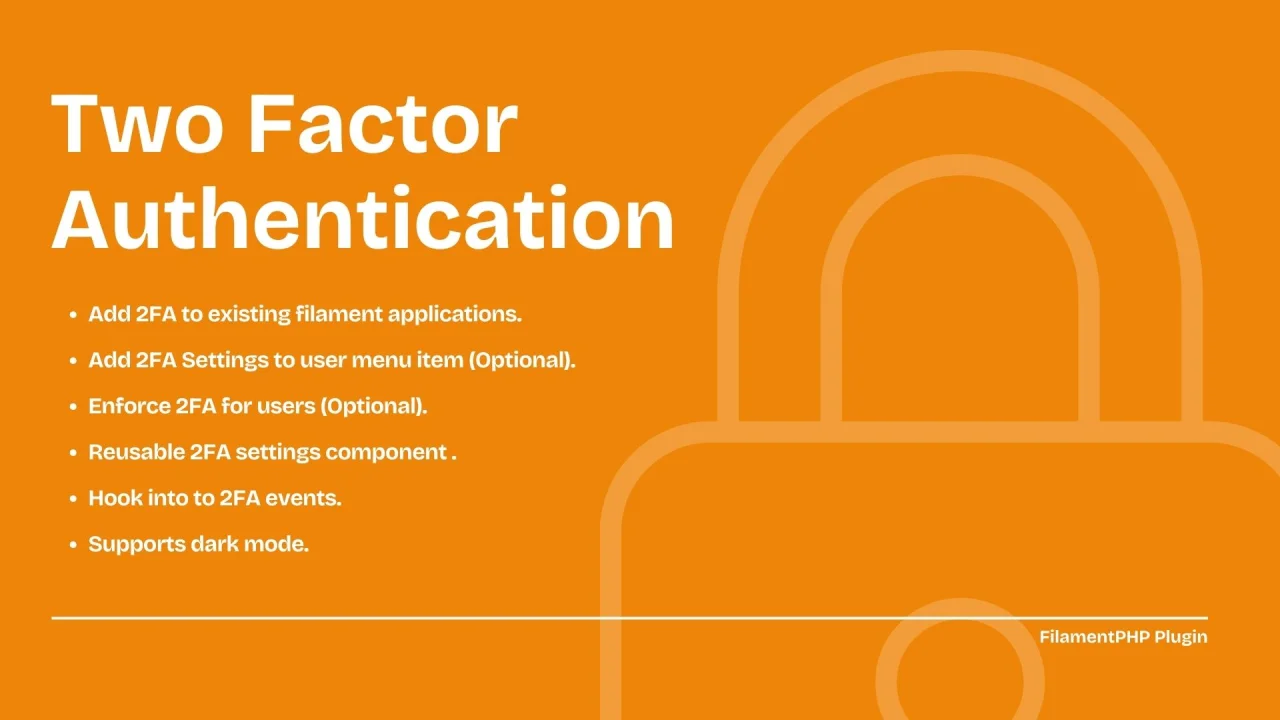
Two Factor Authentication (2FA)
Add two factor authentication to new and existing Filament applications.
Author:
Stephen Jude
Featured Plugins
A selection of plugins curated by the Filament team
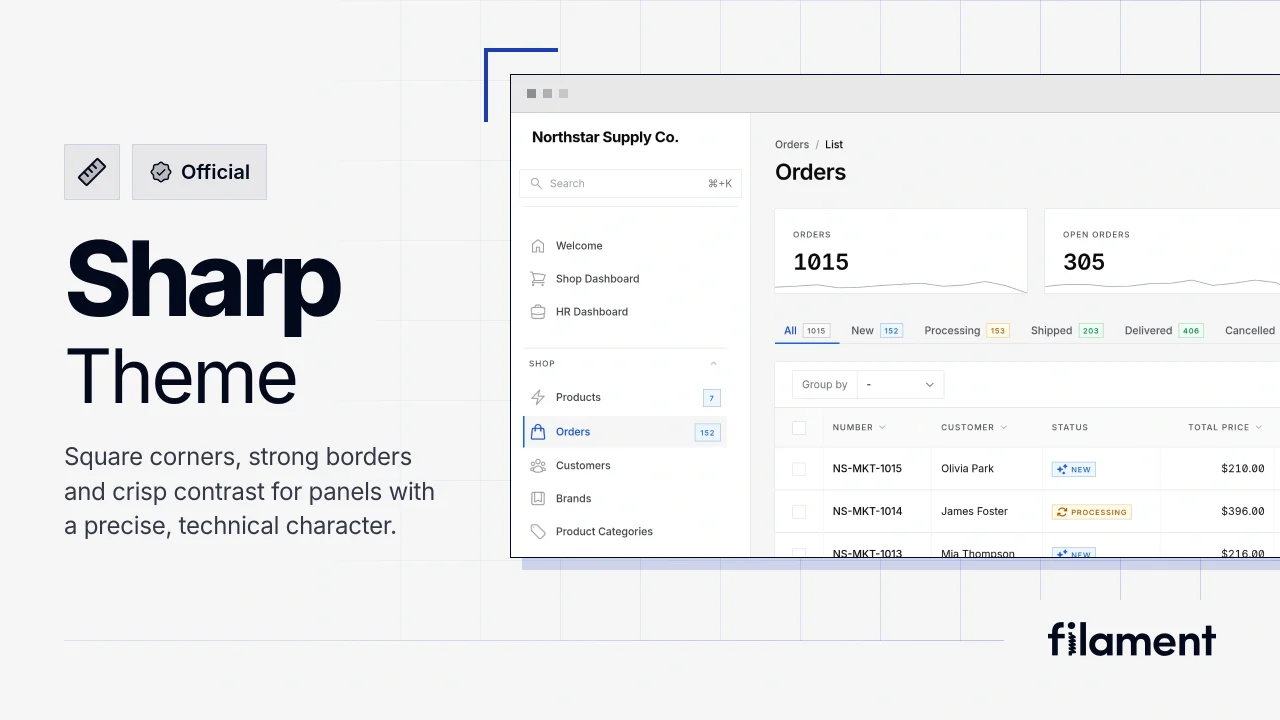
Sharp Theme
A theme that gives panels a precise, technical look with square corners, strong borders, and clear contrast.
 Filament
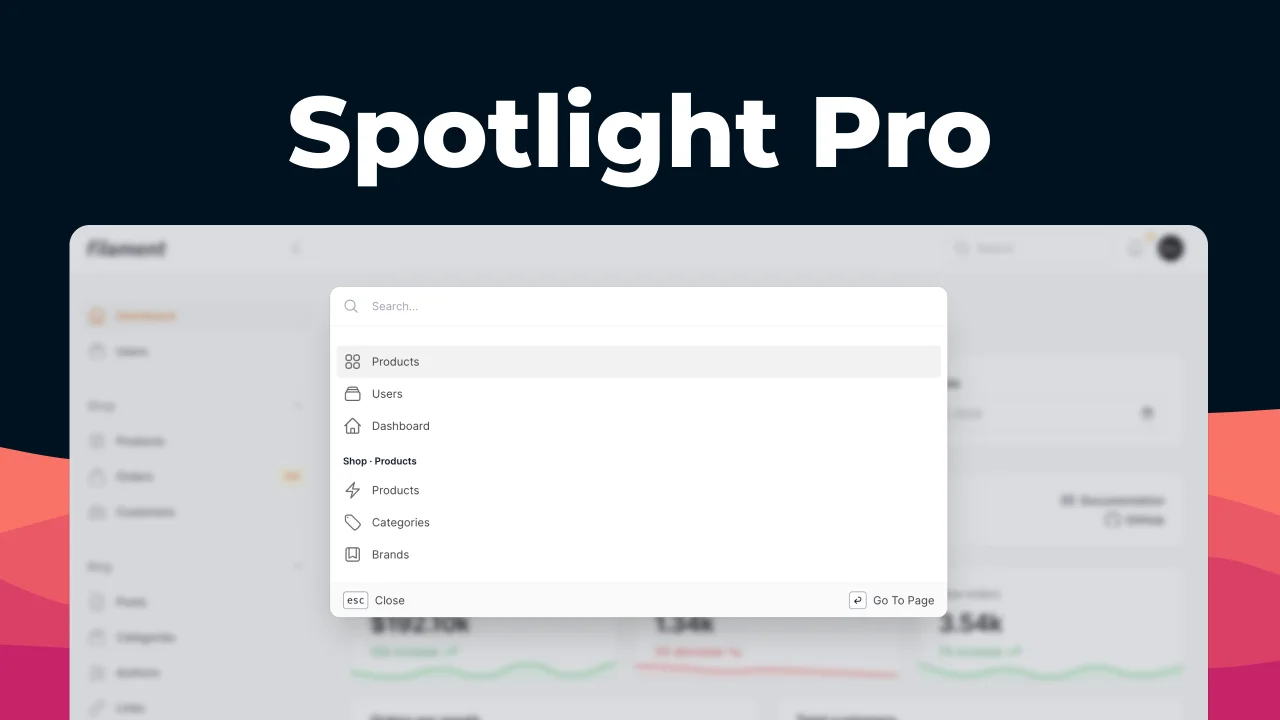
Spotlight Pro
Browse your Filament Panel with ease. Filament Spotlight Pro adds a Spotlight like Command Palette to your Filament Panel.
 Dennis Koch
Custom Fields
Eliminate custom field migrations forever. Let your users create and manage form fields directly in Filament admin panels with 20+ built-in field types, validation, and zero database changes.
 Relaticle