Teams by Packstub
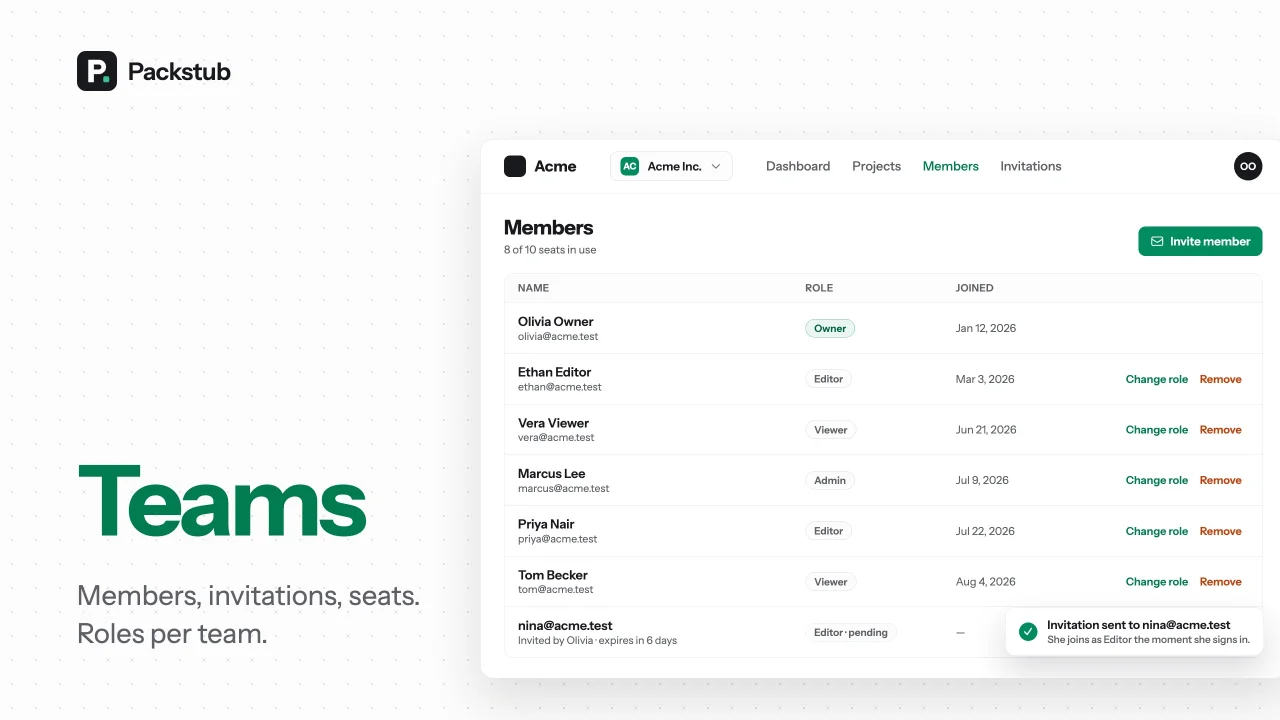
CommunityInvite members by e-mail or link, manage roles and seats per tenant, and let Filament Shield permissions follow the team.
 Author:
Packstub
Package health
Automated checks of this plugin's Composer package
15 checks
- Passed: GitHub Actions pinned to SHA
- Skipped: GitLab CI includes pinned to SHA
- Passed: Open security advisories
- Passed: Dependabot PR responsiveness — No open Dependabot PRs.
- Skipped: Renovate MR responsiveness
- Passed: Dependabot or Renovate configured
- Passed: Dependency update cooldown configured
- Passed: Provides a security policy
- Passed: Abandoned or archived — No consulted source marks the package abandoned (packagist, github).
- Passed: Commit and release recency — Active: last commit 0 days ago; last release 1 days ago.
-
Passed:
composer.lock not committed by library
—
composer.lockis absent from the released dist archive. - Passed: Dist archive is lean
-
Passed:
Current Laravel version supported
— Package dependencies resolve together with current Laravel
13.0. -
Passed:
Current PHP version supported
— Constraint
^8.3supports current PHP8.5. - Skipped: Current Symfony version supported
filament/
namespace. Review the source and install at your own risk. Found
malware or an unresolved security issue the author won't
address?
Report it
.
Documentation
- Features
- Compatibility
- Installation
- Configuration
- Roles and permissions
- Roles with Filament Shield
- The Teams service
- Invitation flow
- Personal teams
- Using it with Filament Tenancy
- Documentation
- Testing
- Changelog
- Contributing
- Security
- Credits
- License
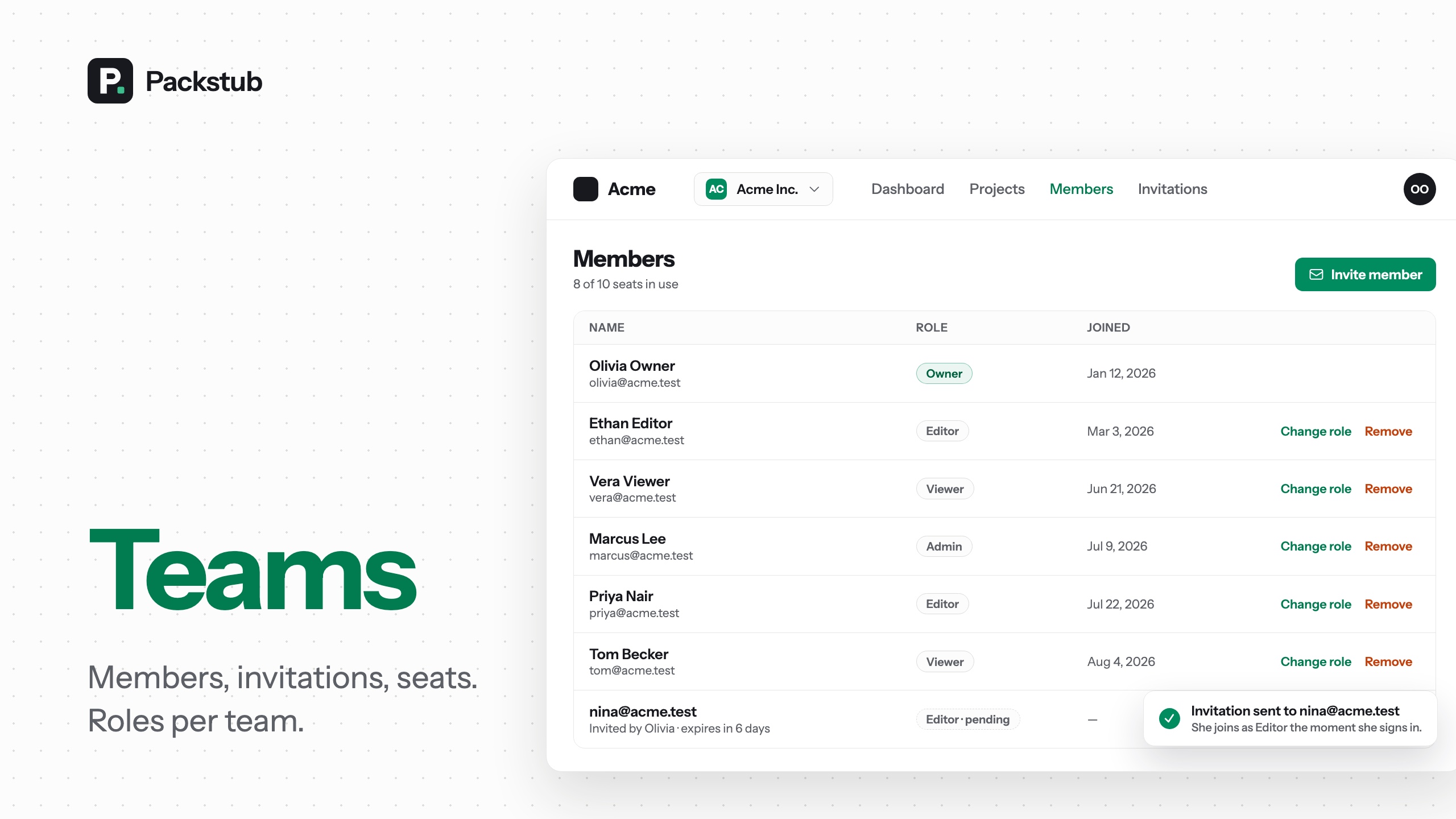





Teams, invitations and seat limits for Filament v5 panels with tenancy — with tenant-scoped roles that plug straight into Filament Shield / Spatie Permission when they're installed.
#Features
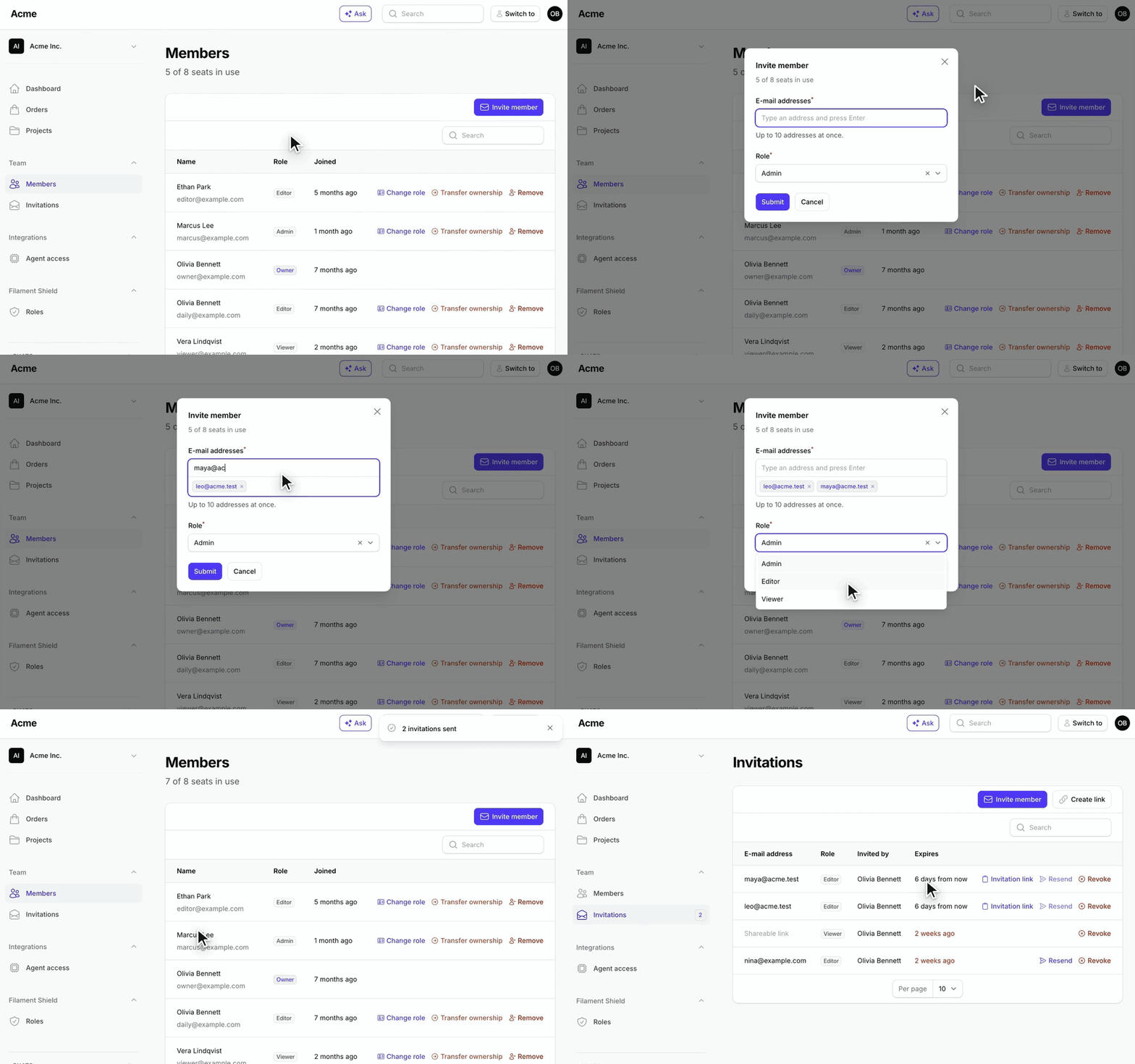
- Members page: invite, change roles, remove members, transfer ownership or leave the team.
- Invitations: e-mail invitations and shareable links; guests sign in or register and land in the team.
- Seat limits: a limit per team from config or the plan, pending invitations counted.
- Roles and permissions: roles that carry permissions, checked with
hasTeamPermission(),@teamcanor ateam.can:middleware. - Filament Shield: Shield's roles per team, synced for each member automatically.
- Ownership rules: the owner role is never assigned by hand, and the last owner stays.
- Personal teams: an optional team for every new registration.
- Any tenancy: Filament's own tenancy, or database per tenant with Filament Tenancy in one call.
- Built to extend: a
Teamsservice that works without the traits, events, typed exceptions and translations.
#Compatibility
| Plugin | Filament | Laravel | PHP |
|---|---|---|---|
| 1.x | 5.x | 12.x, 13.x | 8.3+ |
#Installation
composer require packstub/filament-teams
php artisan packstub-teams:install
Put the traits on your models:
use Filament\Models\Contracts\HasTenants;
use Packstub\Teams\Concerns\HasTeamMemberships;

class User extends Authenticatable implements FilamentUser, HasTenants
{
    use HasTeamMemberships; // joinedTeams(), teamRole(), hasTeamRole(), ownsTeam(), getTenants(), canAccessTenant()
}
use Packstub\Teams\Concerns\HasTeamMembers;

class Team extends Model
{
    use HasTeamMembers; // members(), owners(), invitations(), roleOf(), seatsUsed(), hasAvailableSeats()
}
Register the plugin on the tenant-aware panel:
use Packstub\Teams\TeamsPlugin;

$panel
    ->tenant(Team::class, slugAttribute: 'slug')
    ->tenantRegistration(RegisterTeam::class)
    ->plugin(TeamsPlugin::make());
When a team is created, add its first owner:
use Packstub\Teams\Facades\Teams;

$team = Team::create($data);
Teams::addMember($team, auth()->user(), Teams::ownerRole());
#Configuration
config/packstub-teams.php:
| Key | Purpose |
|---|---|
team_model |
the tenant model |
membership.table / team_foreign_key / user_foreign_key / role_column |
the pivot — set tenant_user / tenant_id to reuse Filament Tenancy's |
roles.provider |
null (auto), simple, spatie, or a RoleProvider class |
roles.owner, roles.default, roles.managers, roles.roles |
the reserved owner role, the role new invites get, which roles may manage members, and the config role list |
membership.team_relationship / user_relationship |
relation names on your models (members / joinedTeams; Tenancy: users / tenants) |
connection |
database connection for the pivot + invitations (central DB in database-per-tenant apps) |
invitations.expire_after_days, require_email_match, count_pending_toward_seats, mail.queue |
invitation behaviour |
seat_limit |
global default (null = unlimited) |
Per-panel options on the plugin:
TeamsPlugin::make()
    ->seatLimit(fn (Team $team): ?int => $team->plan?->seats)     // null = unlimited
    ->canManageUsing(fn (User $user, Team $team): bool => ...)   // roles/removal
    ->canInviteUsing(fn (User $user, Team $team): bool => ...)   // defaults to canManage
    ->roleProvider('spatie')                                     // or 'simple' / a class
    ->navigationGroup('Team')
    ->navigationSort(90)
    ->tenantMenuItem()        // "Members" in the tenant switcher menu
    ->membersPage(MyMembers::class)      // or null to skip
    ->invitationsPage(null)
    ->acceptRoute()           // /{panel}/invitations/{token}
    ->config(['seat_limit' => 10])       // any packstub-teams.* key, per panel
    ->useFilamentTenancy();   // preset for packstub/filament-tenancy
#Roles and permissions
Roles are defined in config (or per panel) with a label, an optional description and the permissions they carry — owners hold everything, * grants all:
TeamsPlugin::make()->roles([
    'owner'  => ['label' => 'Owner', 'permissions' => ['*']],
    'admin'  => ['label' => 'Admin', 'description' => 'Manages members and settings.', 'permissions' => ['create', 'read', 'update', 'delete']],
    'member' => ['label' => 'Member', 'permissions' => ['read']],
], default: 'member', managers: ['admin']);
Check them anywhere:
$user->hasTeamPermission($team, 'update');      // HasTeamRoles / HasTeamMemberships
Teams::userCan($user, $team, 'update');
Route::get(...)->middleware('team.can:update');  // 403 otherwise, against the current Filament tenant
@teamcan('update') <x-filament::button>Edit</x-filament::button> @endteamcan
With the Spatie provider the same calls are answered by Spatie Permission / Shield for the current team.
#Roles with Filament Shield
Install Filament Shield and enable Spatie Permission's teams feature (config/permission.php → 'teams' => true, run the add_teams_fields migration, pass scopeToTenant() to Shield's plugin). That's all: the plugin detects permission.teams, switches to SpatieRoleProvider, and
- the Members page offers Shield's roles (global ones plus roles created inside the current team),
- assigning a role syncs the member's Spatie role for that team,
- a
SetPermissionsTeamtenant middleware points Spatie at the current tenant on every request, so$user->can()and Shield's policies answer for the team you're in.
Global vs. per-team roles. Shield's Role resource is tenant-owned, so during a panel request Filament scopes the Role model to the current team and global roles (team_id null) are invisible to $user->can(). Treat global roles as templates and give each new team its own copies:
// in your RegisterTenant page / team factory
Teams::roleProvider()->cloneGlobalRolesToTeam($team);
Teams::addMember($team, $user, Teams::ownerRole());
Your Role model needs a team() relation for Filament's scoping (belongsTo(Team::class, 'team_id')). When the configured default role doesn't exist among a team's roles, invites fall back to the first assignable one (Teams::defaultRoleFor($team)).
Prefer a fixed list instead? Set roles.provider to simple — roles live on the pivot only.
Write your own provider by implementing Packstub\Teams\Roles\RoleProvider (roles(), assigned(), removed()).
#The Teams service
use Packstub\Teams\Facades\Teams;

Teams::invite($team, '[email protected]', 'editor', inviter: $user); // TeamInvitation (mail sent)
Teams::resend($invitation);
Teams::revoke($invitation);
Teams::accept($invitation, $user);

Teams::addMember($team, $user, 'member');
Teams::changeRole($team, $user, 'admin');
Teams::removeMember($team, $user);
Teams::transferOwnership($team, from: $owner, to: $user);

Teams::roles($team);           // ['owner' => 'Owner', 'admin' => 'Admin', ...]
Teams::assignableRoles($team); // without owner
Teams::canManage($user, $team);
Teams::seatLimit($team);
Also: inviteMany(), createInviteLink(), acceptAllFor($user), pendingInvitationFromSession(), pruneInvitations(), userCan(), roleDescription(), createPersonalTeam().
Every method throws a Packstub\Teams\Exceptions\TeamsException subclass on a rule violation (SeatLimitReached, LastOwnerException, InvalidInvitation, InvalidRole, NotAMember, AlreadyAMember, ResendTooSoon); the Filament pages turn them into notifications.
Events: MemberInvited, InvitationAccepted, MemberAdded, MemberRoleChanged, MemberRemoved, OwnershipTransferred.
#Invitation flow
- A manager invites one or more e-mail addresses with a role (
Teams::invite()/inviteMany(), up toinvitations.max_batchat once). ATeamInvitationis created per address (one pending per e-mail per team, re-inviting refreshes it),TeamInvitationMailgoes out, and invitees who already have an account also get a database notification in Filament's tray. - The link hits
/{panel}/invitations/{token}. Guests are redirected to the panel's login — or its registration page — with the intended URL kept. UsePackstub\Teams\Filament\Pages\Auth\Registeras the panel's registration page to prefill and lock the invited e-mail (->registration(Register::class)). - As soon as they log in or register, the invitation from the link is accepted (
AcceptPendingInvitationslistener); the accept route then sends them to the team's dashboard. Withrequire_email_matchon (default) only the invited address may accept an e-mail invitation. Turn oninvitations.auto_accept_on_loginto also accept every other pending invitation addressed to that e-mail. - Shareable links (
Teams::createInviteLink($team, $role, maxUses: 10, expiresAt: …)or the "Create link" action) let anyone who signs in join with the chosen role until the link expires or its uses run out. Links never hold a seat.
Resending waits invitations.resend_cooldown_minutes between sends. Schedule php artisan teams:prune-invitations to delete expired invitations and accepted ones older than invitations.prune_accepted_after_days.
#Personal teams
Give every new account a team of its own — skipped for users who register through an invitation link:
TeamsPlugin::make()->personalTeams(
    fn (User $user): Team => Team::create(['name' => Teams::personalTeamName($user), 'slug' => Str::slug($user->name).'-'.Str::random(4)]),
    name: ":name's Team",
);
#Using it with Filament Tenancy
Filament Tenancy is a separate, paid Packstub plugin for database-per-tenant panels; Filament Teams works with or without it. When you use both, packstub/filament-tenancy already keeps a tenant_user pivot (tenant_id, user_id, role) with an owner role, string tenant ids and users() / tenants() relations. One call wires everything and keeps invitations on the central connection:
$panel->plugins([
    TenancyPlugin::make()->/* … */,
    TeamsPlugin::make()->useFilamentTenancy(),   // optional: ->useFilamentTenancy('central')
]);
Then publish and run only the invitations migration (create_team_invitations_table) — the pivot already exists — and add HasTeamRoles to your user next to HasPackstubTenants:
use Packstub\Teams\Concerns\HasTeamRoles;
use Packstub\Tenancy\Concerns\HasPackstubTenants;

class User extends Authenticatable implements FilamentUser, HasDefaultTenant, HasTenants
{
    use HasPackstubTenants, HasTeamRoles; // teamRole(), hasTeamRole(), ownsTeam(), canManageTeam()
}
Nothing on the Tenant model changes: the service reads the tenant's own users() relation. The accept link lives on the central host (/{panel}/invitations/{token}) and sends the new member to their tenant host afterwards — subdomains share the central session, custom domains go through Tenancy's handoff.
#Without the traits
The traits are conveniences. Every lookup is also available on the service for models you don't control — Teams::membersOf($team), teamsOf($user), invitationsOf($team), ownersOf($team), isMember(), roleOf(), seatsUsed(), hasAvailableSeats() — building the relations from membership.* config (team_relationship / user_relationship name the model relations to prefer when they exist). Team keys may be integers, UUIDs/ULIDs or plain strings; set connection to keep the pivot and invitations on a central database.
#Documentation
- Installation
- Members
- Invitations
- Roles and permissions
- Roles with Filament Shield
- Using it with Filament Tenancy
- Configuration
- Testing
The same pages live in the docs/ directory of this repository.
#Testing
composer test
#Changelog
See the changelog.
#Contributing
See CONTRIBUTING.
#Security
See our security policy.
#Credits
#License
MIT. See the license file.
The author
Packstub builds plugins for Filament and Laravel, from open-source utilities to paid infrastructure for multi-tenant SaaS. It is the author of Packstub Tenancy, which brings stancl/tenancy's database-per-tenant model to Filament panels, and Filament Account Switcher, which adds linked accounts, impersonation, and developer logins with an audit trail. Packstub is run by XLITE, a web development studio based in Moldova.
From the same author
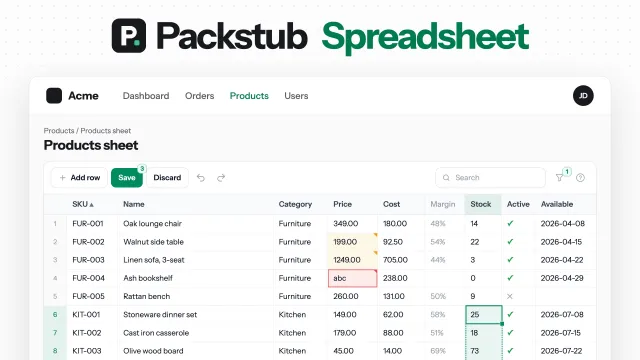
Spreadsheet
Edit hundreds of Filament records like a spreadsheet: paste from Excel, fill down, undo, and one Save checked on the server.
Author:
Packstub

Nitpick
Give users a theme picker in the Filament user menu: designed themes, community themes or your own, with a default per panel.
Author:
Packstub
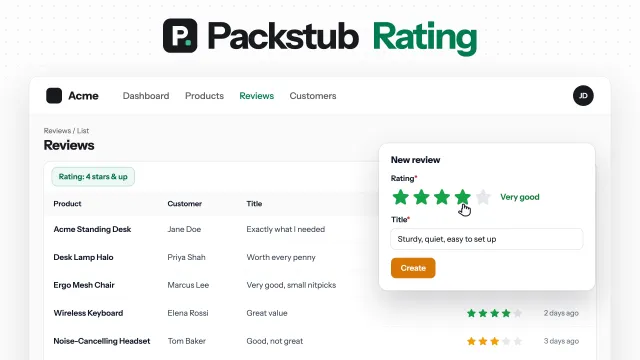
Rating
Star ratings for Filament: a form field, a column you can rate from, a filter, and average and distribution summaries.
Author:
Packstub
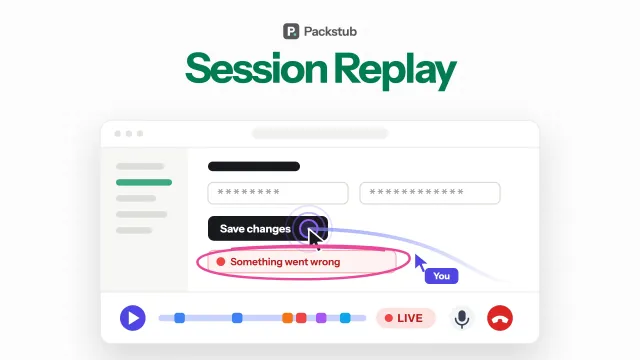
Session Replay
Session replay and live help in your panel: replays with errors marked, co-browsing, remote control and calls.
Author:
Packstub
Featured Plugins
A selection of plugins curated by the Filament team

Blueprint
Filament Blueprint is a premium Laravel Boost extension that helps AI agents produce accurate, detailed implementation plans and security reports for Filament apps.
 Filament
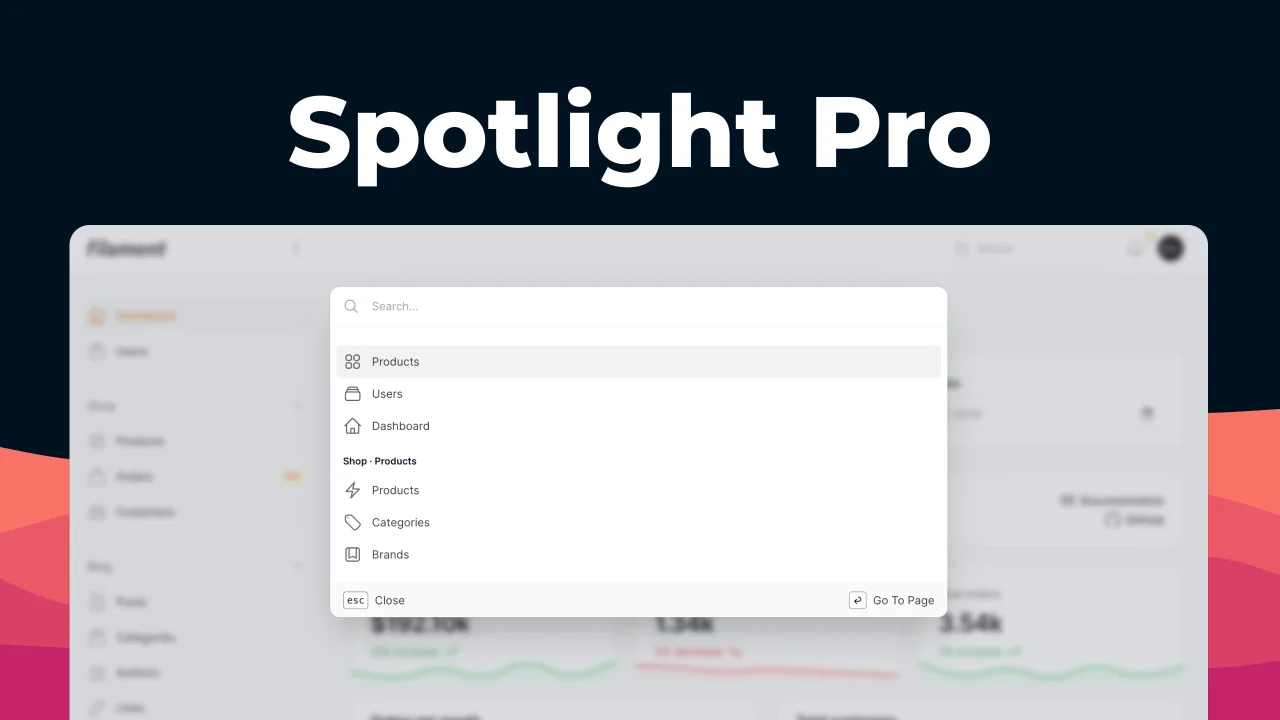
Spotlight Pro
Browse your Filament Panel with ease. Filament Spotlight Pro adds a Spotlight like Command Palette to your Filament Panel.
 Dennis Koch
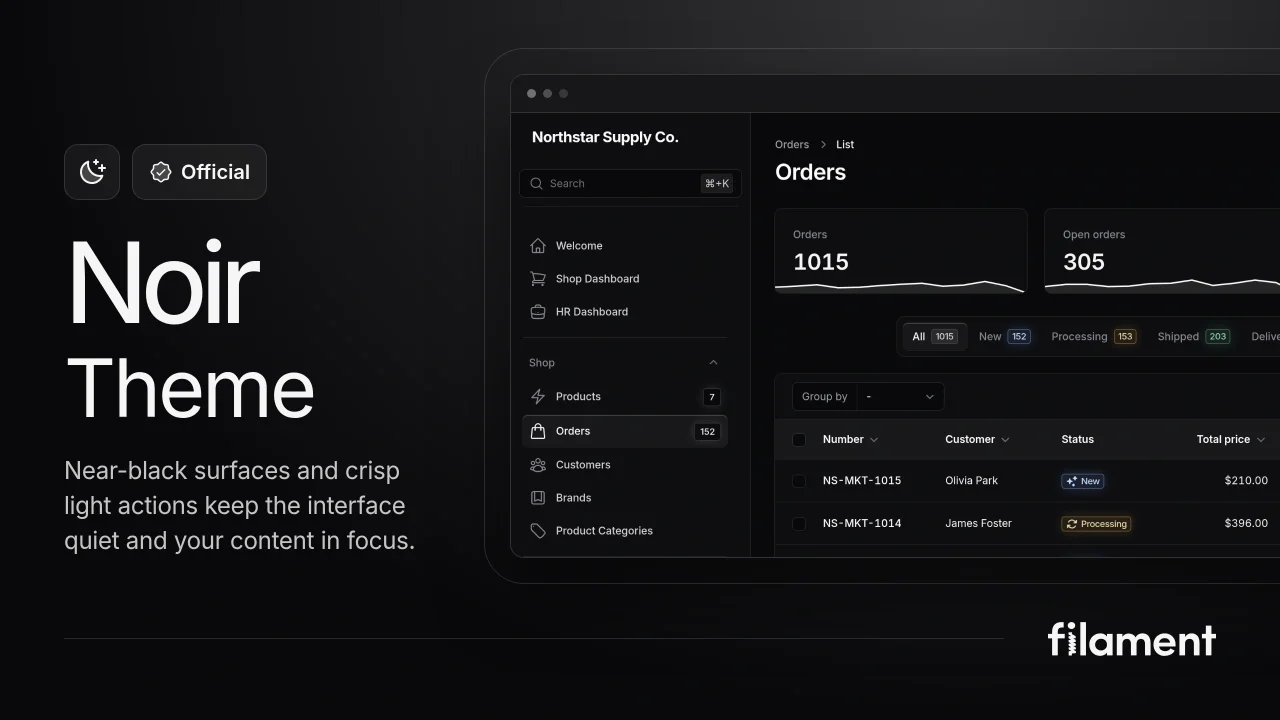
Noir Theme
A theme that gives panels a focused, refined look with near-black surfaces, crisp actions, and restrained color.
Filament