Facehash
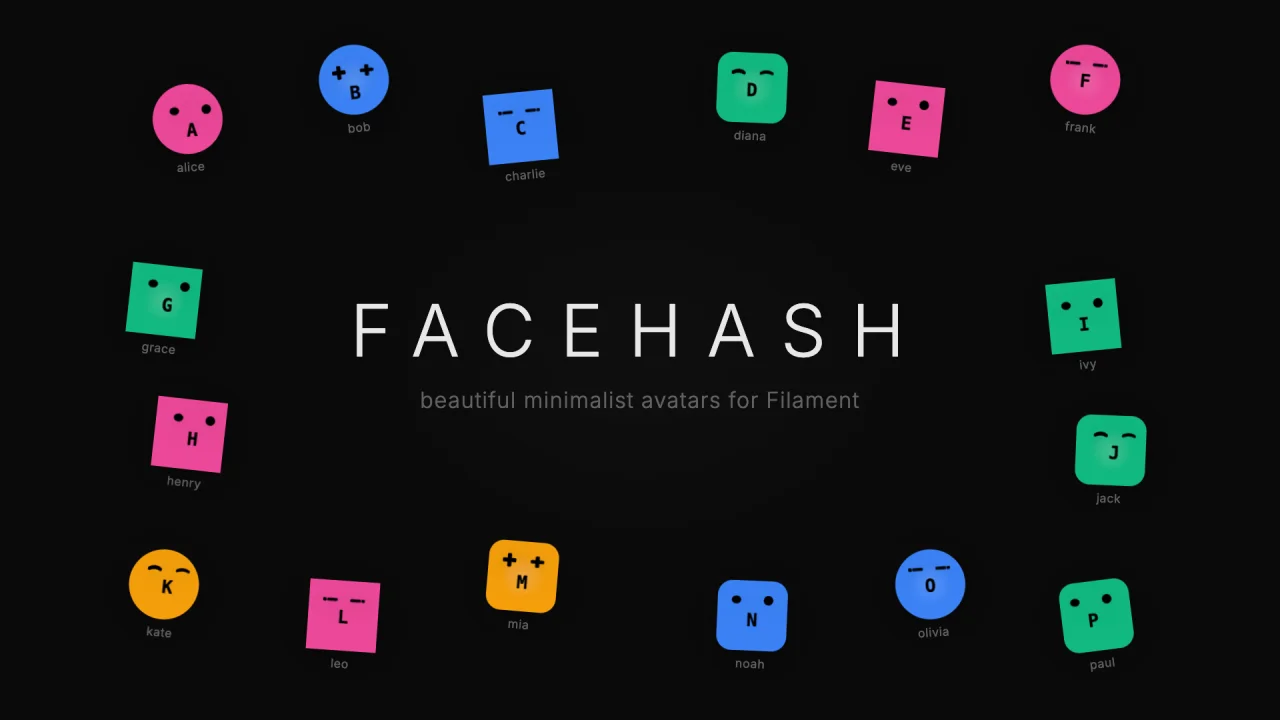
CommunityGenerate unique, deterministic avatar faces for your Filament panels.
 Author:
Saade
Author:
Saade
Package health
BetaAutomated checks of this plugin's Composer package
15 checks
- Passed: GitHub Actions pinned to SHA
- Skipped: GitLab CI includes pinned to SHA
- Passed: Open security advisories
- Warning: Dependabot PR responsiveness — Stale Dependabot PRs: oldest general PR is 65 days old.
- Skipped: Renovate MR responsiveness
- Passed: Dependabot or Renovate configured
- Passed: Dependency update cooldown configured
- Passed: Provides a security policy
- Passed: Abandoned or archived — No consulted source marks the package abandoned (packagist, github).
- Passed: Commit and release recency — Active: last commit 65 days ago; last release 65 days ago.
-
Passed:
composer.lock not committed by library
—
composer.lockis absent from the released dist archive. - Passed: Dist archive is lean
-
Passed:
Current Laravel version supported
—
Package dependencies resolve together with current Laravel
13.0. -
Passed:
Current PHP version supported
—
Constraint
^8.2supports current PHP8.5. - Skipped: Current Symfony version supported
filament/
namespace. Review the source and install at your own risk. Found
malware or an unresolved security issue the author won't
address?
Report it
.
Documentation
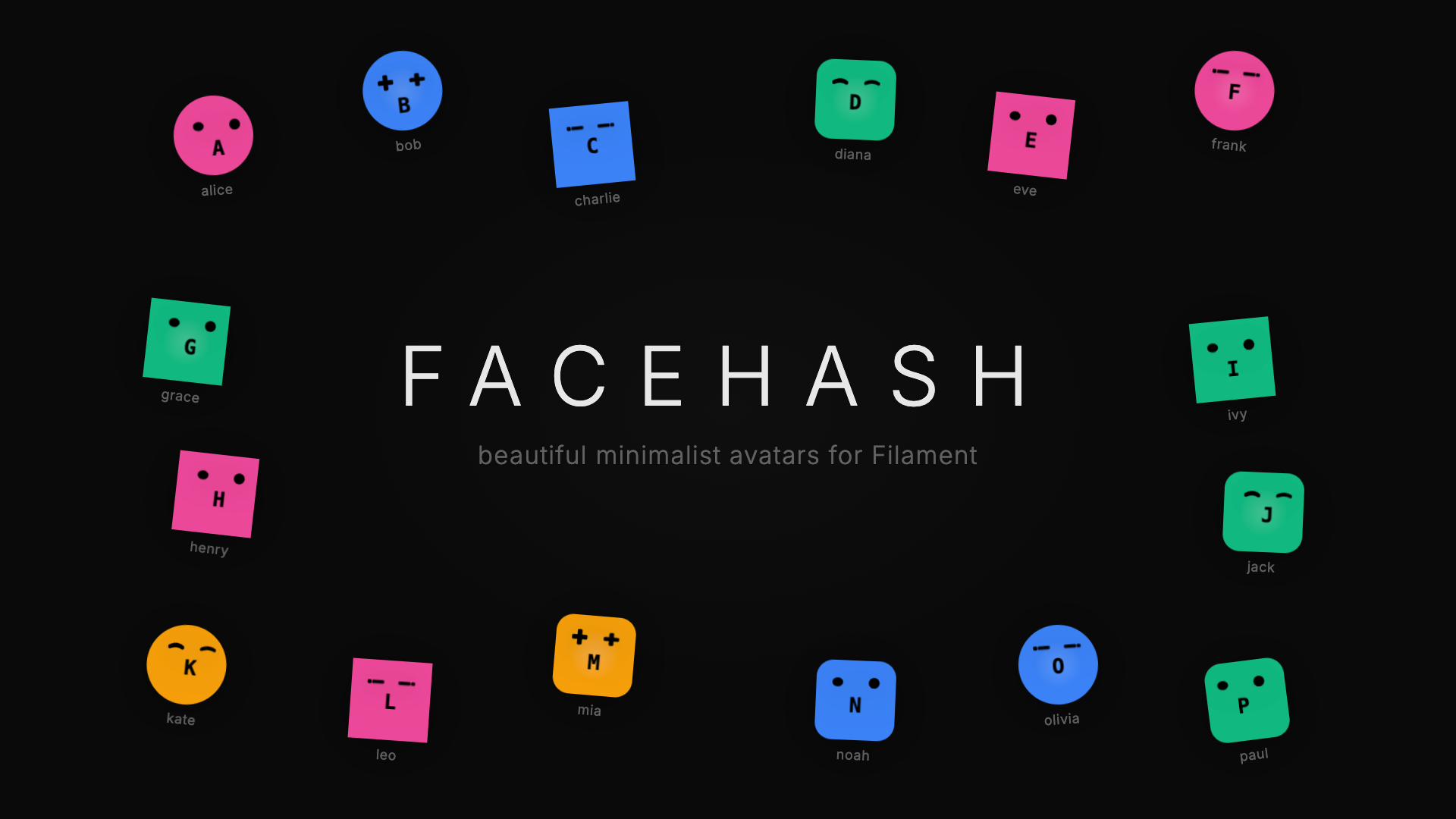
Generate unique, deterministic avatar faces for your Filament panels. Drop-in replacement for default user avatars — same name always produces the same face. Pure SVG, no GD or Imagick required.
#Installation
composer require saade/filament-facehash
#Usage
Add the provider and plugin to your panel configuration:
use Saade\FilamentFacehash\FacehashPlugin;
use Saade\FilamentFacehash\FacehashProvider;

public function panel(Panel $panel): Panel
{
    return $panel
        ->defaultAvatarProvider(FacehashProvider::class)
        ->plugins([
            FacehashPlugin::make(),
        ]);
}
#Configuration
Customize the avatars using the plugin's fluent API:
use Saade\Facehash\Enums\Variant;
use Saade\FilamentFacehash\FacehashPlugin;

FacehashPlugin::make()
    ->size(40)                       // Avatar size in pixels (default: 40)
    ->variant(Variant::Gradient)     // Variant::Gradient or Variant::Solid (default: Gradient)
    ->initial(true)                  // Show first letter of name (default: true)
    ->colors([                       // Custom color palette
        '#ec4899',
        '#f59e0b',
        '#3b82f6',
        '#f97316',
        '#10b981',
    ])
For more configuration options (routes, default overrides, etc.), visit the Facehash package documentation.
#Model Trait
For using facehash avatars outside of Filament panels (e.g. in Blade views, notifications), add the trait to your User model:
use Saade\FilamentFacehash\Concerns\HasFacehashAvatar;

class User extends Authenticatable
{
    use HasFacehashAvatar;
}
This gives you:
$user->facehash_avatar_url // data:image/svg+xml;base64,...
Override which attribute is used as the avatar name:
use Illuminate\Database\Eloquent\Casts\Attribute;

public function facehashAvatarName(): Attribute
{
    return new Attribute(
        get: fn () => $this->email  // use email instead of name
    );
}
#Credits
- Facehash for Laravel — the underlying PHP/Laravel package
- Facehash by Cossistant — the original JavaScript library
#License
MIT
The author
CTO & Backend Engineer at a Brazilian startup. Creating top-tier technology for public sector applications, making information and services universally accessible.
From the same author
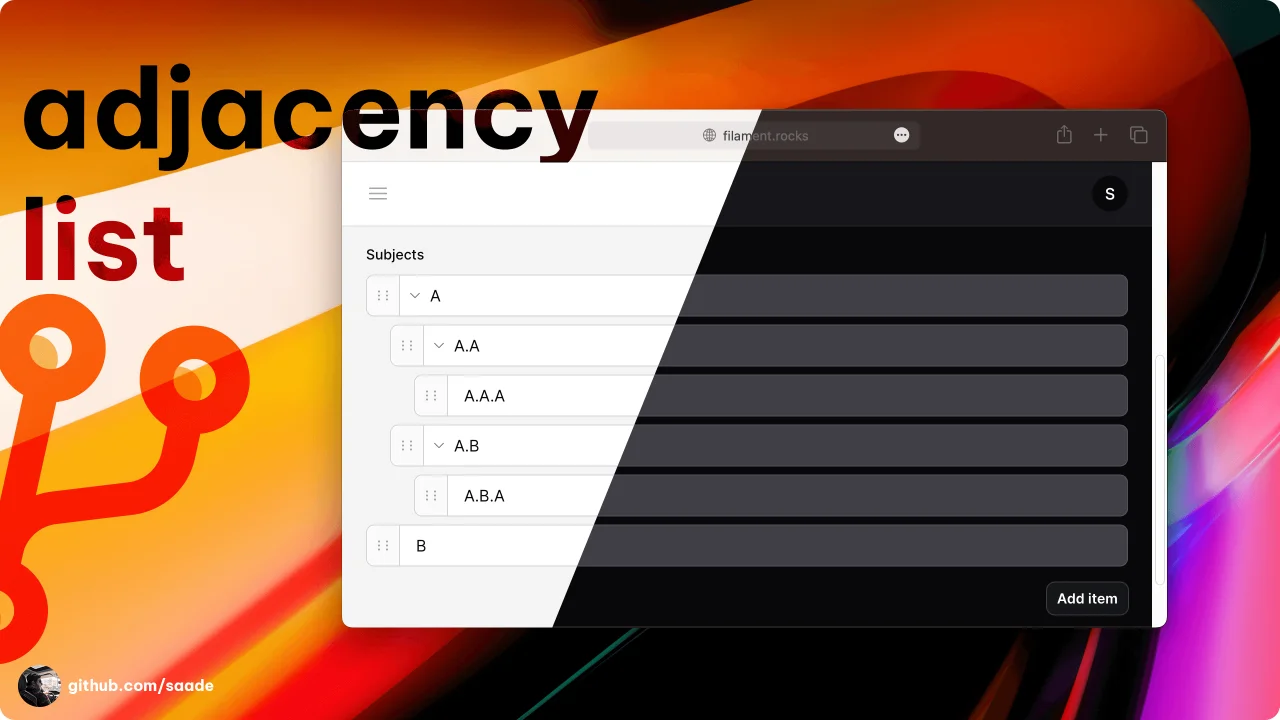
Adjacency List
A package to manage adjacency lists.
Author:
Saade
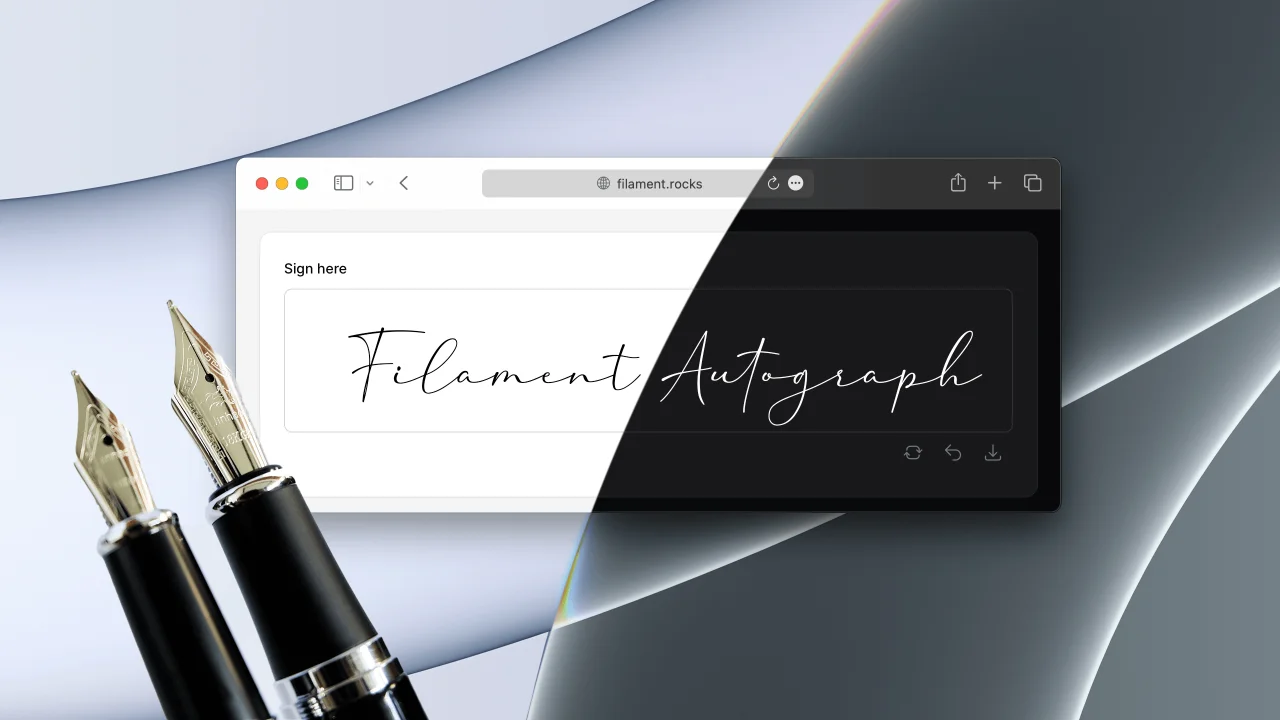
Autograph
A package to collect signatures.
Author:
Saade
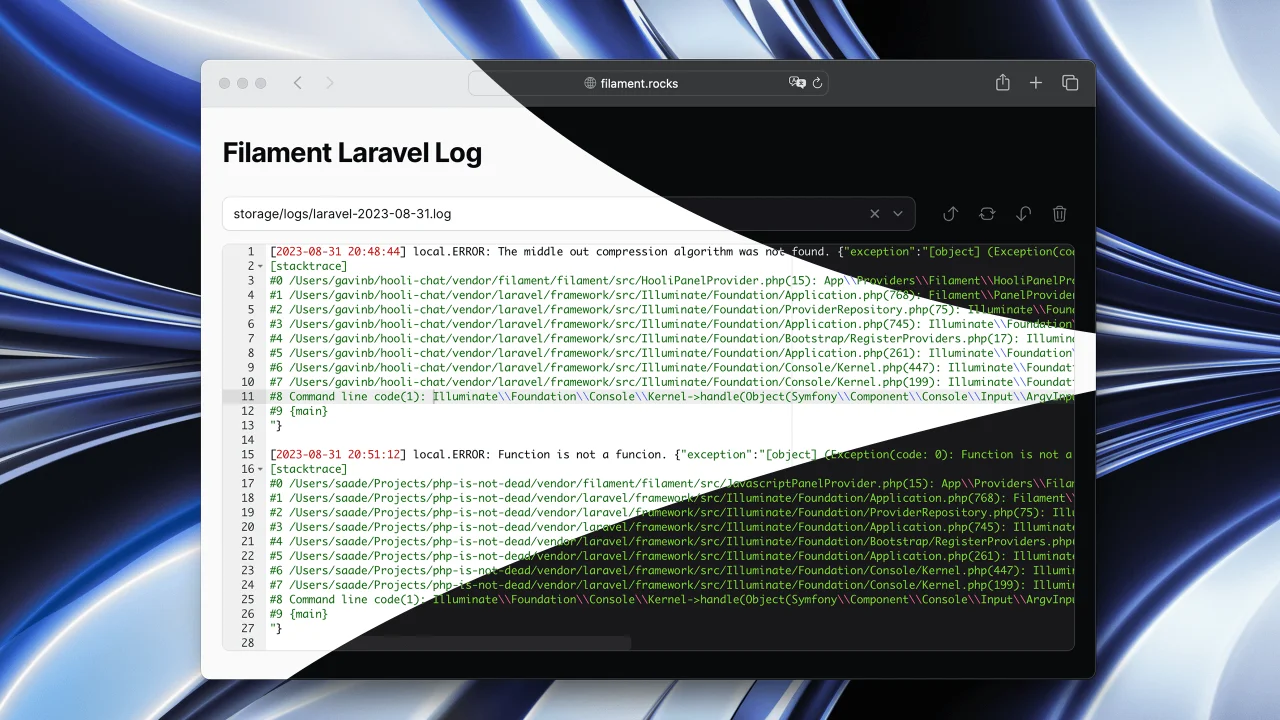
Laravel Log
Read Laravel logs from the Filament admin panel.
Author:
Saade
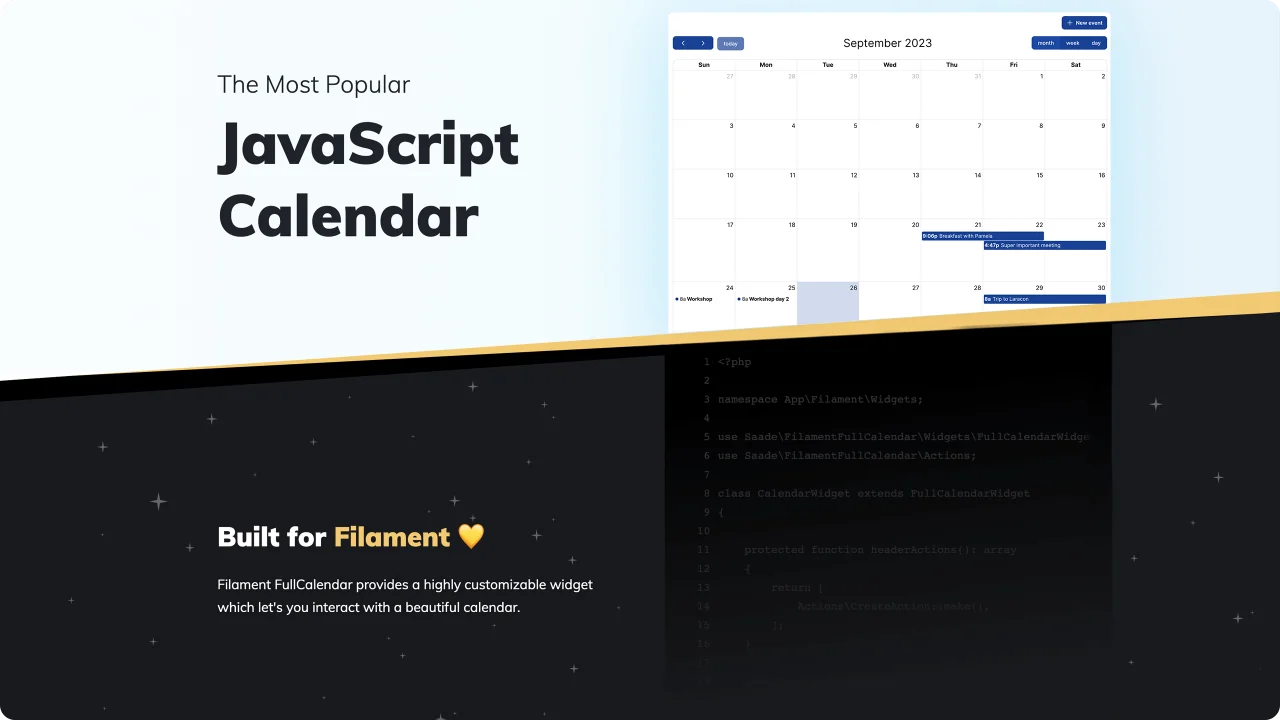
FullCalendar
The most popular JavaScript calendar as a Filament widget.
Author:
Saade
Featured Plugins
A selection of plugins curated by the Filament team
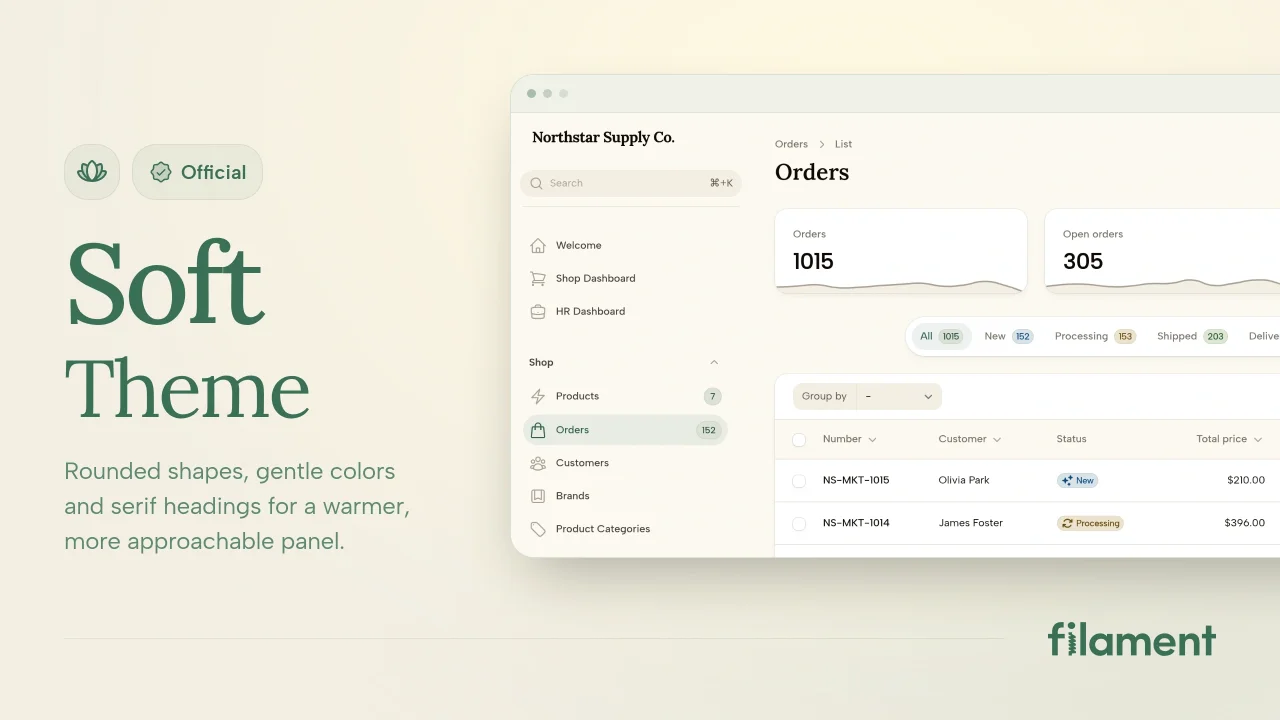
Soft Theme
A theme that gives panels a warm, approachable look with rounded shapes, gentle colors, and serif headings.
 Filament
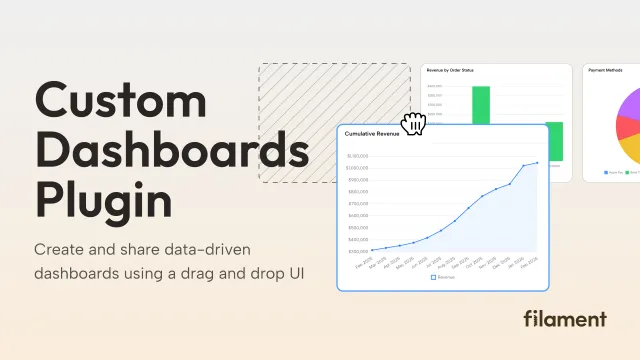
Custom Dashboards
Let your users build and share their own dashboards with a drag-and-drop interface. Define your data sources in PHP and let them do the rest.
Filament
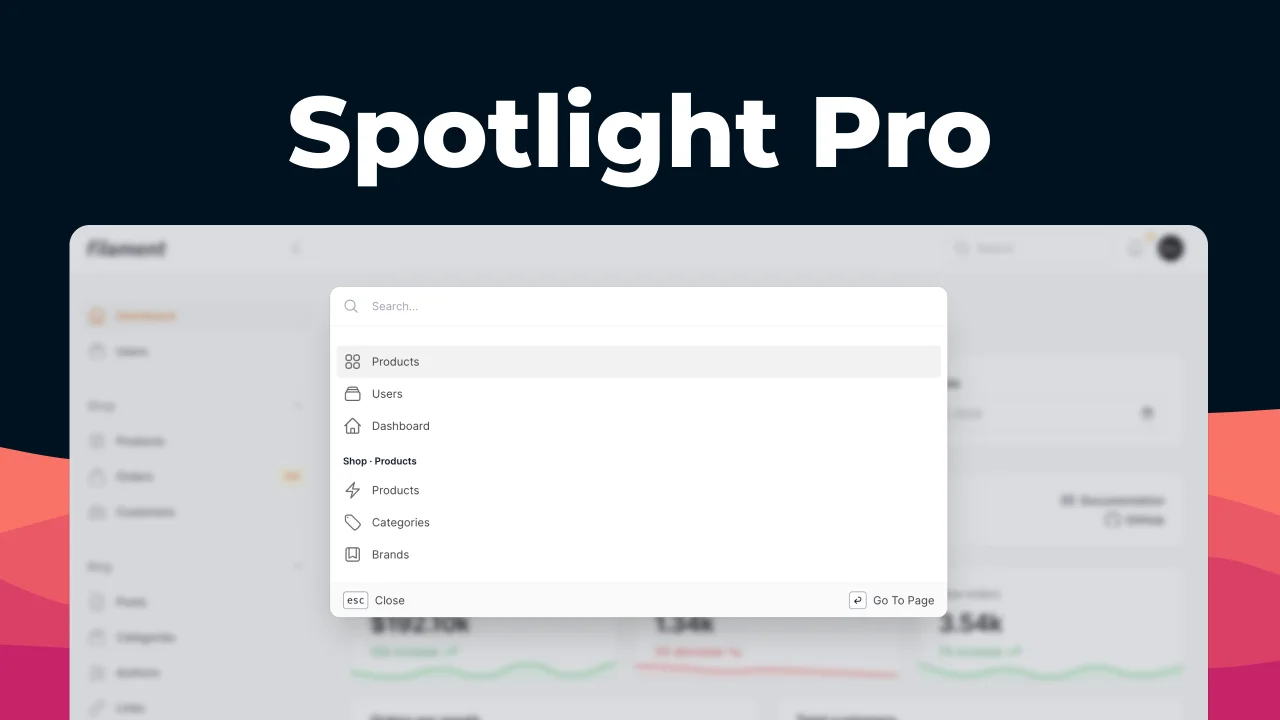
Spotlight Pro
Browse your Filament Panel with ease. Filament Spotlight Pro adds a Spotlight like Command Palette to your Filament Panel.
 Dennis Koch