Laravel Updater
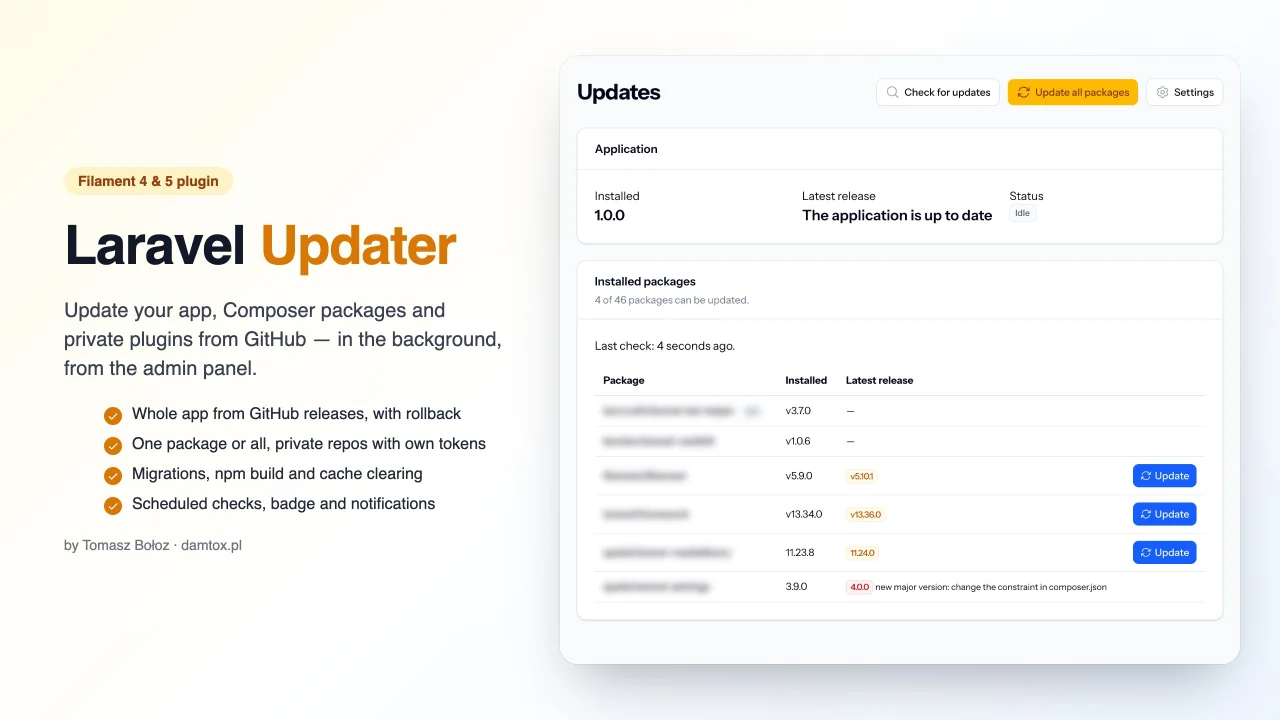
CommunityUpdate your Laravel application, its Composer packages and private GitHub plugins from the admin panel, with migrations, asset builds and cache clearing running safely in the background.
filament/
namespace. Review the source and install at your own risk. Found
malware or an unresolved security issue the author won't
address?
Report it
.
 Author:
Tomasz Bołoz
Author:
Tomasz Bołoz
Documentation
- Packages
- Use cases
- Requirements
- Installation
- Artisan
- Configuration
- Update strategies
- Events
- Security
- Testing
- Releases
- Author
- License


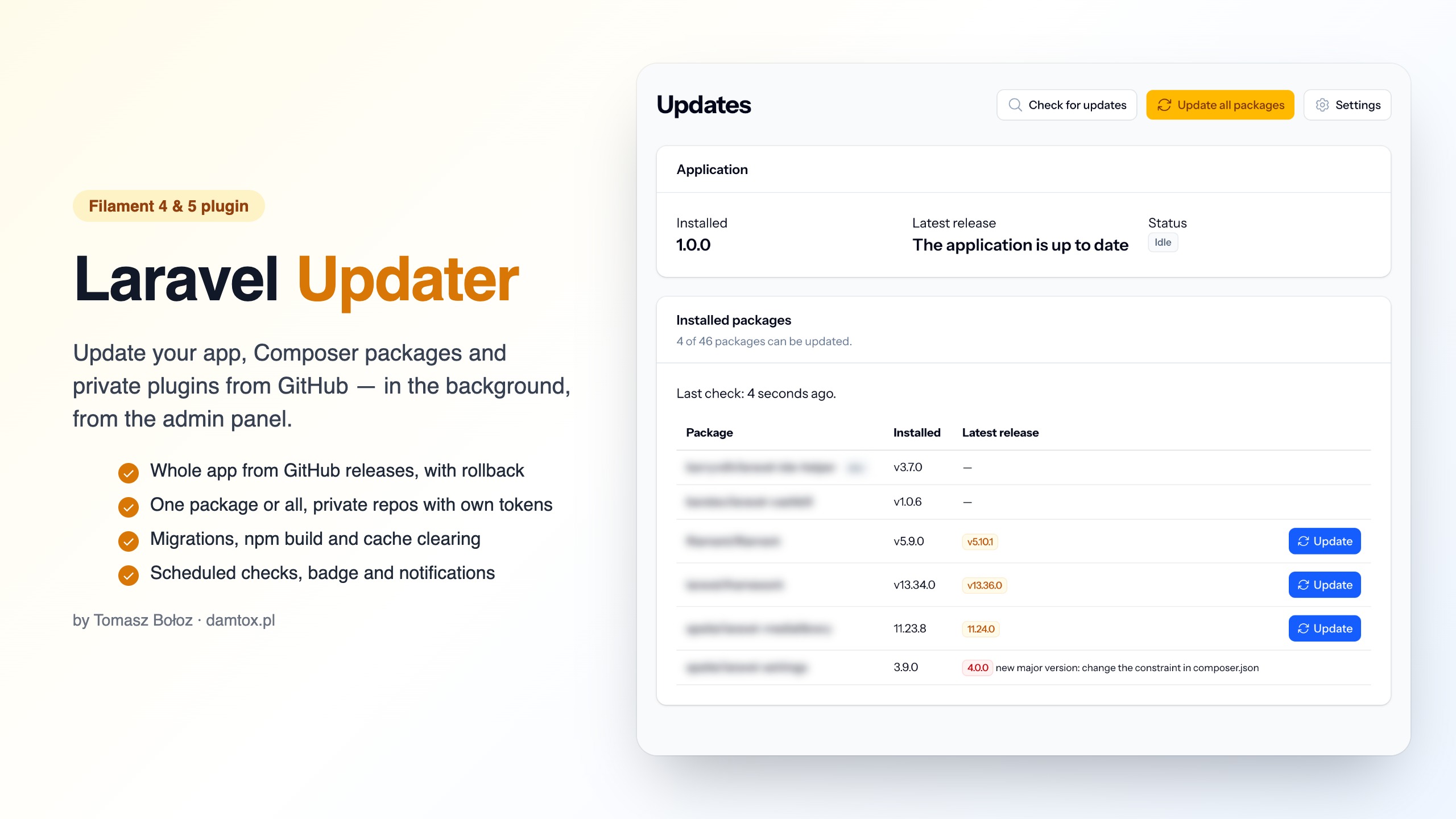
Laravel Updater keeps a Laravel application up to date from the Filament admin panel or Artisan:
- the whole application, from its own GitHub releases (public or private repository);
- every installed Composer package, one at a time or all at once;
- private packages (e.g. your own plugins) from private GitHub repositories, each with its own token.
It monitors everything automatically on a schedule, shows the number of available updates in the navigation badge, and has a manual Check for updates button.
When a newer application release appears, one click (or one command) runs the whole deployment:
- takes a lock, so only one update runs at a time;
- puts the site into maintenance mode (with an optional bypass secret);
- installs the new code:
git fetch+checkoutof the release tag, or the release zipball on hosts without git; - runs your steps:
composer install,php artisan migrate --force,npm ci,npm run build,php artisan optimize:clear,php artisan optimize,php artisan queue:restart(all configurable); - remembers the installed version and brings the site back up.
If any step fails, the code is rolled back to the previous commit, the recovery steps run
(composer install, optimize:clear), the site goes back up and the error is shown in the panel.
#Packages
The Installed packages table lists every direct dependency from composer.json (with dev and
private badges), the installed version and the latest one found by the last check:
- Update on a row runs
composer update vendor/package --with-dependencies, then migrations and cache clearing; - Update all packages runs the same for every package;
- a new major version is shown but not installable from the panel, because it needs a new constraint
in
composer.json(a code change that belongs in a release of the application).
If a step fails, composer.lock is restored and composer install brings vendor/ back to the previous state.
Only installed direct dependencies can be updated: package names from the browser are checked against them.
#Private packages
Updates → Settings → Private packages holds any number of private Composer packages hosted on GitHub:
Composer name, owner/repository and a token (fine-grained, Contents: Read-only). Tokens are encrypted and never
sent back to the browser; an empty field keeps the saved token.
Private packages are monitored by their tags. During updates every repository gets its own token:
git receives a per-repository http.<url>.extraheader, Composer receives COMPOSER_AUTH, all through the
environment, never through process arguments. The packages still need their repositories entry
("type": "vcs") in composer.json, as usual for private packages.
#Monitoring
updater:check checks the application release and all packages in one go (composer outdated --direct
plus GitHub tags of private packages). It runs:
- on the schedule from
updater.schedule(default every 6 hours; requires* * * * * php artisan schedule:run); - from the Check for updates button (queued, the page refreshes by itself);
- after every update, so the list is always current.
When something newer is found, UpdatesAvailable is dispatched (listen to it for e-mail or Slack notifications),
and the navigation badge shows the count.
#Use cases
- Client sites and SaaS installations that should update from the admin panel, without SSH access.
- Many copies of one application (franchises, white-label installs) that track a single GitHub repository.
- Shared hosting without git: the
archivestrategy downloads the release zipball over HTTPS. - Private repositories: the token is entered in the panel, stored encrypted, sent only to GitHub and never logged.
- Scheduled, unattended updates:
php artisan updater:run --forcefrom the scheduler. - Agencies with many private plugins shared between projects: every project shows which plugin versions it runs and updates them with one click.
#Requirements
- PHP 8.3+, Laravel 12 or 13
- Linux or macOS with
execallowed for PHP (updates run in a detached background process), or a queue worker withUPDATER_RUNNER=queue git(for the default strategy) or thezipextension (for thearchivestrategy)- Filament 4 or 5, only if you want the admin page
- Releases in your app's repository tagged with semantic versions:
v1.4.0or1.4.0
#Installation
composer require tomaszboloz/laravel-updater
php artisan vendor:publish --tag=updater-config   # optional
#Settings: in the admin panel
Open Updates → Settings in the Filament panel and fill in:
- Repository:
owner/repositorythat publishes the releases; - Access token: only for private repositories (see below). It is stored encrypted with
APP_KEYand never sent back to the browser. Leave the field empty to keep the saved token; - Update strategy:
gitorarchive; - Installed version: changes automatically after every update. Correct it only if it does not match the deployed code;
- Maintenance mode: on/off,
Retry-Afterand an optional bypass secret.
Panel settings are saved in storage/app/updater/settings.json (permissions 0600, secrets encrypted)
and take precedence over config and .env. Without Filament, or as defaults before the first save,
the same values can come from .env:
UPDATER_REPOSITORY=your-org/your-app
UPDATER_GITHUB_TOKEN=
UPDATER_CURRENT_VERSION=1.0.0
Update steps (the commands that run) are configured only in config/updater.php, on purpose:
letting panel users define commands would let them run arbitrary code on the server.
Settings are encrypted with
APP_KEY. If you rotate the key, enter the token again.
#Private repositories
Create a fine-grained personal access token limited to the one repository, with Repository permissions → Contents: Read-only, and save it in Updates → Settings. Public repositories need no token, but a token raises GitHub's API rate limit.
#Who may update: the gate
The admin page and its actions require the updater.manage ability, so nobody can update until
you allow it (secure by default). Define the gate, for example in AppServiceProvider::boot():
use Illuminate\Support\Facades\Gate;

Gate::define('updater.manage', fn ($user) => $user->hasRole('super_admin'));
With Filament Shield, the super_admin role already passes through its Gate::before callback.
Change the ability name with the updater.ability config option.
#Filament admin panel
Register the plugin in your panel provider:
use TomaszBoloz\LaravelUpdater\Filament\UpdaterPlugin;

public function panel(Panel $panel): Panel
{
    return $panel
        // ...
        ->plugin(
            UpdaterPlugin::make()
                ->navigationGroup('Settings')
                ->navigationSort(90),
        );
}
The Updates page shows the installed and latest version, the release notes (rendered as escaped Markdown), a Settings button, a Check for updates button and an Update now button with confirmation. While an update runs, the page refreshes every five seconds and shows the live log.
The plugin follows the Filament 5 plugin conventions: make() resolves it from the container, get()
returns the instance registered on the current panel, and the service provider extends Spatie's
PackageServiceProvider.
#Everything runs in the background
Buttons in the panel never run Composer, npm or migrations inside the web request. They start a task and return:
processrunner (default): a detachedphp artisan updater:workprocess (nohup … &), so no queue worker is needed and nothing is killed when the request ends. Output goes tostorage/logs/updater.log.queuerunner (UPDATER_RUNNER=queue, and always on Windows): aRunTaskjob; keep a worker running with a timeout longer than your slowest update, e.g.php artisan queue:work --timeout=3600.
What keeps the site and the panel working while an update runs:
- Progress without Livewire. The page polls a small JSON endpoint (
/updater/status) withfetch(). While Composer swapsvendor/a request may fail; the browser just retries, and reloads the page when the task ends. - The admin stays online. The admin who starts an update receives Laravel's maintenance bypass cookie, so the panel keeps working while visitors see the maintenance page. A bypass secret is generated when none is set.
- State outside the cache. Progress, check results and the lock live in
storage/app/updater, so theoptimize:clearstep cannot wipe them. The lock is anflock(), released by the OS if a process is killed. - Fresh code after Composer. Classes needed after Composer ran are loaded up front, and the follow-up check runs
in a new process that boots the updated
vendor/. - Web-server environments. PHP-FPM, Herd or Valet start processes without your shell's
PATH; Composer, npm and node are looked up in the usual places (Homebrew,/usr/local/bin, Composer global, Herd, nvm, Volta). - Development machines. When the app was installed with dev packages,
--no-devis dropped and commands that cache config, routes or views are skipped, so local tools and.envchanges keep working.
#Artisan
php artisan updater:check          # application release and every package
php artisan updater:packages       # update all packages (asks for confirmation in production)
php artisan updater:packages acme/plugin --force   # update one package
php artisan updater:packages --background          # start it in the background and return
php artisan updater:run            # update now (asks for confirmation in production)
php artisan updater:run --force    # no confirmation, e.g. from the scheduler or CI
php artisan updater:run --background   # start it in the background and return
To update automatically every night:
// routes/console.php
Schedule::command('updater:run --force')->dailyAt('03:00')->withoutOverlapping();
#Configuration
Options marked panel are edited in Updates → Settings; config and .env are their fallback.
| Option | Default | Description |
|---|---|---|
repository (panel) |
UPDATER_REPOSITORY |
owner/repository that publishes the releases |
token (panel) |
UPDATER_GITHUB_TOKEN |
Token for private repositories, stored encrypted |
strategy (panel) |
git |
git (checkout of the tag, with rollback) or archive (zipball, no rollback) |
current_version (panel) |
0.0.0 |
Version before the first update; later stored in storage/app/updater/version |
ability |
updater.manage |
Gate ability for the admin page |
check_cache_minutes |
10 |
How long the latest release and tags are cached |
schedule |
0 */6 * * * |
Cron expression of the automatic check, null turns it off |
package_steps |
composer update {packages}, migrate, caches |
Commands of a package update; {packages} is the package or nothing for all |
package_recovery_steps |
composer install, optimize:clear |
Commands run after composer.lock has been restored |
git_ignored_changes |
composer.lock |
Tracked files whose local changes do not block an application update |
timeout |
900 |
Seconds allowed for each step |
maintenance (panel) |
enabled, retry 60 | Maintenance mode during the update, with an optional bypass secret |
binaries |
php, composer, npm, git |
Binaries behind @php, @composer, @npm, @git; e.g. "php8.3 /usr/local/bin/composer" |
environment |
HOME, COMPOSER_HOME |
Extra environment variables; workers often lack HOME |
steps |
see below | Commands run after the new code is in place |
recovery_steps |
composer install, optimize:clear |
Commands run after a rollback |
preserve |
.env, storage, vendor... |
Paths the archive strategy never overwrites |
runner |
process |
process (detached updater:work) or queue (RunTask job) |
route_prefix |
updater |
Prefix of the progress endpoint polled by the page |
queue |
default connection | connection, name and timeout of the RunTask job |
cache_store |
default store | Cache for GitHub API answers |
Steps are arrays of arguments and are never passed through a shell:
'steps' => [
    ['@composer', 'install', '--no-dev', '--no-interaction', '--prefer-dist', '--optimize-autoloader'],
    ['@php', 'artisan', 'migrate', '--force'],
    ['@npm', 'ci', '--no-audit', '--no-fund'],
    ['@npm', 'run', 'build'],
    ['@php', 'artisan', 'optimize:clear'],
    ['@php', 'artisan', 'optimize'],
    ['@php', 'artisan', 'queue:restart'],
    // ['@php', 'artisan', 'filament:optimize'],
    // ['@php', 'artisan', 'backup:run', '--only-db'],
],
Remove the npm steps if your app has no front-end build, and add anything your deployment needs.
--no-dev is dropped from Composer commands when the application was installed with dev packages
(vendor/composer/installed.json says so), so running an update on a development machine does not remove
tools such as PHPUnit, Pint or debug bars. Production installs (composer install --no-dev) stay without them.
#Update strategies
git (default). The application directory is a clone of the repository with an origin remote. The
updater refuses to run when tracked files have local changes, fetches only the release tag, checks it out
and keeps the previous commit as a restore point. If a step fails, it checks the previous commit out again.
archive. For hosts without git. The release zipball is downloaded from the GitHub API, checked for
unsafe paths and copied over the application, skipping the preserve paths. Files deleted in the
release stay in place, and there is no automatic rollback, so keep backups.
#Events
| Event | When |
|---|---|
TomaszBoloz\LaravelUpdater\Events\UpdateSucceeded |
The release is installed ($event->release) |
TomaszBoloz\LaravelUpdater\Events\UpdateFailed |
The update failed ($event->release, $event->exception) |
TomaszBoloz\LaravelUpdater\Events\UpdatesAvailable |
A check found updates ($event->release, $event->packages) |
TomaszBoloz\LaravelUpdater\Events\PackagesUpdated |
Packages updated ($event->package, null = all) |
TomaszBoloz\LaravelUpdater\Events\PackagesUpdateFailed |
A package update failed ($event->package, $event->exception) |
Listen to them to send notifications, for example to Slack or e-mail.
#Security
- Authorization: the page and every Livewire action re-check the gate; with no gate defined, access is denied.
- No shell: steps run as argument arrays through Laravel's Process component, so nothing is shell-interpolated.
- Validated input: release tags must be semantic versions and repository names must match GitHub's
format, which blocks option and path injection into
gitand the API. Restore points must be commit hashes. - Secrets: the GitHub token reaches git only through
GIT_CONFIG_*environment variables, never through process arguments. The token and the maintenance secret are masked in logs, the status and exceptions. - Settings at rest: the token and the bypass secret are encrypted with
APP_KEYin a0600file and never rendered back into the form; update commands cannot be changed from the panel. - HTTPS only: the API URL must use
https://. - Archives: entries with
.., absolute paths, backslashes or drive letters abort the update before anything is copied (zip slip). Symlinks are not copied, and.env,storageandvendorare never overwritten. - Release notes: Markdown is rendered with raw HTML escaped and unsafe links removed.
- One update at a time: an
flock()held by the running process (never stale), plus unique jobs withtries = 1. - Background tasks: task names and package names are validated before a process starts; arguments are
shell-escaped. The progress endpoint requires login and the
updater.managegate. - Local changes: the
gitstrategy refuses to overwrite changed tracked files.
Migrations are not rolled back automatically. Write backward-compatible migrations and back up the database,
for example with a backup:run step before migrate.
Report vulnerabilities privately as described in SECURITY.md.
#Testing
composer test      # PHPUnit: unit, feature, Filament and real git integration tests
composer analyse   # PHPStan with Larastan, level max
composer format    # Laravel Pint
#Releases
Every push to main that passes CI is tagged automatically from
Conventional Commits: fix: → patch, feat: → minor,
feat!: or BREAKING CHANGE: → major. A GitHub release with notes is created for each tag.
#Author
Tomasz Bołoz · www.damtox.pl
#License
The MIT License (MIT). See LICENSE.md.
Featured Plugins
A selection of plugins curated by the Filament team
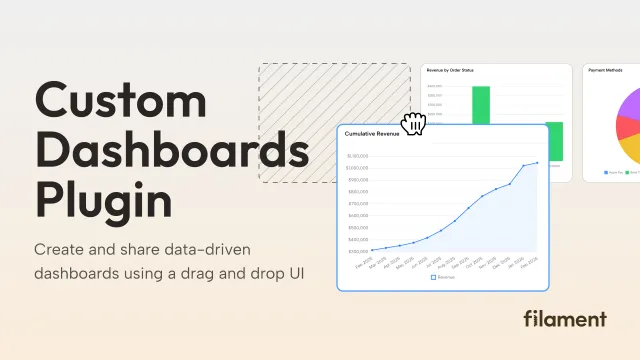
Custom Dashboards
Let your users build and share their own dashboards with a drag-and-drop interface. Define your data sources in PHP and let them do the rest.
 Filament
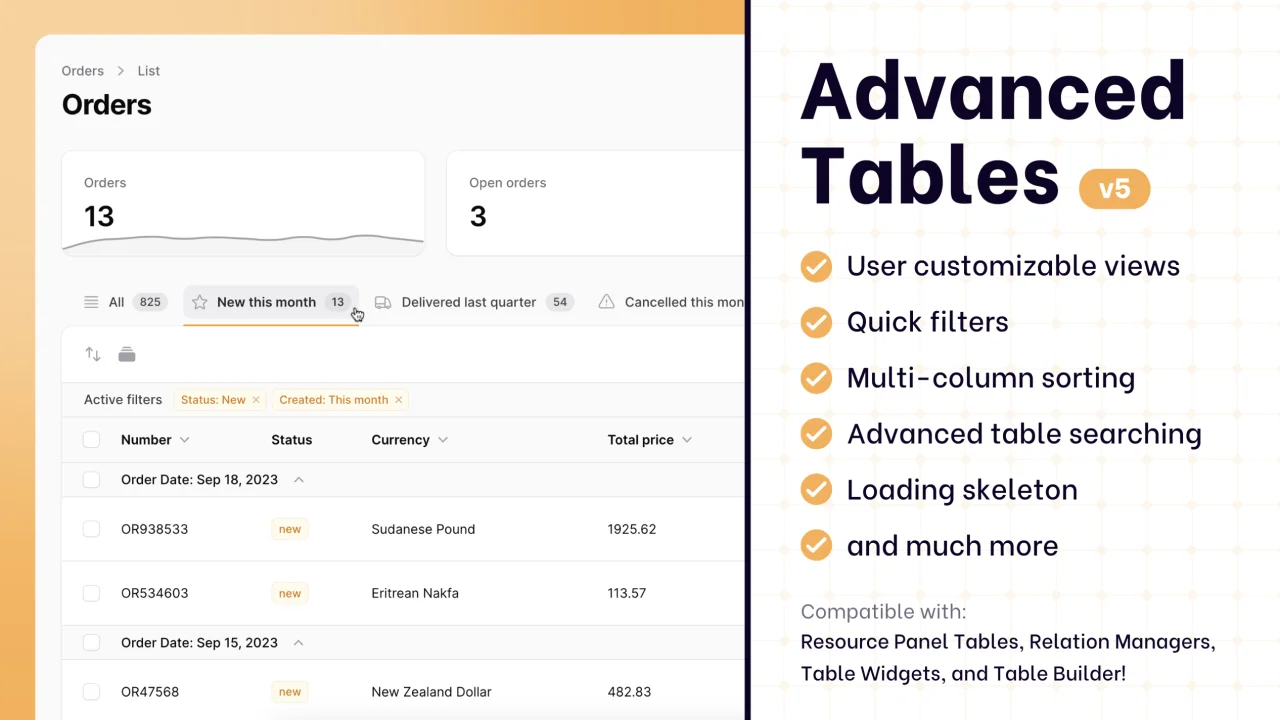
Advanced Tables (formerly Filter Sets)
Supercharge your tables with powerful features like user-customizable views, quick filters, multi-column sorting, advanced table searching, convenient view management, and more. Compatible with Resource Panel Tables, Relation Managers, Table Widgets, and Table Builder!
 Kenneth Sese
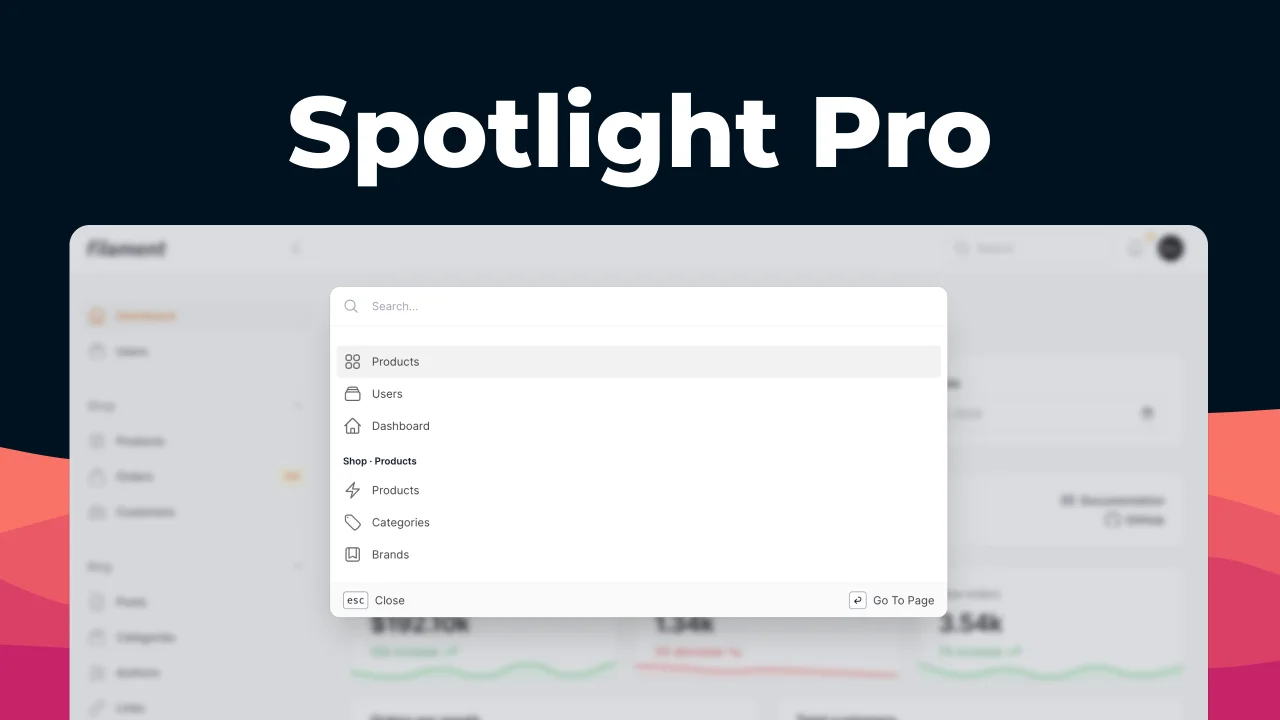
Spotlight Pro
Browse your Filament Panel with ease. Filament Spotlight Pro adds a Spotlight like Command Palette to your Filament Panel.
 Dennis Koch