Locale Switcher by Pruna Catalin
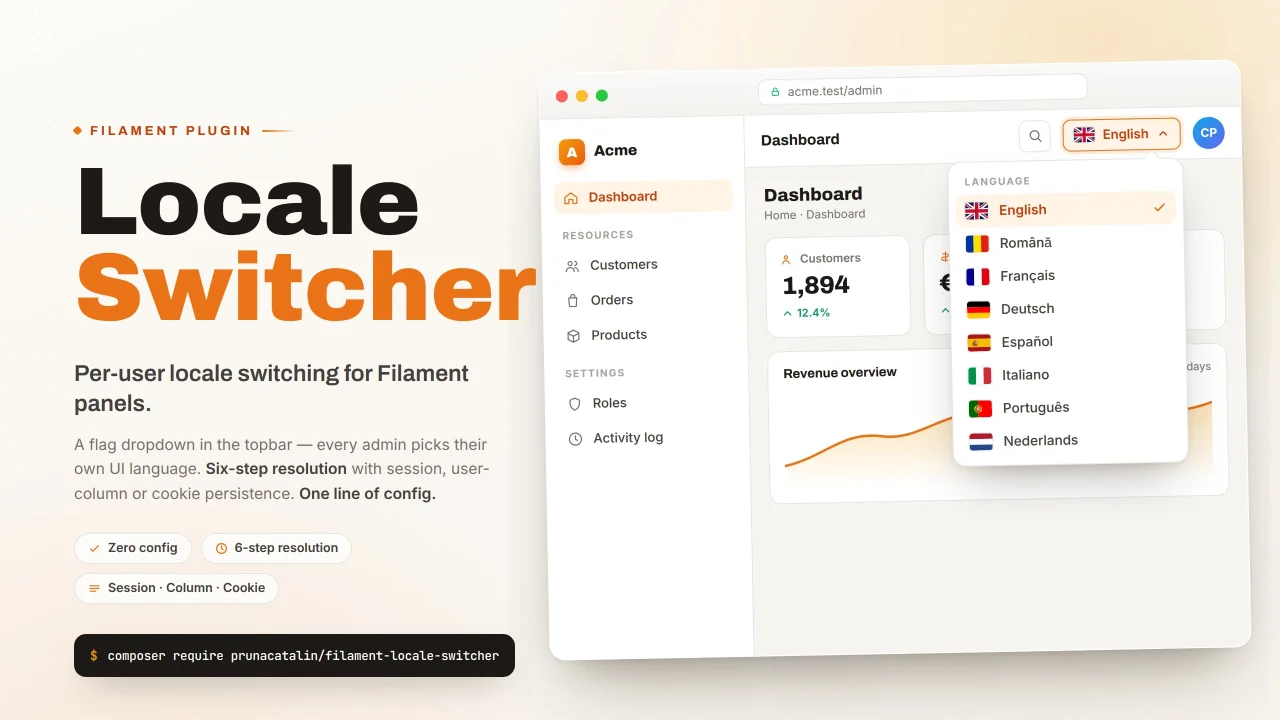
CommunityDrop a flag dropdown in your Filament topbar so every admin picks their own UI language — session, user-column or cookie persistence, six-step resolution, one line of config.
 Author:
Pruna Catalin
Author:
Pruna Catalin
Package health
Automated checks of this plugin's Composer package
15 checks
- Skipped: GitHub Actions pinned to SHA
- Skipped: GitLab CI includes pinned to SHA
- Passed: Open security advisories
- Passed: Dependabot PR responsiveness — No open Dependabot PRs.
- Skipped: Renovate MR responsiveness
- Skipped: Dependabot or Renovate configured
- Skipped: Dependency update cooldown configured
- Failed: Provides a security policy — View details on Plumb
- Passed: Abandoned or archived — No consulted source marks the package abandoned (packagist, github).
- Passed: Commit and release recency — Active: last commit 115 days ago; last release 115 days ago.
-
Passed:
composer.lock not committed by library
—
composer.lockis absent from the released dist archive. - Passed: Dist archive is lean
-
Passed:
Current Laravel version supported
—
Package dependencies resolve together with current Laravel
13.0. -
Passed:
Current PHP version supported
—
Constraint
^8.2supports current PHP8.5. - Skipped: Current Symfony version supported
filament/
namespace. Review the source and install at your own risk. Found
malware or an unresolved security issue the author won't
address?
Report it
.
Documentation
Drop-in locale switcher for Filament v4/v5 panels. Topbar dropdown (or user-menu items), session / per-user / cookie persistence, explicit locale whitelist, six-step resolution chain.
#Install
composer require prunacatalin/filament-locale-switcher
Publish the config (optional — the plugin works without it, but config is the recommended source of truth):
php artisan vendor:publish --tag=filament-locale-switcher-config
If you intend to persist the user's choice on their account, run the migration to add a locale column to users:
php artisan migrate
#Configure
config/filament-locale-switcher.php:
return [
    'locales'     => ['en', 'ro', 'fr', 'it'],
    'labels'      => [
        'en' => 'English',
        'ro' => 'Română',
        'fr' => 'Français',
        'it' => 'Italiano',
    ],
    'flags'       => [
        'en' => '🇬🇧',
        'ro' => '🇷🇴',
        'fr' => '🇫🇷',
        'it' => '🇮🇹',
    ],
    'persist'        => 'user',     // session | user | cookie
    'user_column'    => 'locale',   // column on User when persist=user
    'placement'      => 'topbar',   // topbar | user-menu | both
    'topbar_offset'  => '4.5rem',   // CSS gap between switcher and user-menu
];
#Wire it into your panel
Two lines: register the plugin, append the middleware to your panel middleware list (it MUST run after StartSession).
use Prunacatalin\FilamentLocaleSwitcher\Http\Middleware\ApplyLocale;
use Prunacatalin\FilamentLocaleSwitcher\LocaleSwitchPlugin;

public function panel(Panel $panel): Panel
{
    return $panel
        // …your usual config…
        ->plugin(LocaleSwitchPlugin::make())
        ->middleware([
            // …default Filament middleware (EncryptCookies, StartSession, …)…
            ApplyLocale::class,
        ]);
}
That's it. The plugin reads from config/filament-locale-switcher.php; the dropdown renders in the panel topbar; clicking a flag persists the choice and reloads the current page in that language.
#Per-panel override
Every config key has a matching fluent setter. Useful when a single Laravel app hosts two panels with different policies:
$panel->plugin(
    LocaleSwitchPlugin::make()
        ->locales(['en', 'de'])      // narrower than the global list
        ->persist('cookie')          // override global persist
        ->placement('user-menu'),    // override global placement
);
Setters always win over config.
#Resolution chain (per request)
?lang=xxquery parameter- session value (last switch in this browser)
- cookie (when
persist=cookie) - authenticated user's column (when
persist=user) Accept-Languageheaderconfig('app.locale')
Anything outside the configured locales whitelist is rejected — tampered session/cookie values can never load an arbitrary lang path.
#Testing
composer install
composer test
Pest suite uses Orchestra Testbench with SQLite :memory:. 21 tests / 39 assertions cover the resolver chain, the plugin's config hydration, the middleware, and every controller persistence branch.
#License
MIT.
The author
Laravel & Filament developer at Webdirect, focused on admin panels and line-of-business applications. Most of my day is spent turning messy operational workflows into clean Filament resources, tables, and forms.
I publish open-source plugins whenever an idea shows up more than twice across my own projects. The goal is always the same: make the common case easy, keep the API predictable, and write enough tests that future-me doesn't get burned.
From the same author

Featured Plugins
A selection of plugins curated by the Filament team
Compact Theme
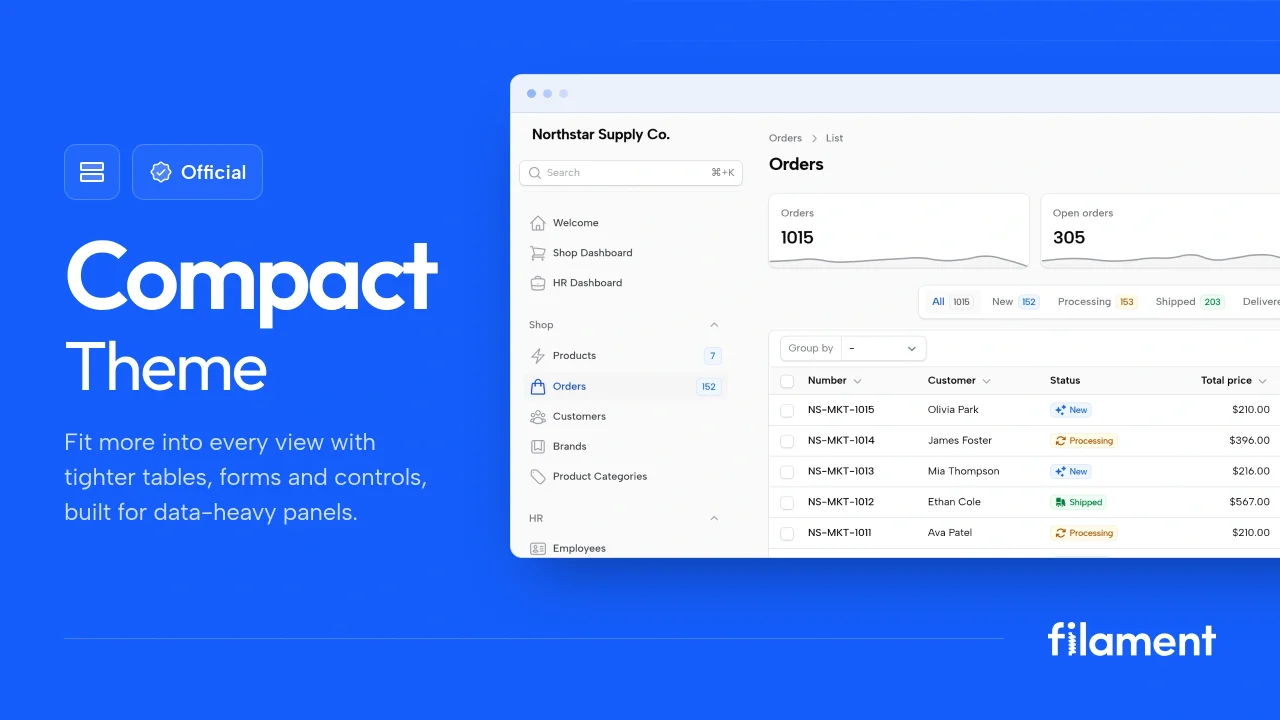
A theme that makes data-heavy panels easier to scan by fitting more useful information on each screen.
 Filament
Spotlight Pro
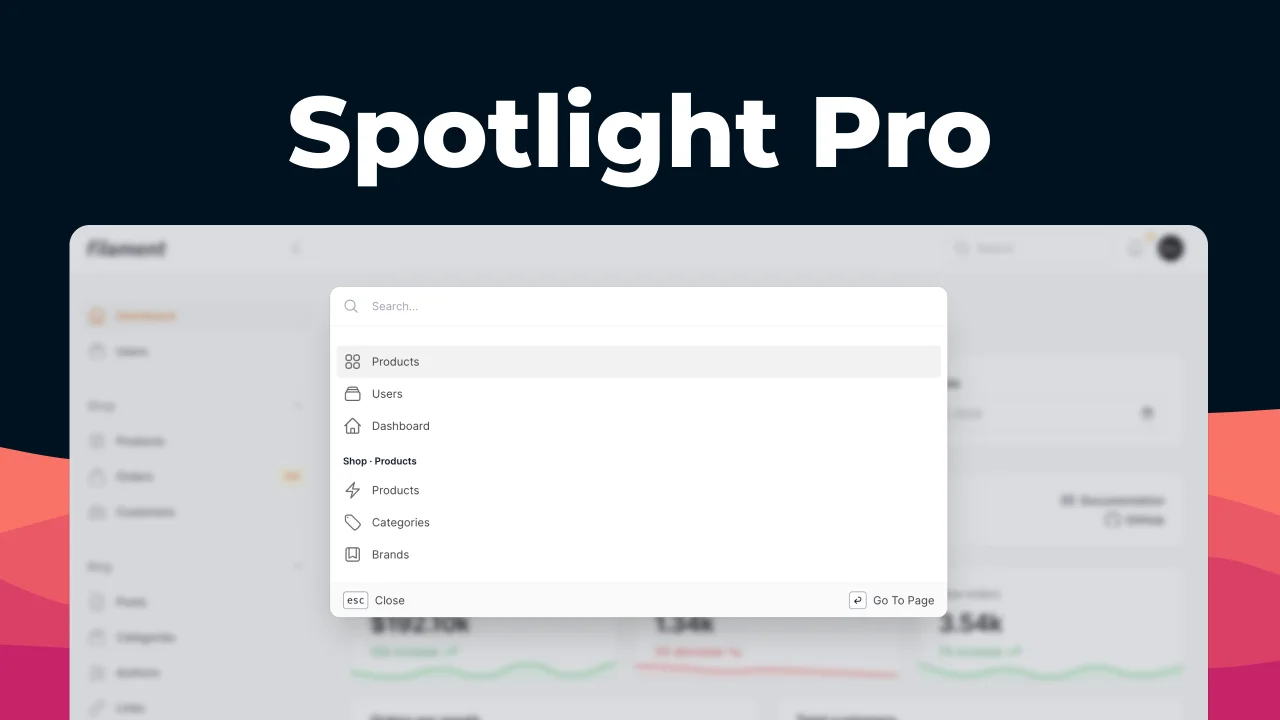
Browse your Filament Panel with ease. Filament Spotlight Pro adds a Spotlight like Command Palette to your Filament Panel.
 Dennis Koch
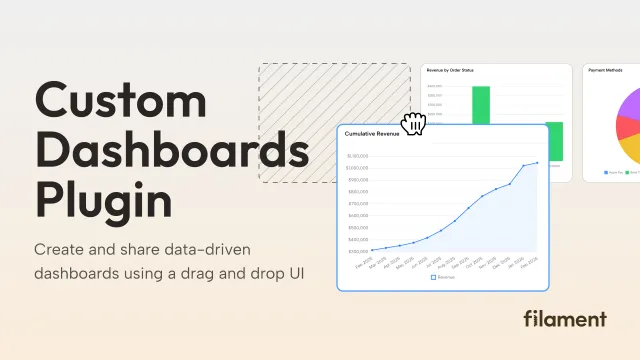
Custom Dashboards
Let your users build and share their own dashboards with a drag-and-drop interface. Define your data sources in PHP and let them do the rest.
Filament