Tenancy by Packstub
CommunityMulti-database tenancy powered by stancl/tenancy v4 — one isolated database per tenant or shared databases with tenant_id scoping, async provisioning, and a load-balanced database pool that scales tenants across multiple database servers.
filament/
namespace. Review the source and install at your own risk. Found
malware or an unresolved security issue the author won't
address?
Report it
.
 Author:
Packstub
Author:
Packstub
Documentation
- Full documentation
- Features
- Screenshots
- Installation
- Getting started
- Scaling across database servers
- Dedicated or shared — your choice, per tenant
- Testing
- Documentation
- Support
- Changelog
- License
One database per tenant. Any number of database servers.
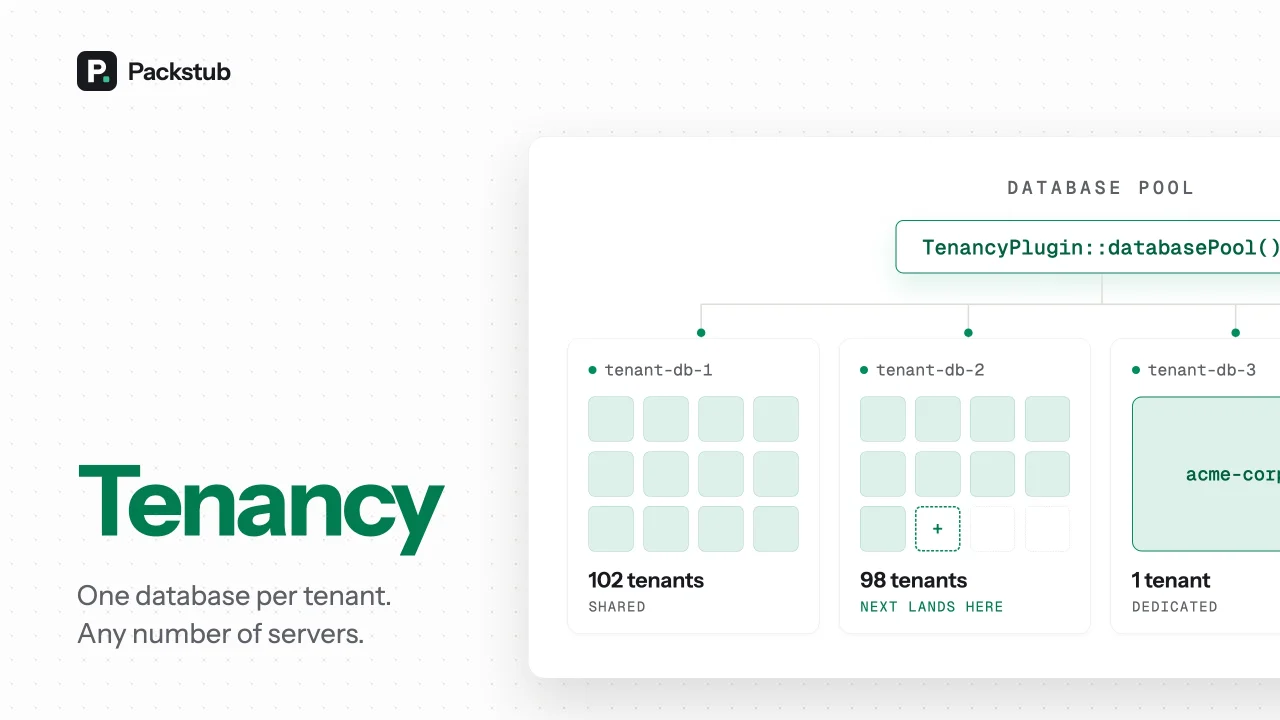
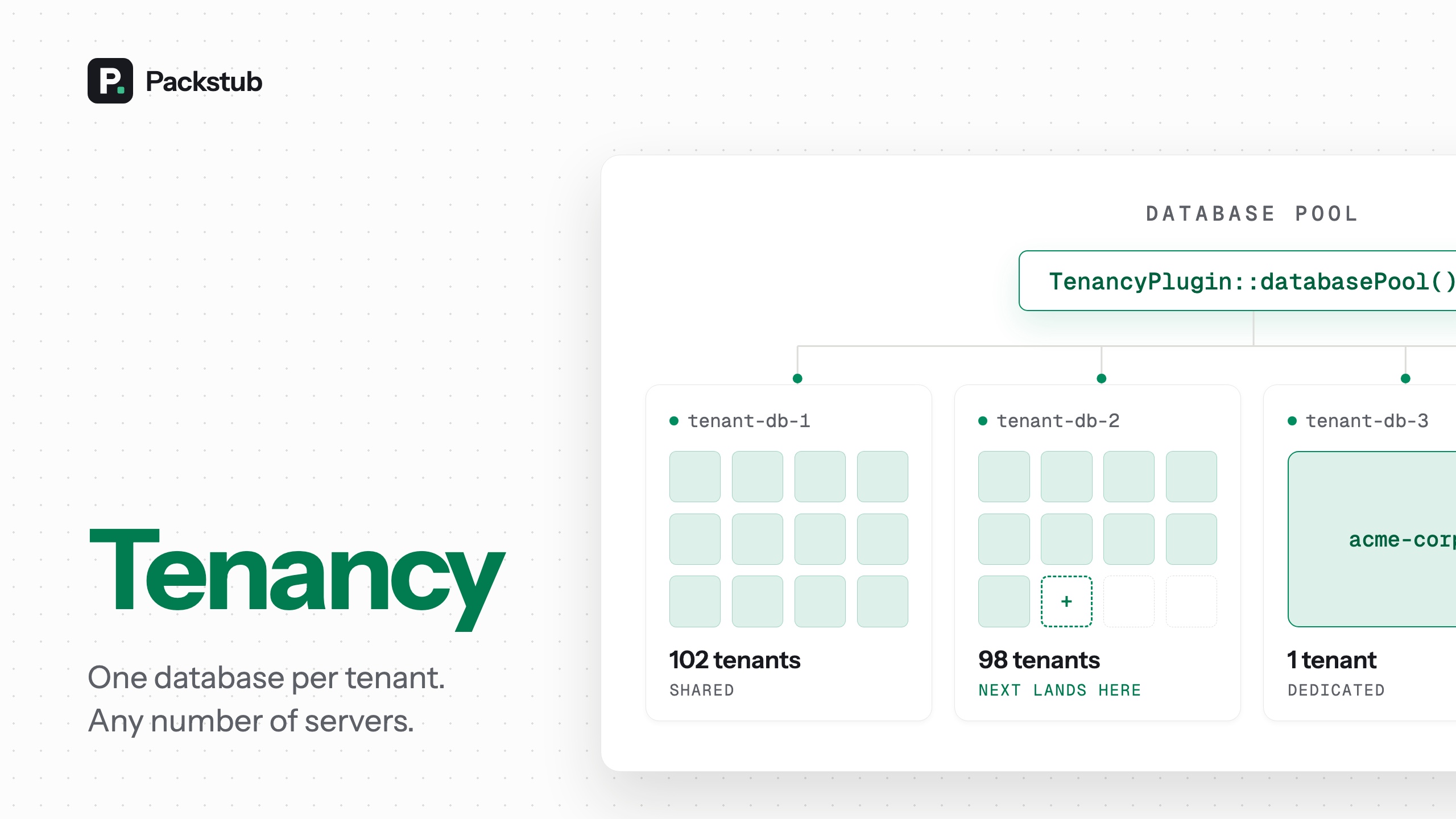
Packstub Tenancy is a premium plugin that brings stancl/tenancy v4 into Filament v5 panels, fully wired: every tenant gets its own isolated database, new signups are provisioned through your queue while they wait in a polished waiting room, and a load-balanced database pool spreads tenants across as many database servers as you need — adding capacity is one line of config. Filament's built-in tenancy is a great fit for shared-database apps; Packstub Tenancy is the bridge to database-per-tenant when isolation and scale become the requirement.
#Full documentation
Every guide — quickstart, configuration reference, horizontal scaling, custom domains, production checklist — lives at packstub.dev/docs/filament-tenancy.
#Features
- One database per tenant — structural isolation; per-tenant backup, export, or deletion is a single database
- Load-balanced database pool — list your servers, and every new tenant lands on the least-loaded one (
least-tenants,round-robin, orweighted); placement is persisted and followed everywhere - Add a server, add capacity — no proxy, no extra hop, no migration of existing tenants
- Pin tenants to a server — data-residency customers stay exactly where you put them
- Two data-separation strategies —
dedicated(database per tenant) orshared(tenant_idscoping across shard databases), selectable per app and overridable per tenant - PostgreSQL Row-Level Security for the shared strategy, via stancl's
tenants:rlstoolchain - Subdomain or path identification — pick one; routing, session cookie domain, and central-domain-aware middleware are wired for you
- Custom domains per tenant — DNS TXT/CNAME verification, a tenant-facing Domains page, single-origin login handoff, and logout-everywhere
- Async provisioning pipeline —
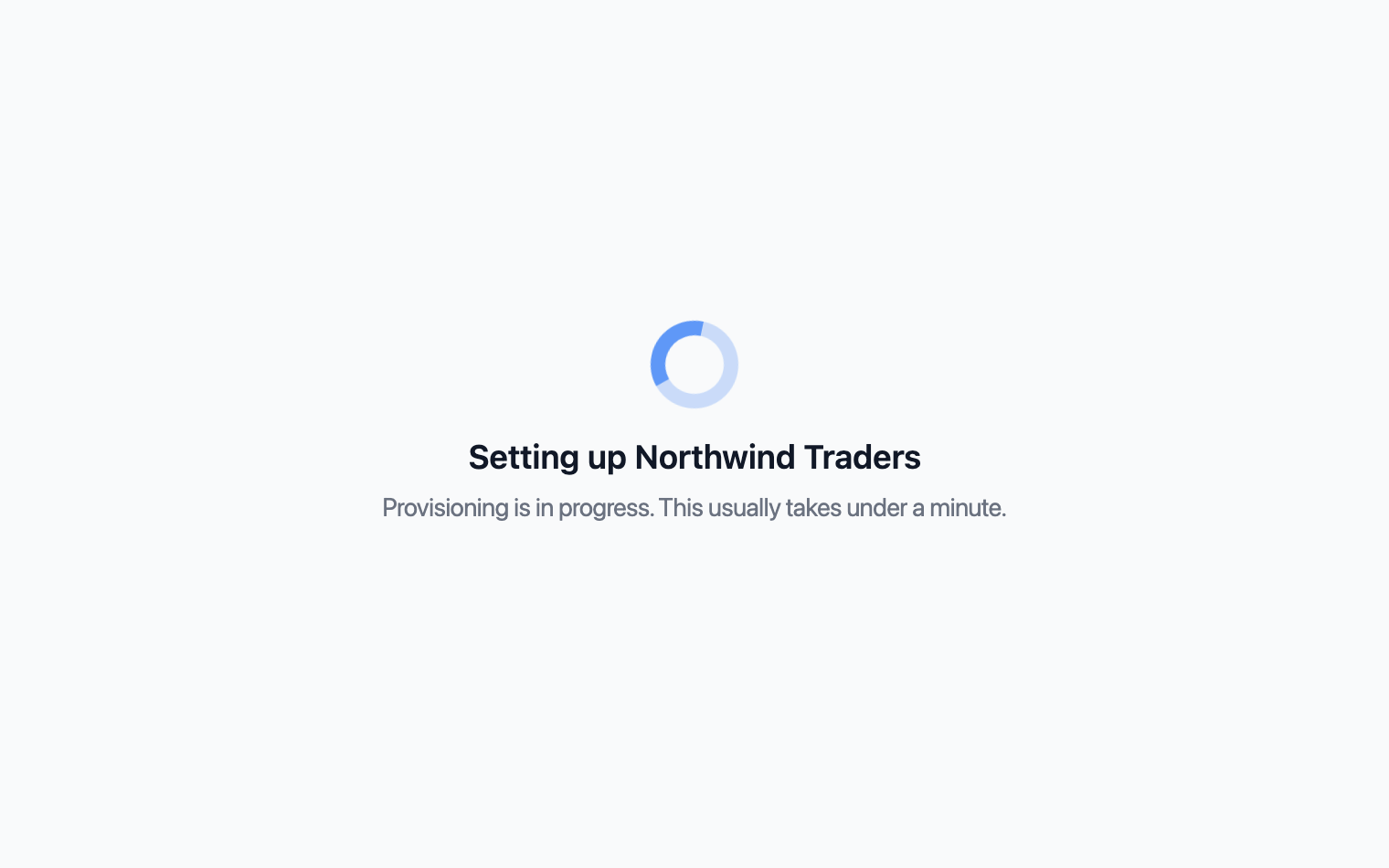
CreateDatabase → MigrateDatabase → SeedDatabase → MarkTenantReadyon your queue, with a retry command for failures - Provisioning waiting room — a Livewire-polled page that redirects the moment the tenant is ready; light and dark themes included
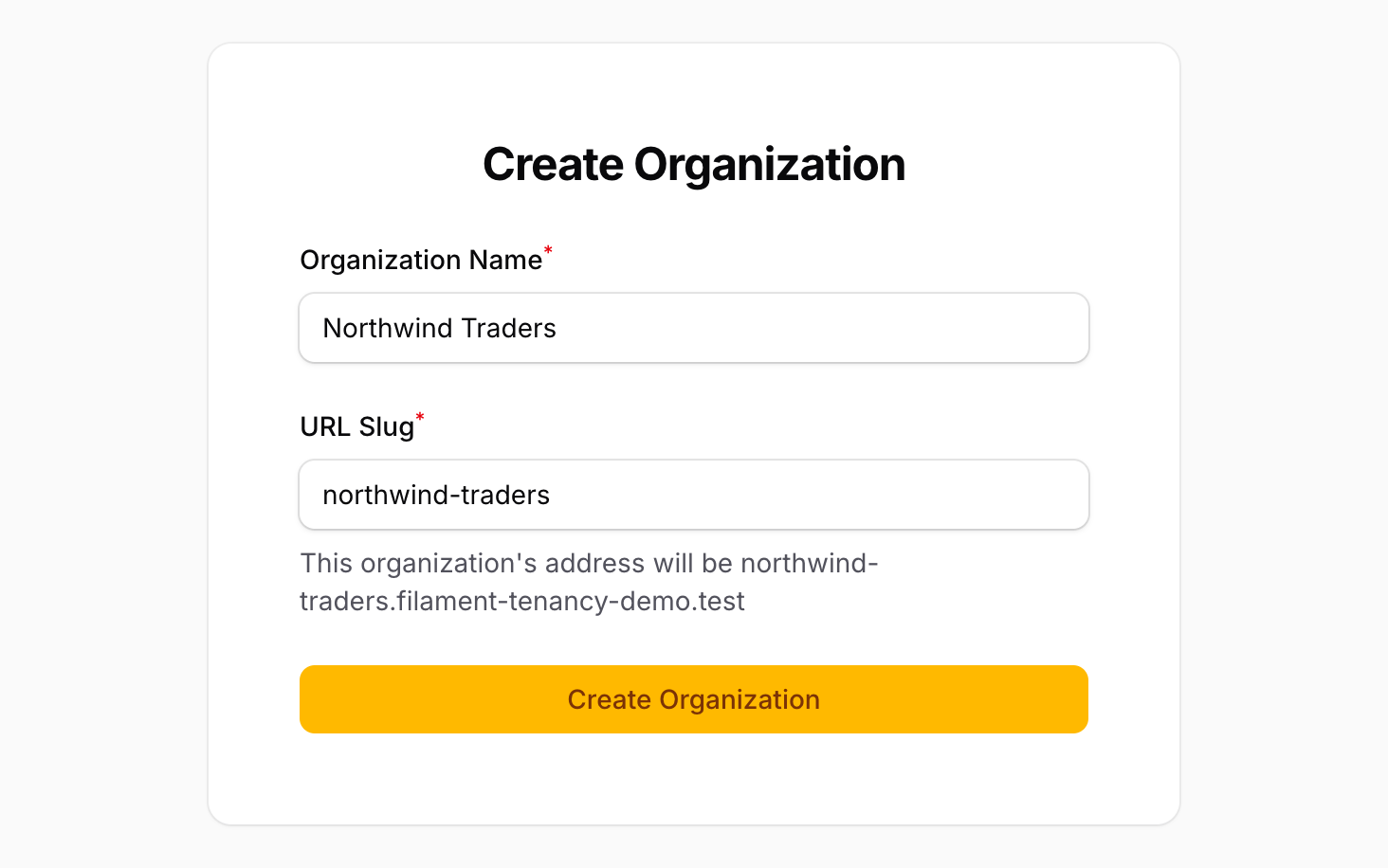
- Onboarding page — a Create Organization form with live slug generation, a preview of the tenant's address, and central-safe uniqueness
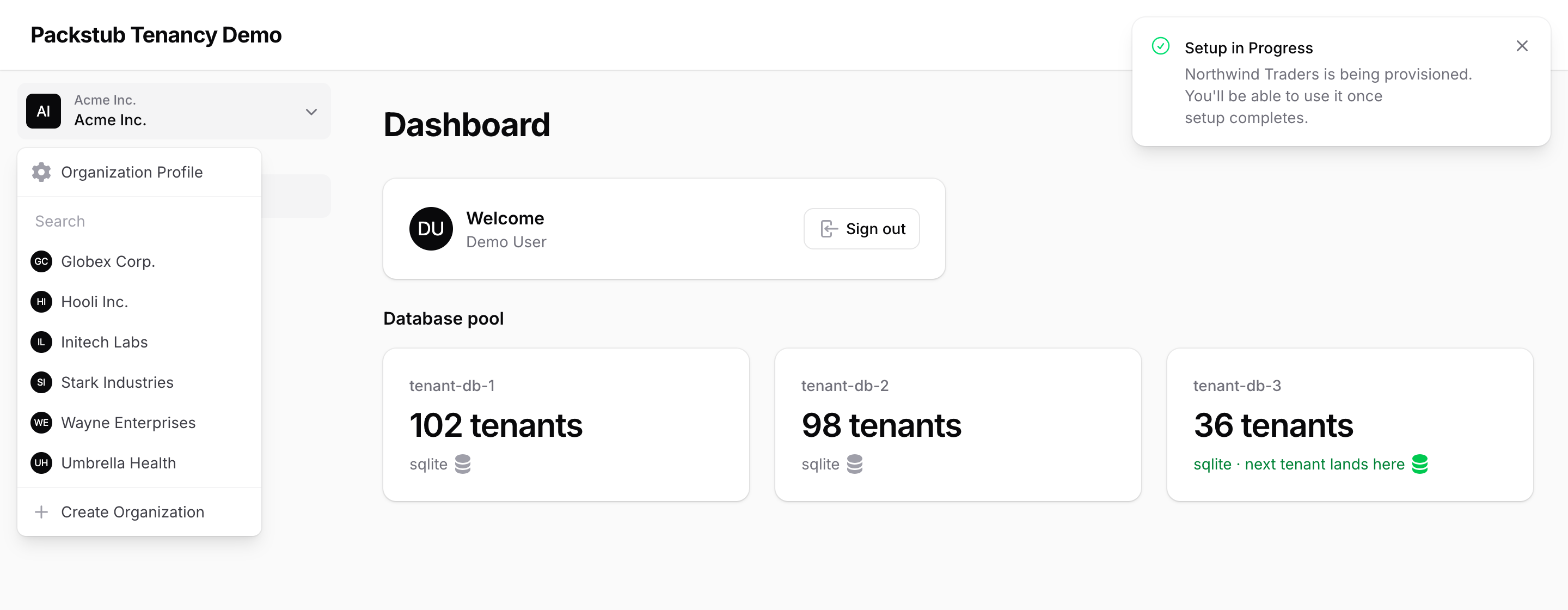
- Ready-tenant gating — the switcher lists only ready tenants and half-provisioned panels stay unreachable
- Pool overview widget — live tenant counts per server from any panel, plus a
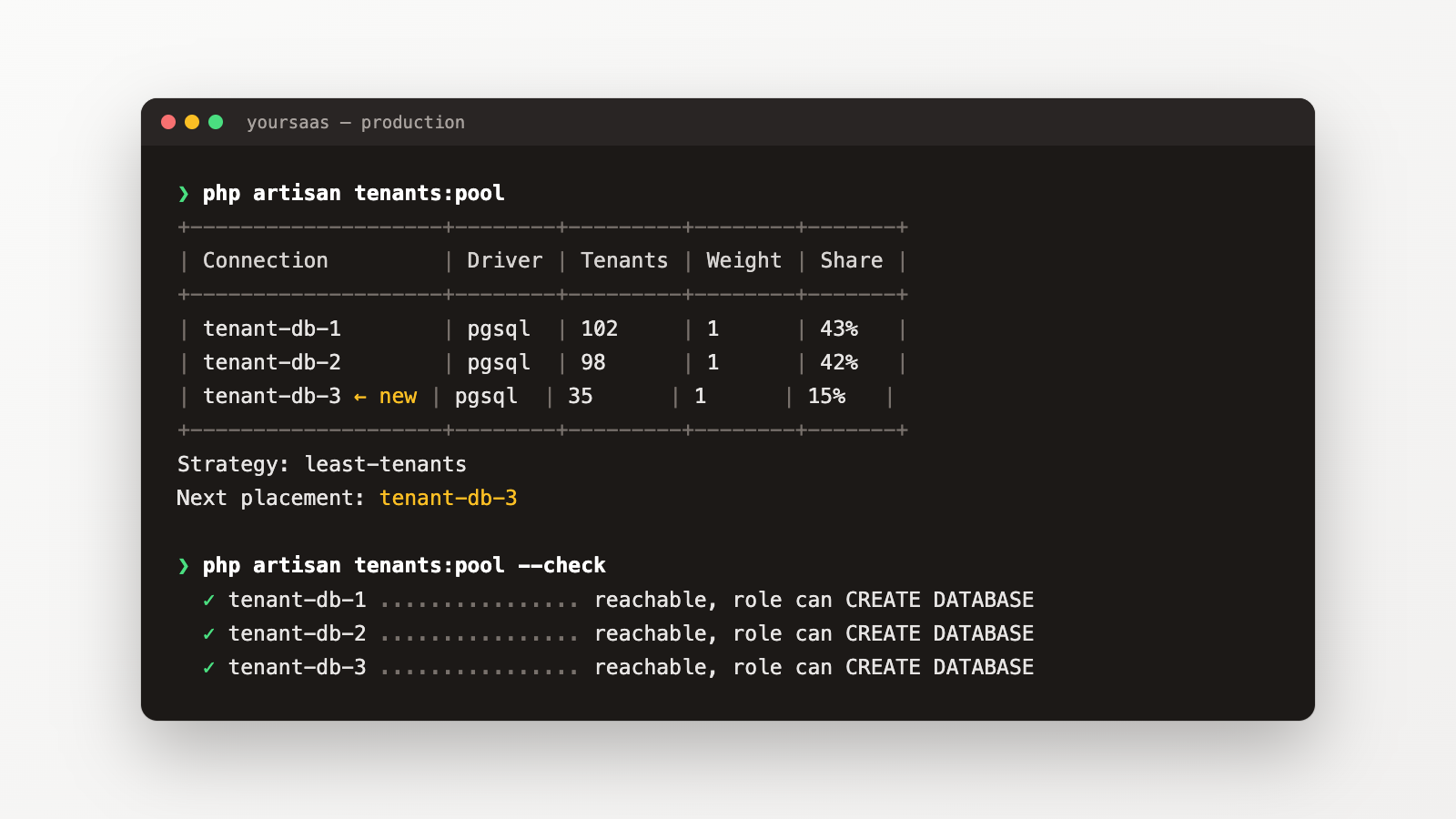
tenants:poolcommand - Cross-database resource syncing — mirror users, catalogs, or licenses between central and tenant databases with one fluent call
- Strategy-safe defaults —
Resource::scopeToTenant()follows your strategy automatically; Octane per-request reset; billing provider hooks - Translations and publishable views — restyle the waiting room, add a locale
- Test helpers —
TenantTestHelpersboots tenancy inside your own test suite with one trait
#Screenshots
Pool overview widget — live tenant counts per server with the next-placement marker
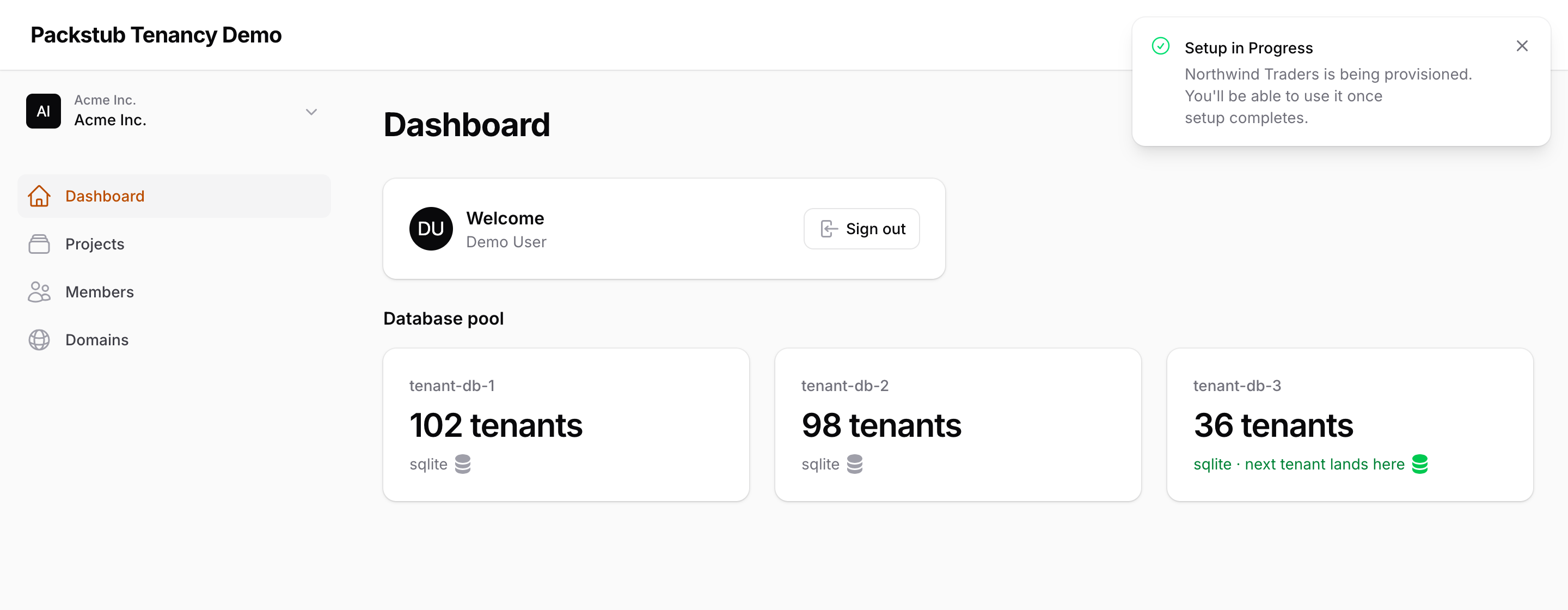
tenants:pool command — tenant distribution across three PostgreSQL servers
Onboarding — Create Organization with live slug generation and address preview
Provisioning waiting room — shown while the tenant database is being created
Tenant switcher — searchable, ready-tenants only, with a provisioning notification
#Installation
#Requirements
| Package | Filament | Laravel | PHP | stancl/tenancy |
|---|---|---|---|---|
1.x |
^5.0 |
^13.0 |
8.4+ |
4.x |
- MySQL, MariaDB, or PostgreSQL for tenant databases; the database user needs permission to create and drop databases
- A queue worker (tenant provisioning runs as jobs)
- Wildcard DNS for subdomain identification — Herd and Valet resolve
*.myapp.testautomatically
stancl/tenancy v4 has no stable tag on Packagist yet — nothing to do on your side. The Packstub registry serves a vetted v4 snapshot as a regular stable release, so a plain
composer requireworks with default stability settings. How that works →
#Purchasing a license
Licenses are sold at packstub.dev/plugins/filament-tenancy. After purchase, sign in to your Packstub dashboard and create an access token on the Install Guide page — it shows the commands below with your token filled in.
#Installing with Composer
Add the Packstub registry and your token, then require the package:
composer config repositories.packstub-filament-tenancy composer https://packstub.dev/composer/filament-tenancy
composer config --auth http-basic.packstub.dev pkg_xxxxxxxxxxxxxxxx your-token-secret

composer require packstub/filament-tenancy
Run the interactive installer — it publishes the config, asks subdomain vs. path, writes your choice into the published config, and prints the exact wiring for your mode:
php artisan packstub-tenancy:install
Migrations run straight from the package, so plugin updates can ship schema changes with no extra steps. Prefer to own them? Publish the migrations →
#Getting started
Add two traits to your user model and register the plugin on your panel:
// app/Models/User.php
class User extends Authenticatable implements HasDefaultTenant, HasTenants
{
    use CentralConnection;     // identity lives in the central database
    use HasPackstubTenants;    // tenants, default tenant, ready-filtering
}

// app/Providers/Filament/AdminPanelProvider.php
public function panel(Panel $panel): Panel
{
    return $panel
        ->id('admin')
        ->plugin(TenancyPlugin::make());
}
Start a queue worker, and your first signup provisions its own database. Full walkthrough: Quickstart →
#Scaling across database servers
Define one ordinary Laravel connection per server, list them as a pool, and every new tenant lands on the least-loaded server. Placement is persisted per tenant — provisioning, runtime connections, migrations, and deletion all follow it automatically.
TenancyPlugin::make()
    ->databasePool(['tenant-db-1', 'tenant-db-2', 'tenant-db-3'])
    // strategies: least-tenants (default) · round-robin · weighted
Need a tenant on a specific server? Pin it — pins are never rebalanced:
Organization::create([
    'name' => 'Fjord GmbH',
    'slug' => 'fjord',
    'tenancy_db_connection' => 'residency-eu-1',
]);
Strategies, the add-a-server runbook, privileges, and operations: Horizontal scaling →
#Dedicated or shared — your choice, per tenant
Both separation models ship behind one config key, and they compose: free tier in the central database, standard tier on shared shards, enterprise on private databases, regulated customers pinned to their own servers — one app, one plugin.
// config/packstub-tenancy.php
'database_strategy' => 'dedicated',  // one database per tenant (default)
'database_strategy' => 'shared',     // many tenants per database, tenant_id-scoped

// Any tenant can override the app default
Tenant::create([
    'name' => 'Enterprise Co',
    'slug' => 'enterprise',
    'isolation_mode' => 'dedicated',
]);
Setup for each model: Database strategies →
#Testing
The package ships with an extensive test suite covering provisioning success and failure paths, transaction-safe onboarding, path-mode Livewire flows, resource-syncing cascades, custom tenant models, and pool placement. A multi-server harness boots three real PostgreSQL servers and verifies end to end that tenants distribute across them, each database exists on its assigned server, and deleting a tenant drops only its own database.
Bring the same confidence to your app with the exported TenantTestHelpers trait (createTenantWithUser(), actingAsTenant(), …). Testing guide →
#Documentation
| Guide | What's inside |
|---|---|
| Quickstart | Zero to first tenant in 10 minutes |
| Installation | Registry auth, installer, per-mode wiring, annotated config |
| Horizontal scaling | The database pool: strategies, add-a-server runbook, pinning |
| Database strategies | Dedicated vs. shared vs. hybrid |
| Configuration | Every config key and its fluent twin |
| Custom domains | Verification, sign-in handoff, logout-everywhere |
| Customizing the UI | Publishable views and translations |
| Resource syncing | Shared users and catalogs across databases |
| Testing | Test helpers and the multi-server harness |
| Production | DNS/TLS, queues, Octane, backups, pool monitoring |
| Troubleshooting | Symptom-first fixes |
#Support
- Email: support@packstub.dev — answered within one business day
- Issues: private issue tracker access comes with your license
- Security: report privately to support@packstub.dev; tenant-isolation reports get highest priority
#Changelog
Every release is documented in the package CHANGELOG.md, with upgrade notes in UPGRADE.md. Config keys, the fluent API, and published views are treated as public API and follow semver.
#License
Packstub Tenancy is commercial software. Every license includes the full source code, 12 months of updates and support, and a perpetual license for the versions you received.
- Solo — one production project, unlimited developers
- Unlimited — unlimited projects, including client work
Redistribution and resale are not permitted; the full license agreement ships with the package. Get a license →
The author
Packstub builds plugins for Filament and Laravel, from open-source utilities to paid infrastructure for multi-tenant SaaS. It is the author of Packstub Tenancy, which brings stancl/tenancy's database-per-tenant model to Filament panels, and Filament Account Switcher, which adds linked accounts, impersonation, and developer logins with an audit trail. Packstub is run by XLITE, a web development studio based in Moldova.
From the same author
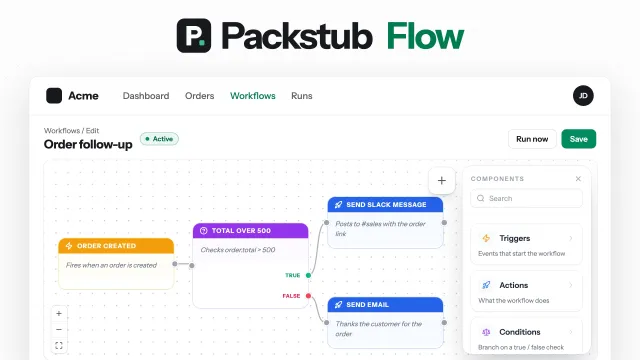
Flow
Visual workflows in your panel: record, schedule and webhook triggers, conditions, email, Slack and HTTP actions, approvals.
Author:
Packstub
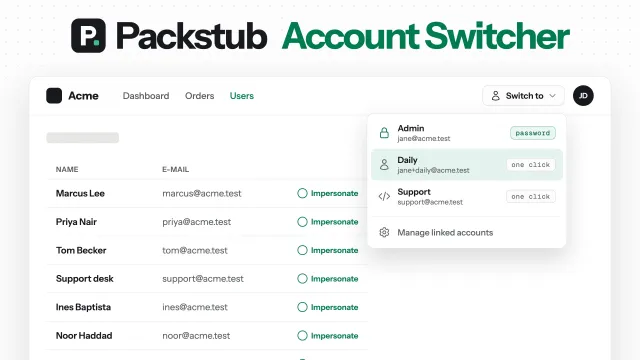
Account Switcher
Switch between accounts without signing out: linked sub-accounts with password-confirmed escalation, impersonation with a switch-back banner, and one-click developer logins.
Author:
Packstub
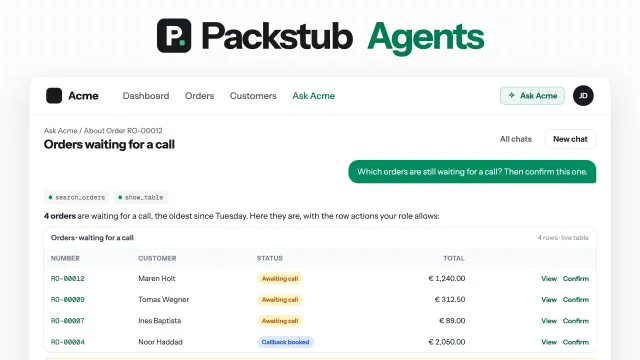
Agents
An AI assistant in your panel and an MCP server for Claude Code from one tool list, with the panel's own authorization.
Author:
Packstub
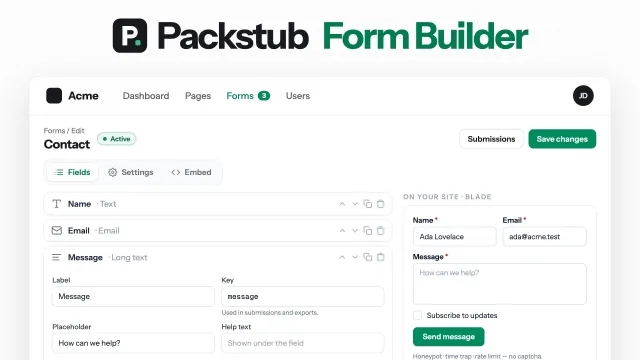
Form Builder
Build forms in your Filament panel, render them with Blade, Livewire or JSON, and collect, export and forward submissions.
Author:
Packstub
Featured Plugins
A selection of plugins curated by the Filament team
Blueprint
Filament Blueprint is a premium Laravel Boost extension that helps AI agents produce accurate, detailed implementation plans and security reports for Filament apps.
 Filament
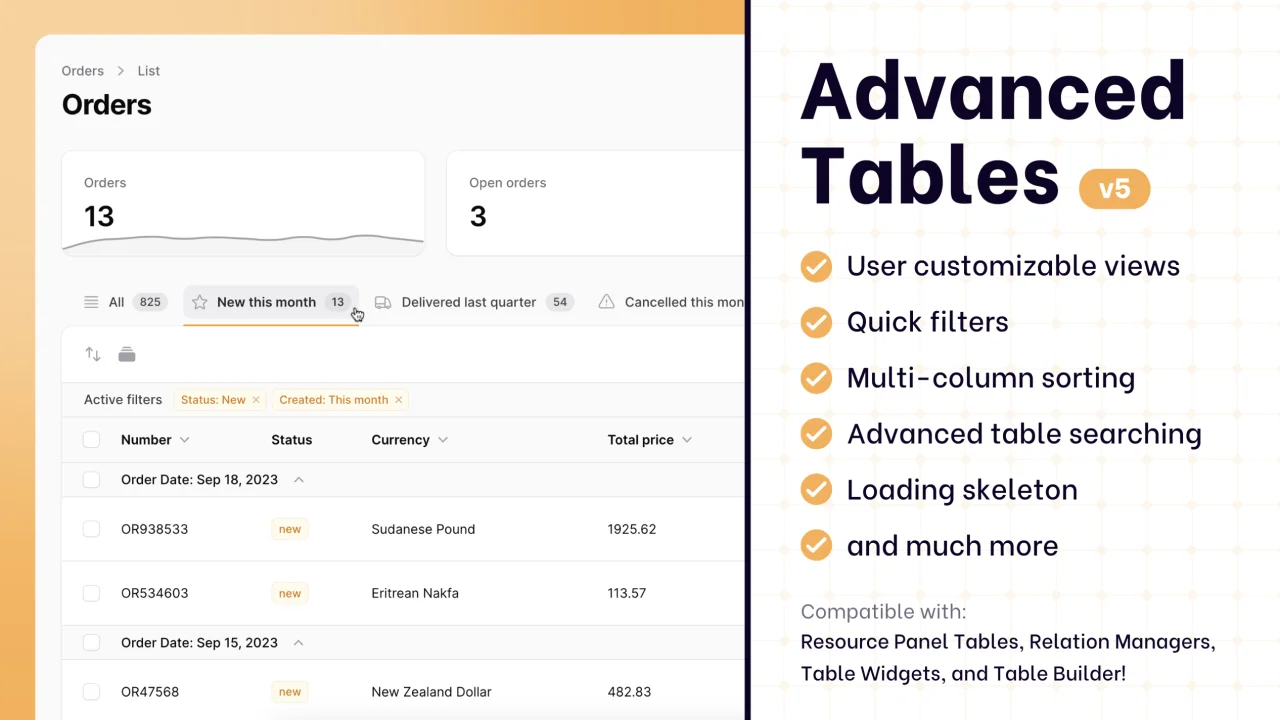
Advanced Tables (formerly Filter Sets)
Supercharge your tables with powerful features like user-customizable views, quick filters, multi-column sorting, advanced table searching, convenient view management, and more. Compatible with Resource Panel Tables, Relation Managers, Table Widgets, and Table Builder!
 Kenneth Sese
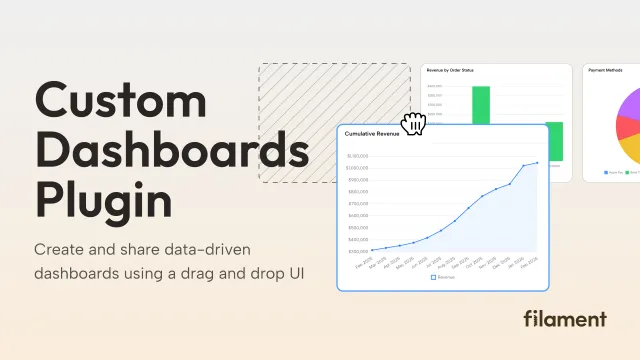
Custom Dashboards
Let your users build and share their own dashboards with a drag-and-drop interface. Define your data sources in PHP and let them do the rest.
Filament