Easy Footer
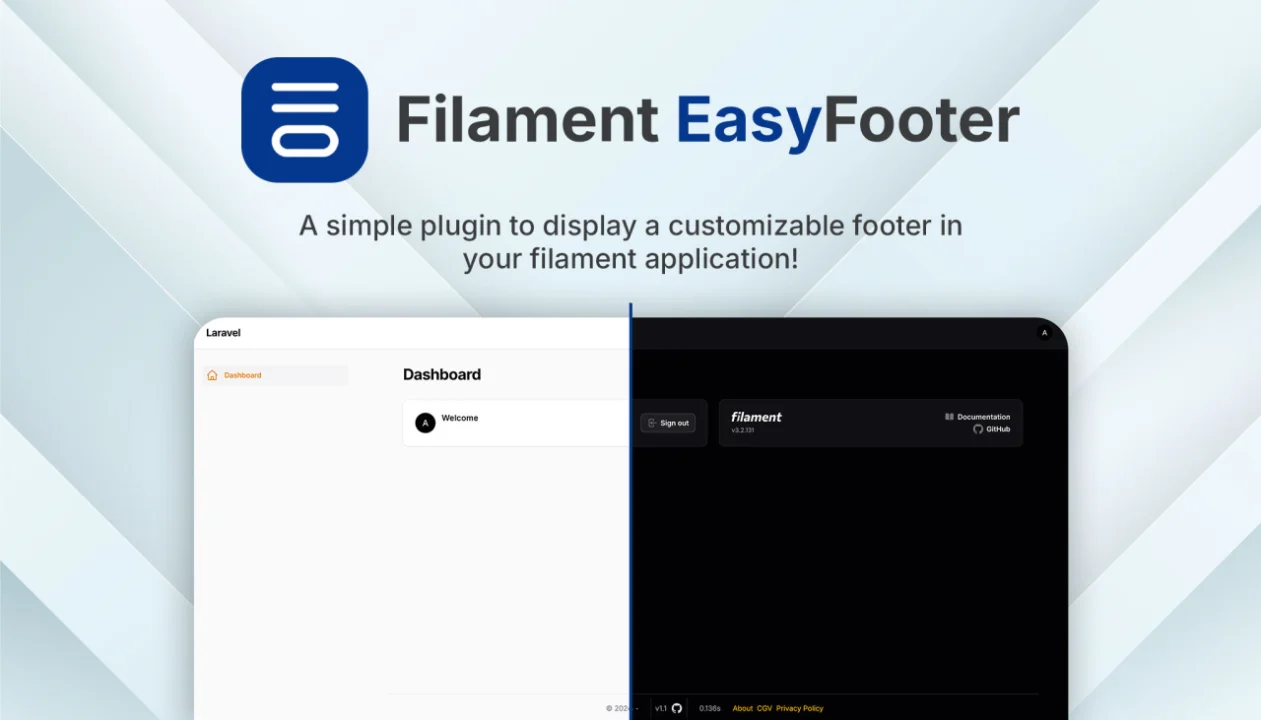
CommunityA simple plugin to display a customizable footer in your Filament application.
 Author:
Devonab
Author:
Devonab
Package health
BetaAutomated checks of this plugin's Composer package
15 checks
- Passed: GitHub Actions pinned to SHA
- Skipped: GitLab CI includes pinned to SHA
- Passed: Open security advisories
- Passed: Dependabot PR responsiveness — No open Dependabot PRs.
- Skipped: Renovate MR responsiveness
- Passed: Dependabot or Renovate configured
- Passed: Dependency update cooldown configured
- Passed: Provides a security policy
- Passed: Abandoned or archived — No consulted source marks the package abandoned (packagist, github).
- Passed: Commit and release recency — Active: last commit 1 days ago; last release 11 days ago.
-
Passed:
composer.lock not committed by library
—
composer.lockis absent from the released dist archive. - Passed: Dist archive is lean
-
Passed:
Current Laravel version supported
—
Package dependencies resolve together with current Laravel
13.0. -
Passed:
Current PHP version supported
—
Constraint
^8.1|^8.2|^8.3|^8.4supports current PHP8.5. - Skipped: Current Symfony version supported
filament/
namespace. Review the source and install at your own risk. Found
malware or an unresolved security issue the author won't
address?
Report it
.
Documentation
- Navigation
- Installation
- Usage
- Configurations
- Testing
- Changelog
- Contributing
- Security Vulnerabilities
- Credits
- License





| FilamentPHP | Package version | Branch |
|---|---|---|
| v3.x | v1.x | filament-v3 |
| v4.x | v2.x | main |
| v5.x | v2.x | main |
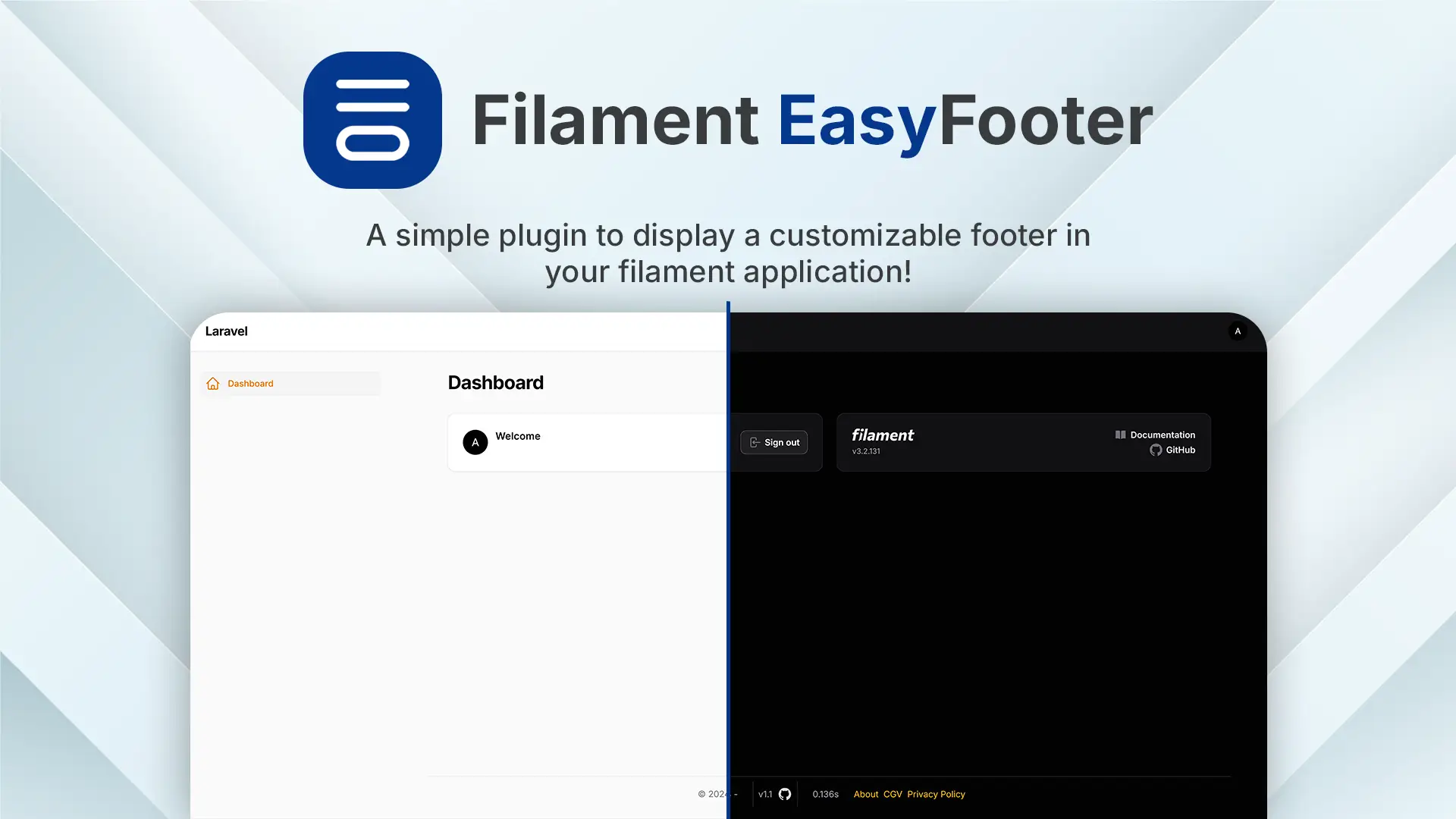
This filament Plugin provides an easy and flexible way to add a customizable footer to your FilamentPHP application. This plugin integrates seamlessly with Filament's admin interface, enabling you to enhance your application's user experience with a good looking footer.
#Navigation
- Installation
- Usage
- Configurations
- Testing
- Contributing
- Changelog
- Security Vulnerabilities
- Credits
- License
#Installation
First, you can start to install the package via composer:
composer require devonab/filament-easy-footer:^2.0
You can publish the config file with. This file is needed if you want to change the default:
php artisan vendor:publish --tag="filament-easy-footer-config"
Optionally, you can publish the views using
php artisan vendor:publish --tag="filament-easy-footer-views"
This is the contents of the published config file:
return [
    'app_name' => null,

    'github' => [
        'repository' => null,
        'token' => null,
        'cache_ttl' => 3600,
    ],
];
#Usage
To start using this plugin, simply add it to the Filament provider's plugin array.
use Devonab\FilamentEasyFooter\EasyFooterPlugin;

->plugins([
    EasyFooterPlugin::make(),
])
#Custom theme
You will need to create a custom theme for the footer styles to be applied correctly.
Once that is done, add this line to your theme.css file before compiling everything with npm run build.
@source '../../../../vendor/devonab/filament-easy-footer/resources/views/**/*';
#Configurations
#Enable or Disable the Footer
You can enable or disable the footer entirely using the following configuration:
use Devonab\FilamentEasyFooter\EasyFooterPlugin;

->plugins([
    EasyFooterPlugin::make()
    ->footerEnabled() // true by default,
]);
Without this configuration, the footer will be enabled by default.
#Footer position
You can choose the position of the footer by using this configuration :
use Devonab\FilamentEasyFooter\EasyFooterPlugin;

->plugins([
    EasyFooterPlugin::make()
    ->withFooterPosition('footer'),
])
You can choose between 3 positions, represented by their corresponding render hooks
footer: panels::footer (by default)sidebar: panels::sidebar.nav.endsidebar.footer: panels::sidebar.footer
use Devonab\FilamentEasyFooter\EasyFooterPlugin;

->plugins([
    EasyFooterPlugin::make()
    ->withFooterPosition('footer'),
])
use Devonab\FilamentEasyFooter\EasyFooterPlugin;

->plugins([
    EasyFooterPlugin::make()
    ->withFooterPosition('sidebar'),
])
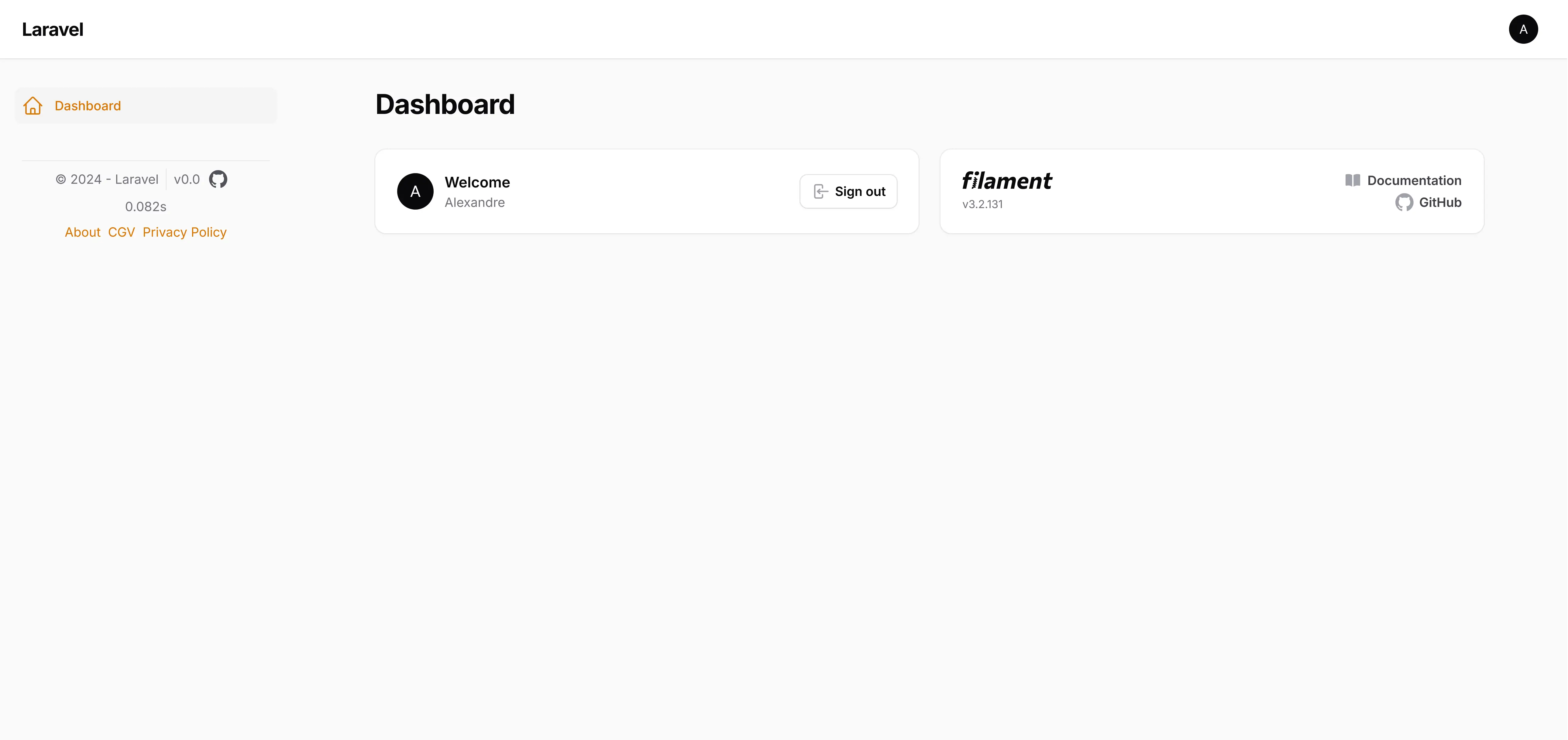
use Devonab\FilamentEasyFooter\EasyFooterPlugin;

->plugins([
    EasyFooterPlugin::make()
    ->withFooterPosition('sidebar.footer'),
])
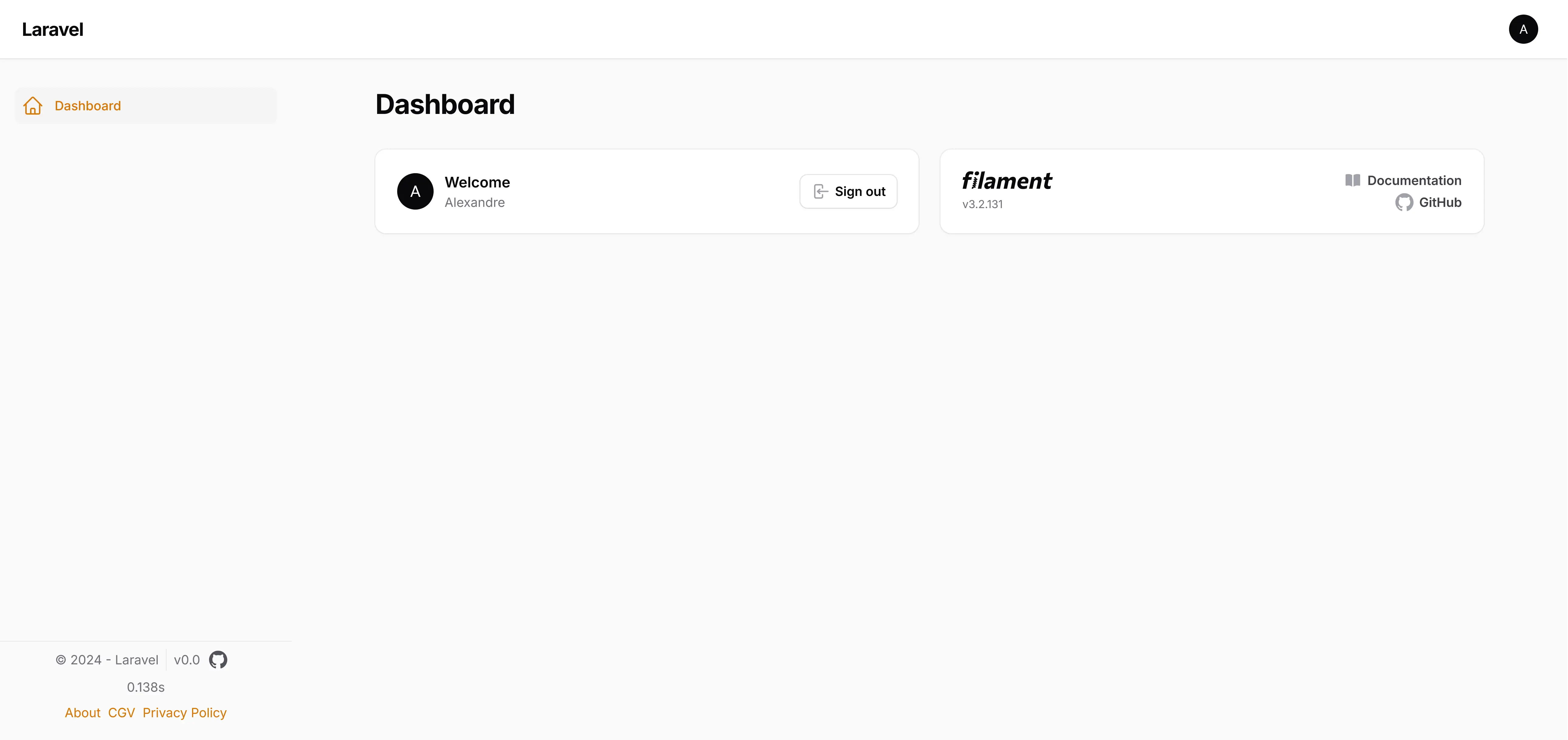
#Custom sentence

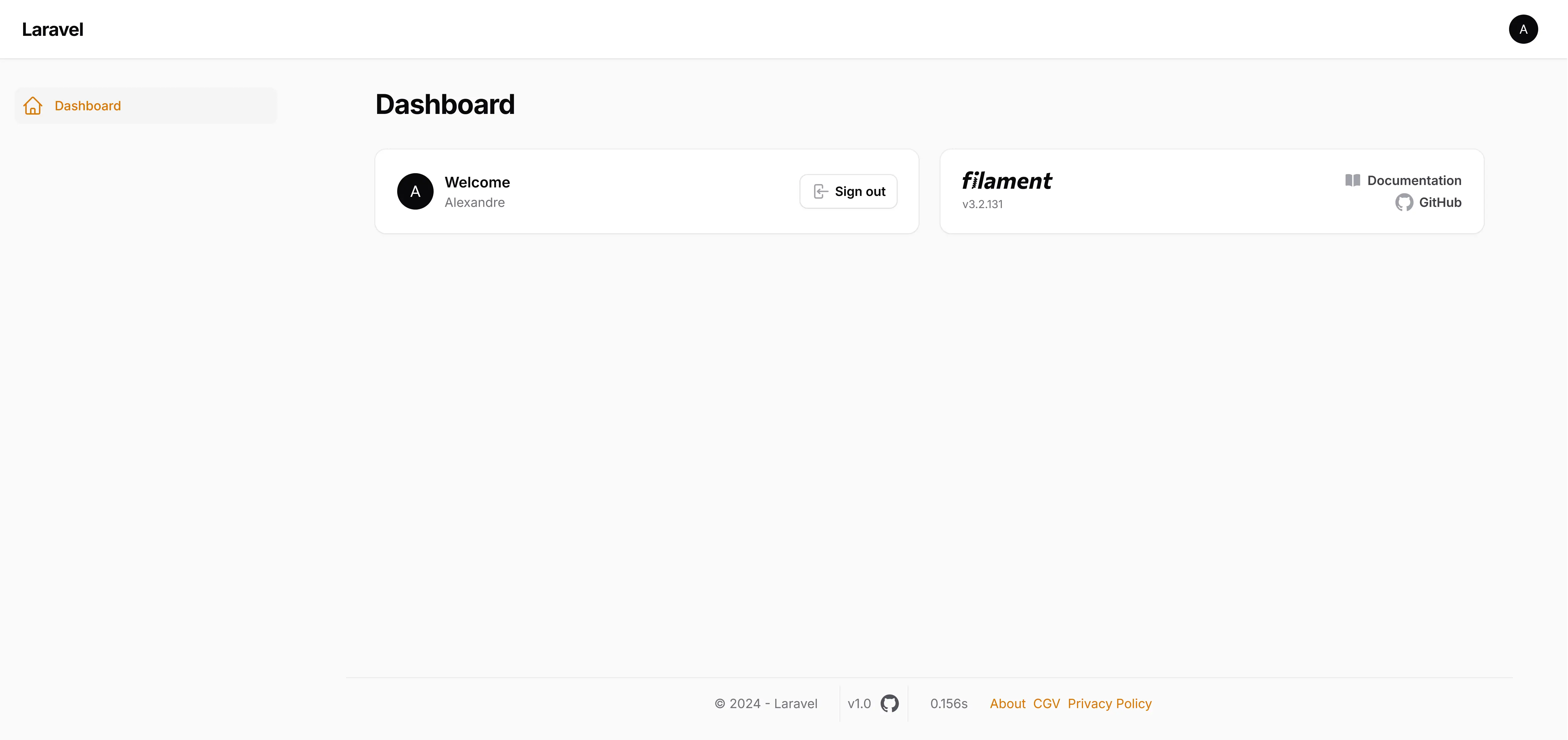
By default, the plugin will display the name of your application (configured from your .ENV), or the app_name key in the plugin config file,next to the copyright. You can change the phrase by publishing the plugin configuration file.
If you prefer a more personalized approach, you can use the following method:
use Devonab\FilamentEasyFooter\EasyFooterPlugin;

->plugins([
    EasyFooterPlugin::make()
    ->withSentence('your sentence'),
])
The method accepts a string or HTMLString as a parameter. With this, you can get the result you want. For example, for the result shown in the image above :
use Devonab\FilamentEasyFooter\EasyFooterPlugin;

->plugins([
    EasyFooterPlugin::make()
    ->withSentence(new HtmlString('<img src="https://static.cdnlogo.com/logos/l/23/laravel.svg" style="margin-right:.5rem;" alt="Laravel Logo" width="20" height="20"> Laravel'))
,
])
The authorized tags are as follows: <strong><img><a><em><span><b><i><small>.
#Show GitHub version

You can show the GitHub version of your application by using this configuration :
use Devonab\FilamentEasyFooter\EasyFooterPlugin;

->plugins([
    EasyFooterPlugin::make()
    ->withGithub(showLogo: true, showUrl: true)
])
- showLogo : Display the GitHub logo next to the version
- showUrl : Add an
<a>tag to the Github URL around the logo
To make this one work, you need to publish the plugin configuration file and set the following keys :
return [
    'app_name' => null,

    'github' => [
        'repository' => null, #user/name-of-the-repo
        'token' => null, # Recommended but not compulsory for all repos, required for private repos
        'cache_ttl' => 3600, # in seconds, 3600 by default
    ],
];
If needed, you can generate a token here. The token need to have at least the read-only permission on the "Contents" scope in Repository permissions.
#Show installed version
You can show the currently installed Composer version of your application in the footer by using this configuration :
use Devonab\FilamentEasyFooter\EasyFooterPlugin;

->plugins([
    EasyFooterPlugin::make()
    ->withShowInstalledVersion()
])
This works independently of ->withGithub() and does not perform any GitHub API call: it only reads the version Composer resolved for your application.
If you also want to compare it against the latest GitHub release and flag when an update is available, combine it with ->withGithub() :
use Devonab\FilamentEasyFooter\EasyFooterPlugin;

->plugins([
    EasyFooterPlugin::make()
    ->withGithub()
    ->withShowInstalledVersion(showLatest: true, showUpdatable: true)
])
- showLatest : Display the latest GitHub release next to the installed version
- showUpdatable : Display an "available" badge when the installed version is older than the latest release
showLatest and showUpdatable require ->withGithub() to be enabled, since they need to fetch the latest tag from GitHub.
If Composer cannot resolve the installed version (for example, the application isn't checked out from its VCS), you can provide a fallback config key that will be read instead :
return [
    'app_name' => null,

    'github' => [
        'repository' => null,
        'token' => null,
        'cache_ttl' => 3600,
    ],

    'versioning' => [
        'local_fallback_config_key' => null, # e.g. 'app.version'
    ],
];
#Load time

If you want to display the page load time, you can use this configuration :
use Devonab\FilamentEasyFooter\EasyFooterPlugin;

->plugins([
    EasyFooterPlugin::make()
    ->withLoadTime(),
])
You can also display a prefix by using this configuration :
use Devonab\FilamentEasyFooter\EasyFooterPlugin;

->plugins([
    EasyFooterPlugin::make()
    ->withLoadTime('This page loaded in'),
])

#Custom logo with link

#Custom logo with link
You can add a custom logo with optional link and text to the footer by using this configuration:
use Devonab\FilamentEasyFooter\EasyFooterPlugin;

->plugins([
    EasyFooterPlugin::make()
        ->withLogo(
            'https://static.cdnlogo.com/logos/l/23/laravel.svg', // Path to logo
            'https://laravel.com'                                // URL for logo link (optional)
        )
])
You can customize the logo further with optional text and height:
use Devonab\FilamentEasyFooter\EasyFooterPlugin;

->plugins([
    EasyFooterPlugin::make()
        ->withLogo(
            'https://static.cdnlogo.com/logos/l/23/laravel.svg', // Path to logo
            'https://laravel.com',                               // URL for logo link (optional)
            'Powered by Laravel',                                // Text to display (optional)
            35                                                   // Logo height in pixels (default: 20)
        )
])
If you don't need the link, you can pass null for the second parameter:
use Devonab\FilamentEasyFooter\EasyFooterPlugin;

->plugins([
    EasyFooterPlugin::make()
        ->withLogo(
            'https://static.cdnlogo.com/logos/l/23/laravel.svg', // Path to logo
            null,                                                // No link
            null,                                                // No text
            60                                                   // Logo height in pixels
        )
])
#Links

You can add custom links (3 links max) to the footer by using this configuration :
use Devonab\FilamentEasyFooter\EasyFooterPlugin;

->plugins([
    EasyFooterPlugin::make()
    ->withLinks([
        ['title' => 'About', 'url' => 'https://example.com/about'],
        ['title' => 'CGV', 'url' => 'https://example.com/cgv'],
        ['title' => 'Privacy Policy', 'url' => 'https://example.com/privacy-policy']
    ]),
])
#Border on top
You can add a border on the top of the footer by using this configuration :
use Devonab\FilamentEasyFooter\EasyFooterPlugin;

->plugins([
    EasyFooterPlugin::make()
    ->withBorder(),
])
#Hiding from specific pages
By default, the footer is also showed on the 3 auth pages : admin/login, admin/forgot-password and admin/register. You can hide it by using this configuration :
use Devonab\FilamentEasyFooter\EasyFooterPlugin;

->plugins([
    EasyFooterPlugin::make()
    ->hiddenFromPagesEnabled(),
])
If you would like to hide the footer on other pages, you can use this configuration :
use Devonab\FilamentEasyFooter\EasyFooterPlugin;

->plugins([
    EasyFooterPlugin::make()
    ->hiddenFromPagesEnabled()
    ->hiddenFromPages(['sample-page', 'another-page', 'admin/login', 'admin/forgot-password', 'admin/register']),
])
Note that anything set in hiddenFromPages() will override the default behavior.
#Testing
You can run the test with this command
composer test
#Changelog
Please see CHANGELOG for more information on what has changed recently.
#Contributing
Please see CONTRIBUTING for details.
#Security Vulnerabilities
Please review our security policy on how to report security vulnerabilities.
#Credits
#License
The MIT License (MIT). Please see License File for more information.
Featured Plugins
A selection of plugins curated by the Filament team
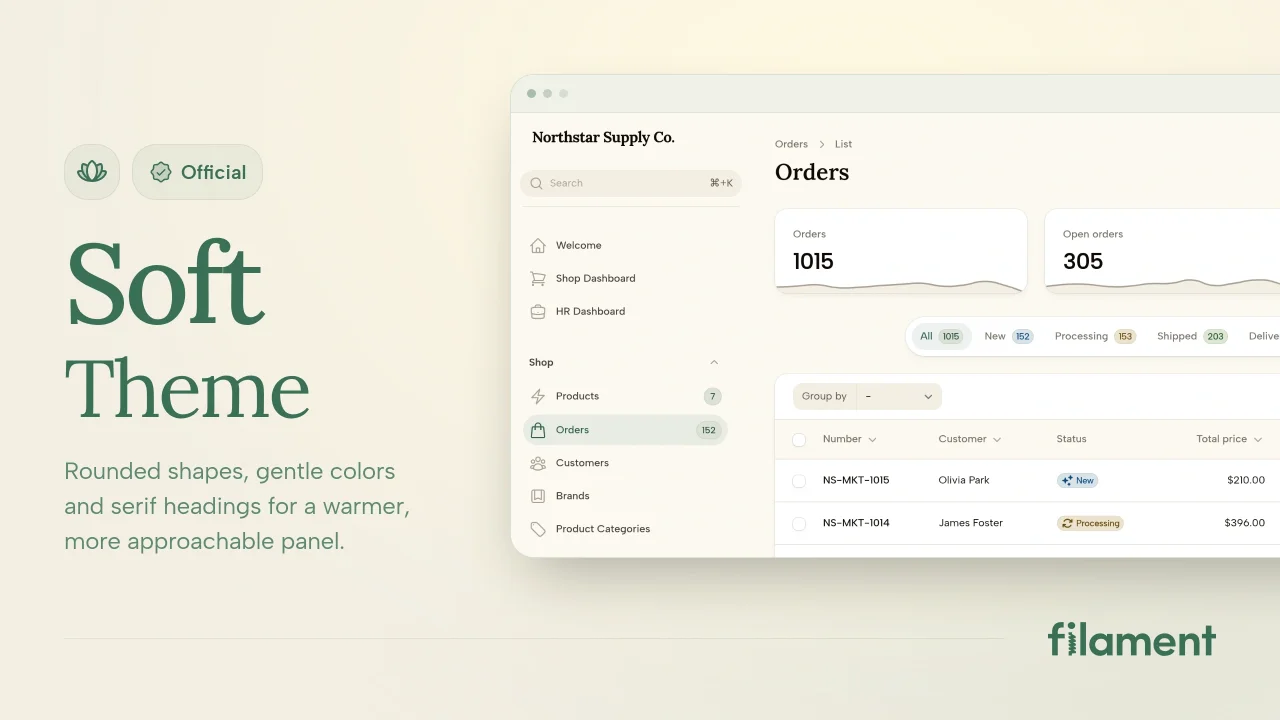
Soft Theme
A theme that gives panels a warm, approachable look with rounded shapes, gentle colors, and serif headings.
 Filament
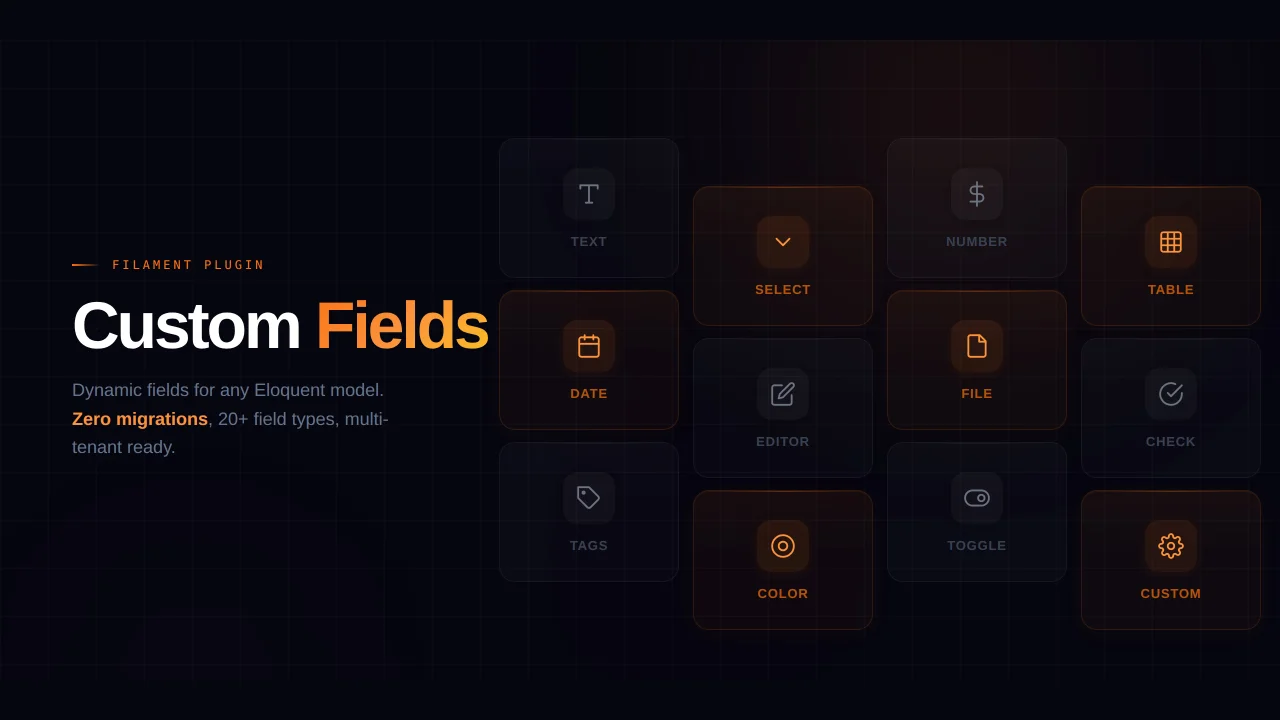
Custom Fields
Eliminate custom field migrations forever. Let your users create and manage form fields directly in Filament admin panels with 20+ built-in field types, validation, and zero database changes.
 Relaticle

Blueprint
Filament Blueprint is a premium Laravel Boost extension that helps AI agents produce accurate, detailed implementation plans and security reports for Filament apps.
Filament