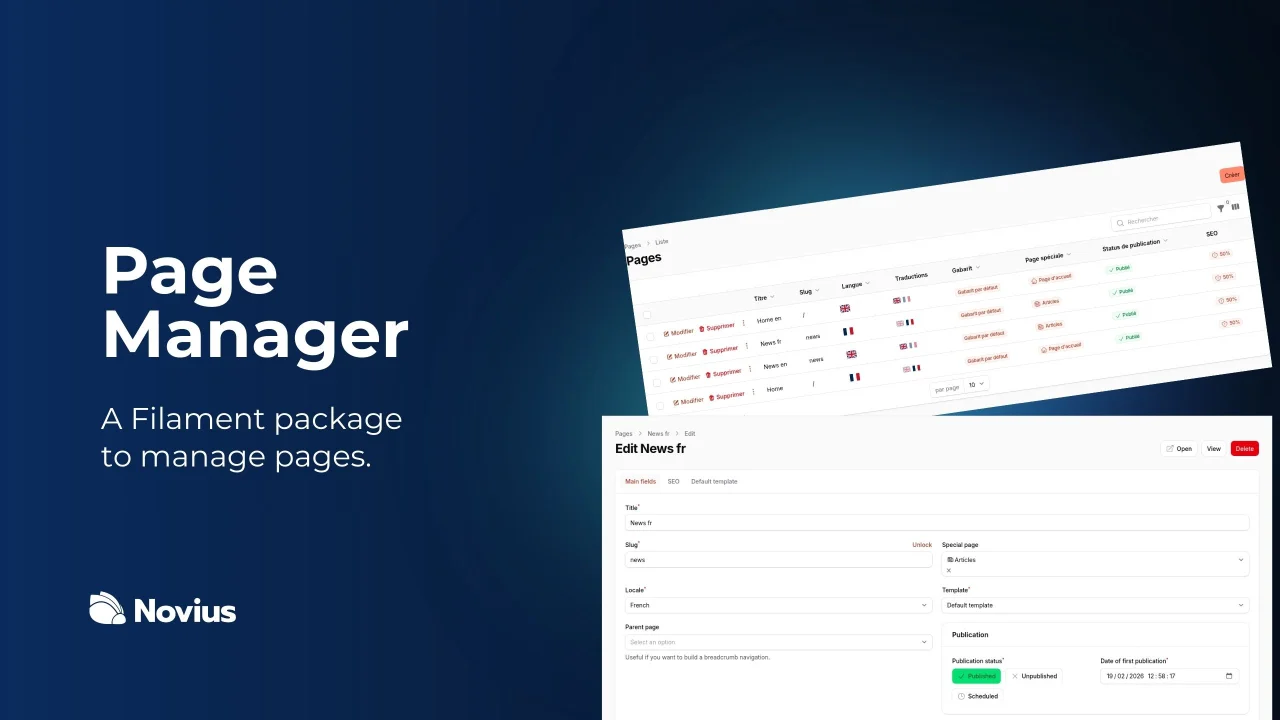
Page Manager by Novius
CommunityPlugin to manage pages and structured content from the admin panel.
 Author:
Novius
Author:
Novius
Package health
Automated checks of this plugin's Composer package
15 checks
- Passed: GitHub Actions pinned to SHA
- Skipped: GitLab CI includes pinned to SHA
- Passed: Open security advisories
- Passed: Dependabot PR responsiveness — No stale Dependabot PRs.
- Skipped: Renovate MR responsiveness
- Passed: Dependabot or Renovate configured
-
Failed:
Dependency update cooldown configured
—
No cooldown configured in
.github/dependabot.yml. View details on Plumb - Passed: Provides a security policy
- Passed: Abandoned or archived — No consulted source marks the package abandoned (packagist, github).
- Passed: Commit and release recency — Active: last commit 24 days ago; last release 24 days ago.
-
Passed:
composer.lock not committed by library
—
composer.lockis absent from the released dist archive. - Passed: Dist archive is lean
-
Passed:
Current Laravel version supported
—
Package dependencies resolve together with current Laravel
13.0. -
Passed:
Current PHP version supported
—
Constraint
>=8.2supports current PHP8.5. - Skipped: Current Symfony version supported
filament/
namespace. Review the source and install at your own risk. Found
malware or an unresolved security issue the author won't
address?
Report it
.
Documentation
- Introduction
- Requirements
- Installation
- Configuration
- Templates
- Special Pages
- Guards
- Facade and Helpers
- Seeder
- Lint
- Changelog
- Contributing
- Licence



#Introduction
This package allows you to manage pages with custom templates.
#Requirements
- PHP >= 8.2
- Laravel >= 11.0
- Laravel Filament >= 4
#Installation
composer require novius/laravel-filament-page-manager
Run migrations with:
php artisan migrate
In your AdminFilamentPanelProvider add the PageManagerPlugin :
use Novius\LaravelFilamentPageManager\Filament\PageManagerPlugin;

class AdminFilamentPanelProvider extends PanelProvider
{
    public function panel(Panel $panel): Panel
    {
        return $panel
            // ...
            ->plugins([
                PageManagerPlugin::make(),
            ])
            // ...
            ;
    }
}
#Route
Add to your routes/web.php file:
\Novius\LaravelFilamentPageManager\Facades\PageManager::routes();
#Configuration
Some options that you can override are available.
php artisan vendor:publish --provider="Novius\LaravelFilamentPageManager\LaravelFilamentPageManagerServiceProvider" --tag="config"
If you're overload the Page model (and so the filament resource), remember to change them in the config.
#Templates
To add a template, add your custom class to templates array in the configuration file or place it under App\Pages\Templates namespace if you keep this value for autoload_templates_in.
Your class must implement Novius\LaravelFilamentPageManager\Contracts\PageTemplate.
Example :
In app/Pages/Templates/StandardTemplate.php
<?php
namespace App\Pages\Templates;

use Filament\Forms\Components\DatePicker;
use Filament\Forms\Components\RichEditor;
use Novius\LaravelFilamentPageManager\Contracts\PageTemplate;

class StandardTemplate implements PageTemplate
{
    public function key(): string
    {
        return 'standard';
    }

    public function name(): string
    {
        return trans('laravel-filament-page-manager::template.standard_template');
    }

    public function fields(): array
    {
        return [
            RichEditor::make('extras.content') // Prefix the name by `extras.` to save it in the extras fields
                ->label('Content'),
            DatePicker::make('extra.date')
                ->label('Date'),
        ];
    }

    public function casts() : array
    {
        return [
            'date' => 'date',
        ];
    }

    public function view(): string
    {
        return 'templates/standard';
    }

    public function viewParameters(Request $request, Page $page): array
    {
        $settings = \App\Model\SettingsModel::instance();

        return [
            'page' => $page,
            'settings' => $settings,
        ];
    }
}
You could also overload the DefaultTemplate class
<?php
namespace App\Pages\Templates;

use Filament\Forms\Components\DatePicker;
use Filament\Forms\Components\RichEditor;
use Novius\LaravelFilamentPageManager\Templates\DefaultTemplate;

class StandardTemplate extends DefaultTemplate
{
    public function fields(): array
    {
        return [
            ...parent::fields(),

            DatePicker::make('extras.date')
                ->label('Date'),
        ];
    }

    public function casts() : array
    {
        return [
            'date' => 'date',
        ];
    }

    public function view(): string
    {
        return 'templates/standard';
    }
}
#Fields
To use the specific template fields :
$page = \Novius\LaravelFilamentPageManager\Models\Page::where('template', 'standard')->first();

$content = $page->extras['content'];

// Date will be a Carbon instance, thanks to the cast
$date = $page->extras['date'];
#View
In the template view, use the documentation of laravel-meta to implement meta tags.
The page manager automatically calls the CurrentModel::setModel() method for you, with the current page displayed.
#Special Pages
The page manager came with three special pages:
- Home page
- Page for 404 error
You could remove those special pages if you don't need them.
For the 404 pages to work, you must add middleware HandleSpecialPages to the Middleware group Web. In your provider/app.php file :
use Illuminate\Routing\Middleware\SubstituteBindings;
use Novius\LaravelFilamentPageManager\Http\Middleware\HandleSpecialPages;

return Application::configure(basePath: dirname(__DIR__))
    //...
    ->withMiddleware(function (Middleware $middleware) {
        //...
        $middleware->web(remove: [
            SubstituteBindings::class,
        ]);
        $middleware->web(append: [
            HandleSpecialPages::class,
            SubstituteBindings::class,
        ]);
        //...
    })
    //...
    })->create();
#Custom Special page
You can create your owned special page. Add your custom class to special array in the configuration file or place it under App\Pages\Special namespace if you keep this value for autoload_special_in.
Here are two examples.
One for a contact page:
<?php
namespace App\Pages\Special;

use Illuminate\Http\Request;
use Illuminate\Support\Facades\Route;
use Novius\LaravelFilamentPageManager\Contracts\PageTemplate;
use Novius\LaravelFilamentPageManager\Contracts\Special;
use Novius\LaravelFilamentPageManager\Facades\PageManager;

class Contact implements Special
{
    public function key(): string
    {
        return 'contact';
    }

    public function name(): string
    {
        return 'Contact';
    }

    public function icon(): ?string
    {
        // you can return null if you d'ont want icon in the filament interface
        return 'heroicon-o-paper-airplane';
    }

    public function pageSlug(): ?string
    {
        // return null, let the user define is owned slug for this page
        return null;
    }

    public function template(): ?PageTemplate
    {
        // return null, let the user define is owned template for this page
        return null;
    }

    public function statusCode(): ?int
    {
        // return null, your page has a 200 status code
        return null;
    }

    public function routes(): void
    {
        // do nothing, your page will be handled by the main page manager route
    }
}
Another for a page displaying a product :
<?php
namespace App\Pages\Special;

use Illuminate\Http\Request;
use Illuminate\Support\Facades\Route;
use Novius\LaravelFilamentPageManager\Contracts\Special;
use Novius\LaravelFilamentPageManager\Facades\PageManager;

class Product implements Special
{
    public function key(): string
    {
        return 'product';
    }

    public function name(): string
    {
        return 'Product';
    }

    public function icon(): ?string
    {
        return null;
    }

    public function pageSlug(): ?string
    {
        // return null, let the user define is owned slug for this page
        return null;
    }

    public function template(): ?PageTemplate
    {
        return \App\Pages\Templates\ProductTemplate::class;
    }

    public function statusCode(): ?int
    {
        // return null, your page has a 200 status code
        return null;
    }

    public function routes(): void
    {
        $this->addRouteGet(
            '{product}',
            static function (Request $request, Product $product) {
                return PageManager::render($request);
            },
            'page-manager.product'
        );
    }
}
Next in the method viewParameters of your template, you could do that:
use Novius\LaravelFilamentPageManager\Contracts\PageTemplate;

class ProductTemplate implements PageTemplate
{
    // ...
    public function viewParameters(Request $request, Page $page): array
    {
        $product = Route::getCurrentRoute()?->parameter('product');
        CurrentModel::setModel($product);

        return [
            'page' => $page,
            'product' => $product,
        ];
    }
}
#Guards
Si vous voulez protéger certaines pages derrière des guards, il suffit d'ajouter dans la config laravel-filament-page-manager.php:
    // If you want certain pages to be protected by a Guard, indicate the list of guards you want to make available (must be in `config('auth.guards')` keys)
    'guards' => [
        'myquard',
    ],
#Facade and Helpers
use Novius\LaravelFilamentPageManager\Facades\PageManager;
use Novius\LaravelFilamentPageManager\Models\Page;
use Novius\LaravelFilamentPageManager\SpecialPages\Page404;

PageManager::templates();  // return Collection<string, PageTemplate>
PageManager::template('default'); // return the PageTemplate with the 'default' key
PageManager::specialPages();  // return Collection<string, Special>
PageManager::special('homepage'); // return the Special with the 'homepage' key
PageManager::routes(); // Use it in your `routes/web.php` file

Page::getHomePage('en'); // return the Page defined as special Homepage in locale 'en'
Page::getHomePage(); // return the Page defined as special Homepage in the current locale
Page::getSpecialPage('404', 'en'); // return the Page defined as special Page404 in locale 'en'
Page::getSpecialPage('404'); // return the Page defined as special Page404 in the current locale
Page::getSpecialPage(Page404::class); // return the Page defined as special Page404 in the current locale
Page::getSpecialPage(new Page404()); // return the Page defined as special Page404 in the current locale
#Seeder
You can use the \Novius\LaravelFilamentPageManager\Database\Seeders\PageSeeder to create menus.
Create a new seeder, extend the class and define the pages() method. You can also override the postCreate() method to add custom logic.
namespace Database\Seeders;

use Novius\LaravelFilamentPageManager\SpecialPages\Homepage;
use Novius\LaravelFilamentPageManager\Templates\DefaultTemplate;

class PageSeeder extends \Novius\LaravelFilamentPageManager\Database\Seeders\PageSeeder
{
    protected function pages(): array
    {
        return [
            [
                'title' => 'Home',
                'slug' => '/',
                'special' => Homepage::class,
                'template' => DefaultTemplate::class,
            ],
        ];
    }

    protected function postCreate(array $config, LocaleData $locale, Menu $menu): void
    {
        // Add custom logic here
    }
}
#Lint
Run php-cs with:
composer run-script lint
#Changelog
Please see CHANGELOG for more information on what has changed recently.
#Contributing
Contributions are welcome!
Leave an issue on GitHub, or create a Pull Request.
#Licence
This package is under GNU Affero General Public License v3 or (at your option) any later version.
The author
Novius is a French web agency specializing in the development of tailor-made web applications with Laravel.
We design robust, maintainable and business-oriented tools, with particular attention paid to the developer experience and the sustainability of projects. Our Filament plugins are used in production on customer projects and are designed to meet concrete needs, proven in the field.
From the same author
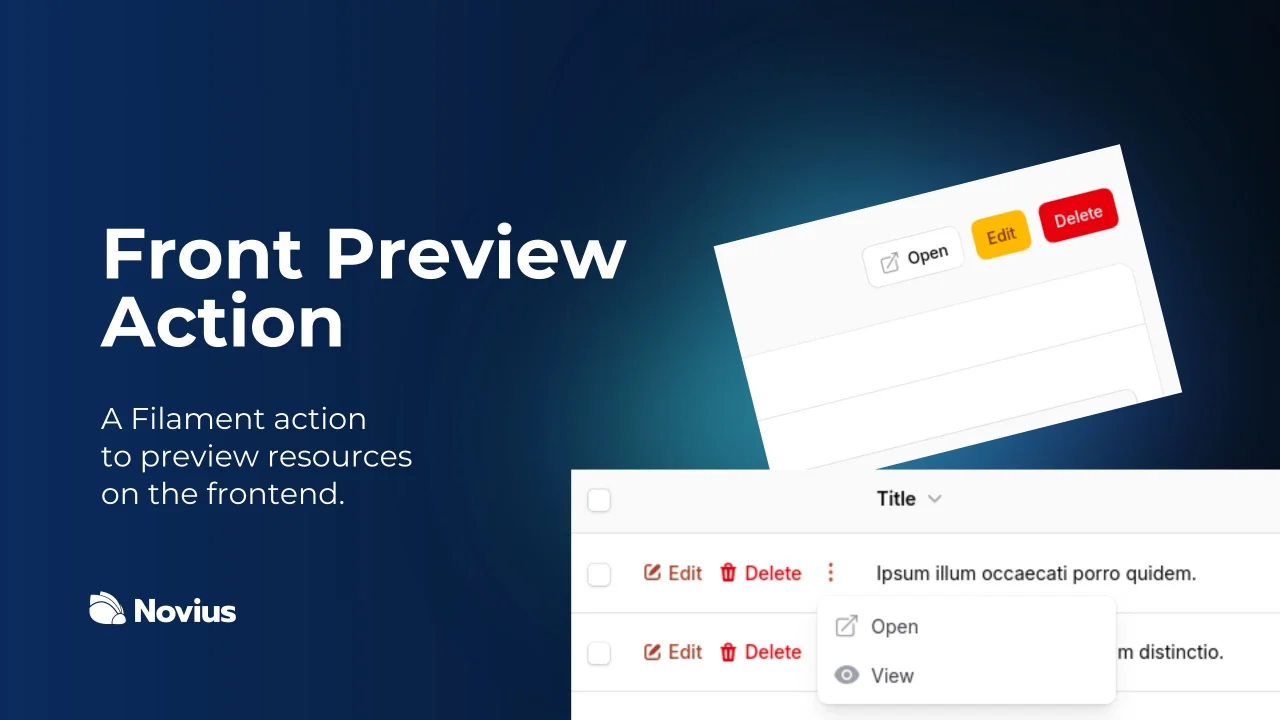
Action Preview
Action to preview a resource before saving or publishing it.
Author:
Novius
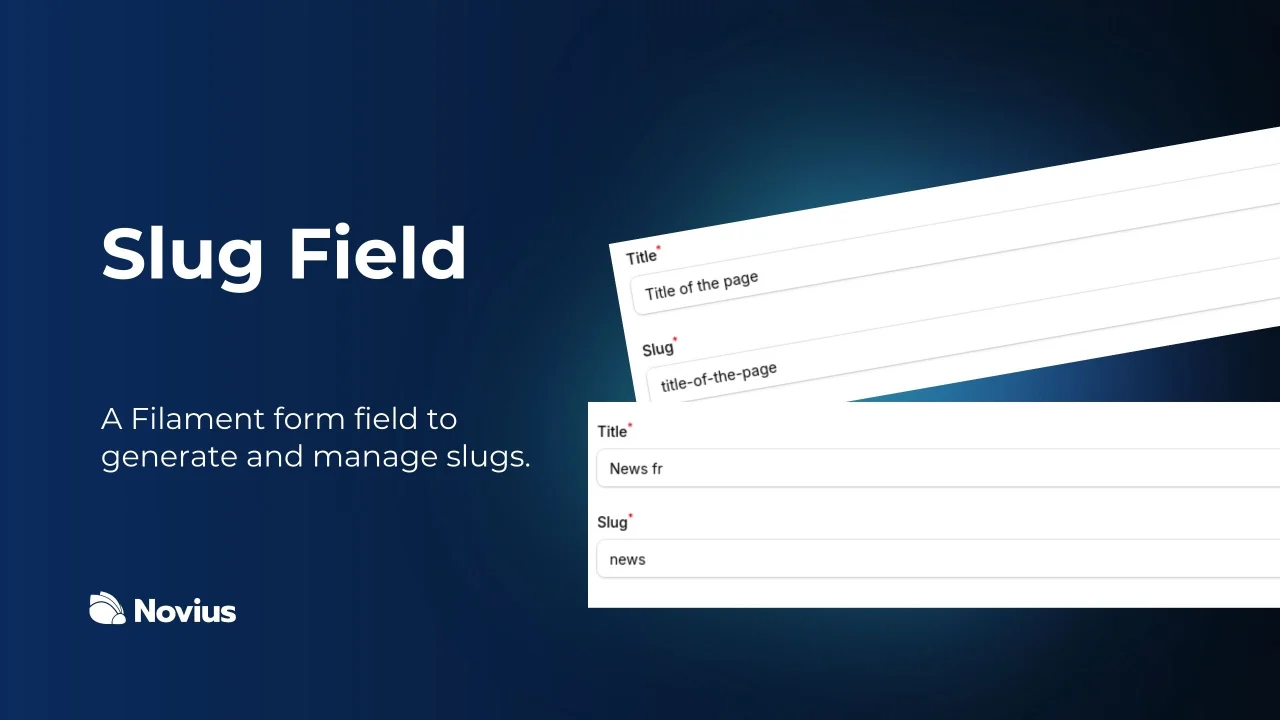
Slug
Plugin to generate and manage slugs automatically.
Author:
Novius
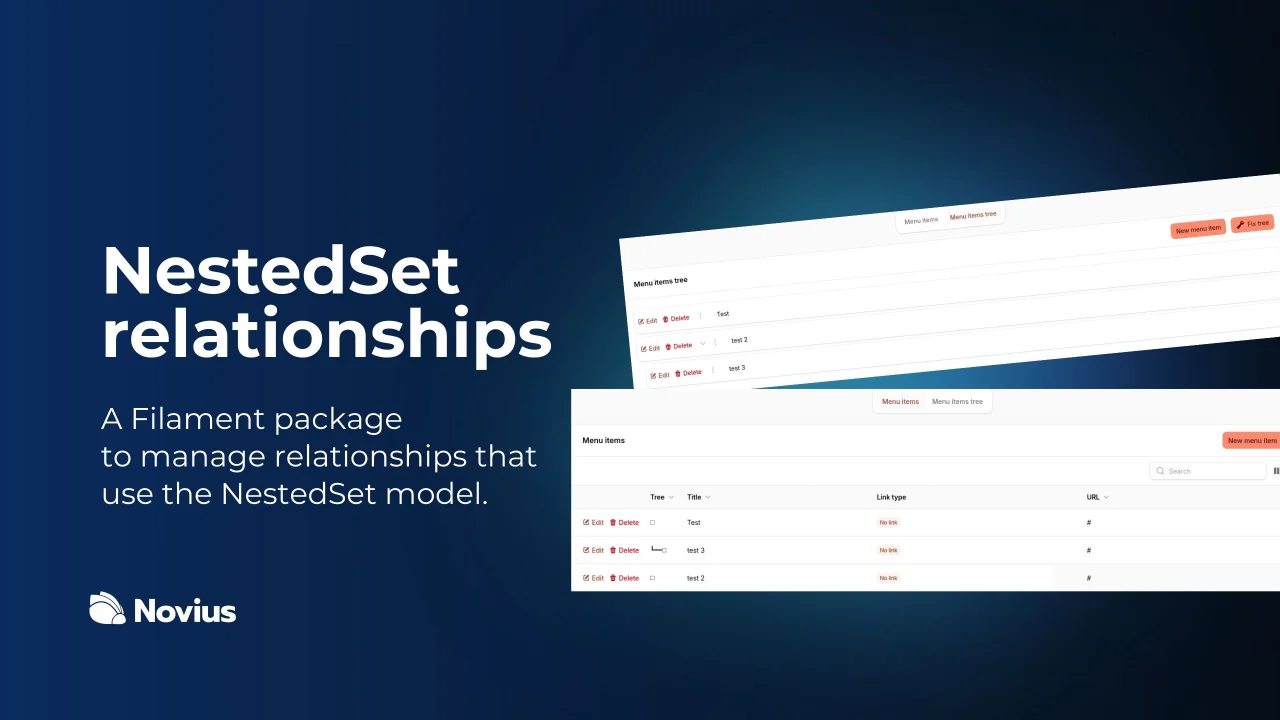
Relation Nested
Plugin to manage nested relationships using the Nested Set model.
Author:
Novius
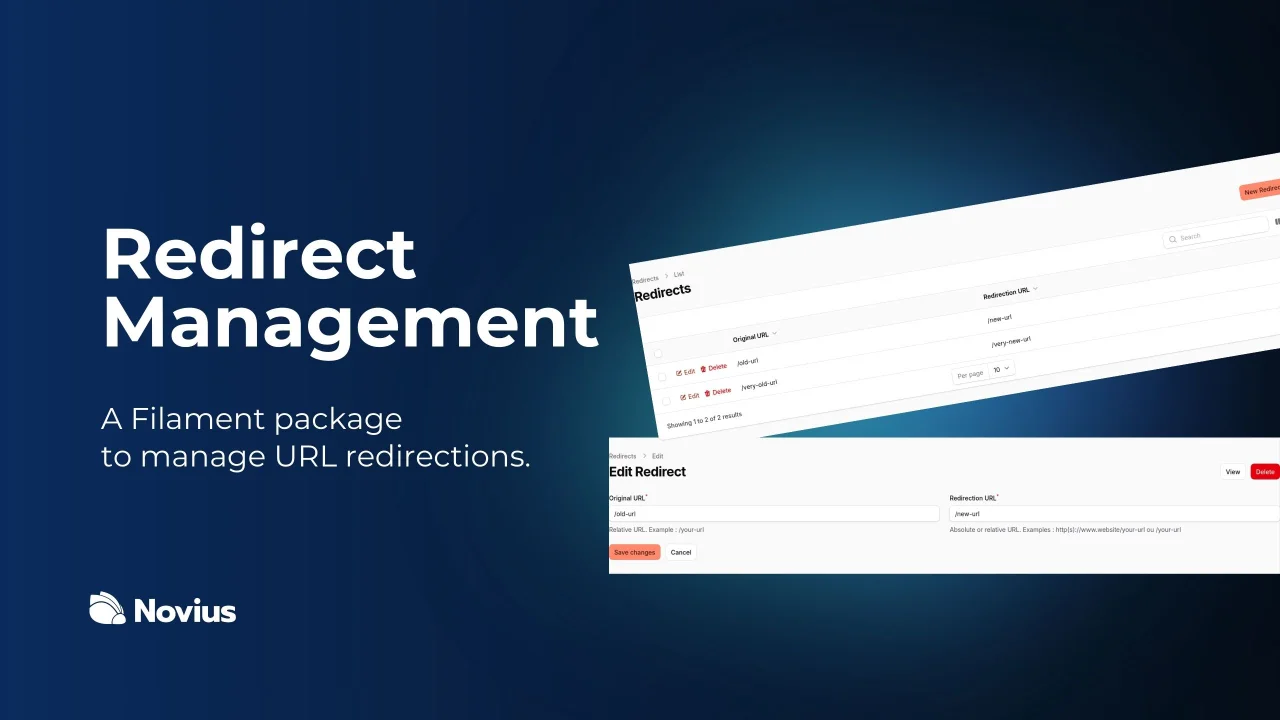
Redirect Manager
Plugin to manage URL redirections directly from the admin panel.
Author:
Novius
Featured Plugins
A selection of plugins curated by the Filament team
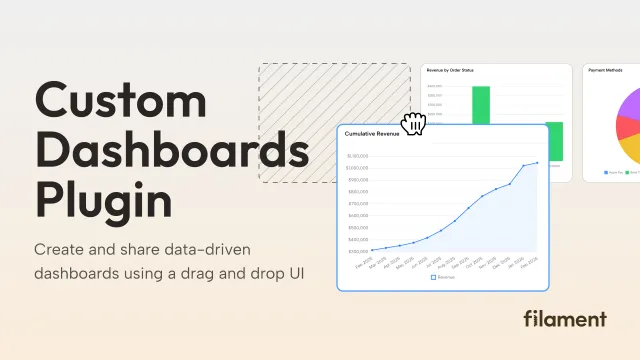
Custom Dashboards
Let your users build and share their own dashboards with a drag-and-drop interface. Define your data sources in PHP and let them do the rest.
 Filament
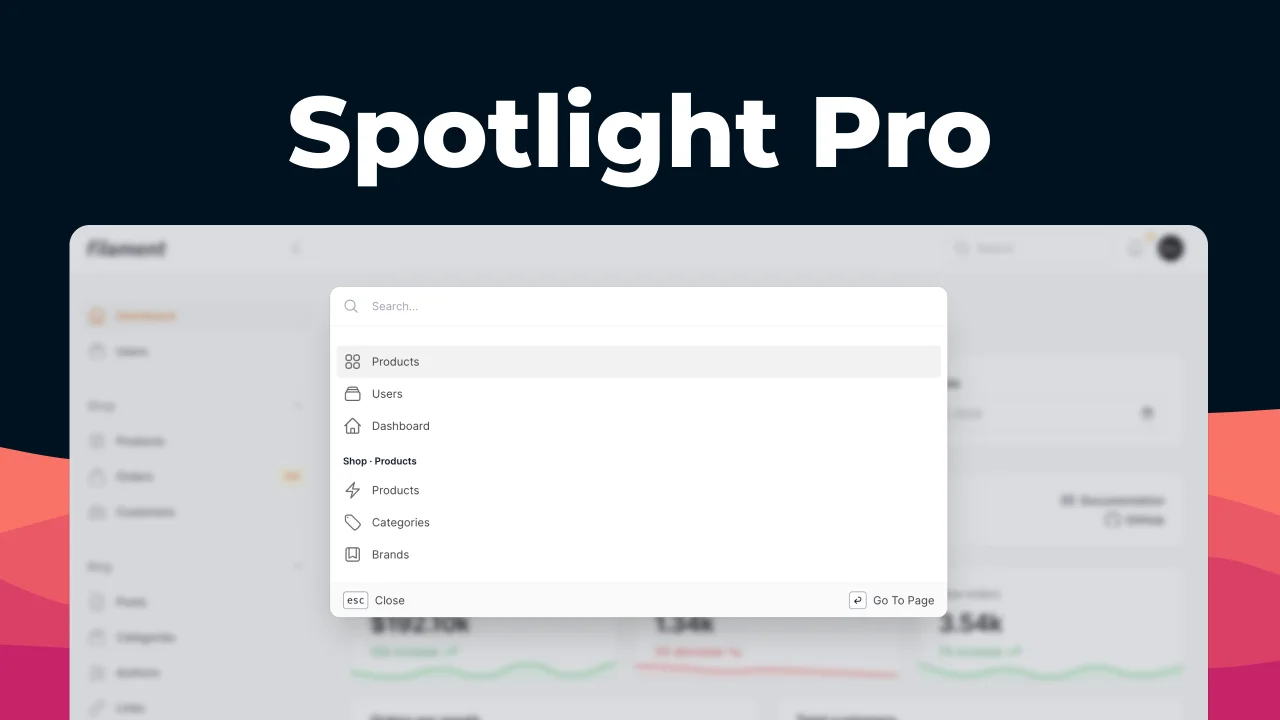
Spotlight Pro
Browse your Filament Panel with ease. Filament Spotlight Pro adds a Spotlight like Command Palette to your Filament Panel.
 Dennis Koch
Advanced Tables (formerly Filter Sets)
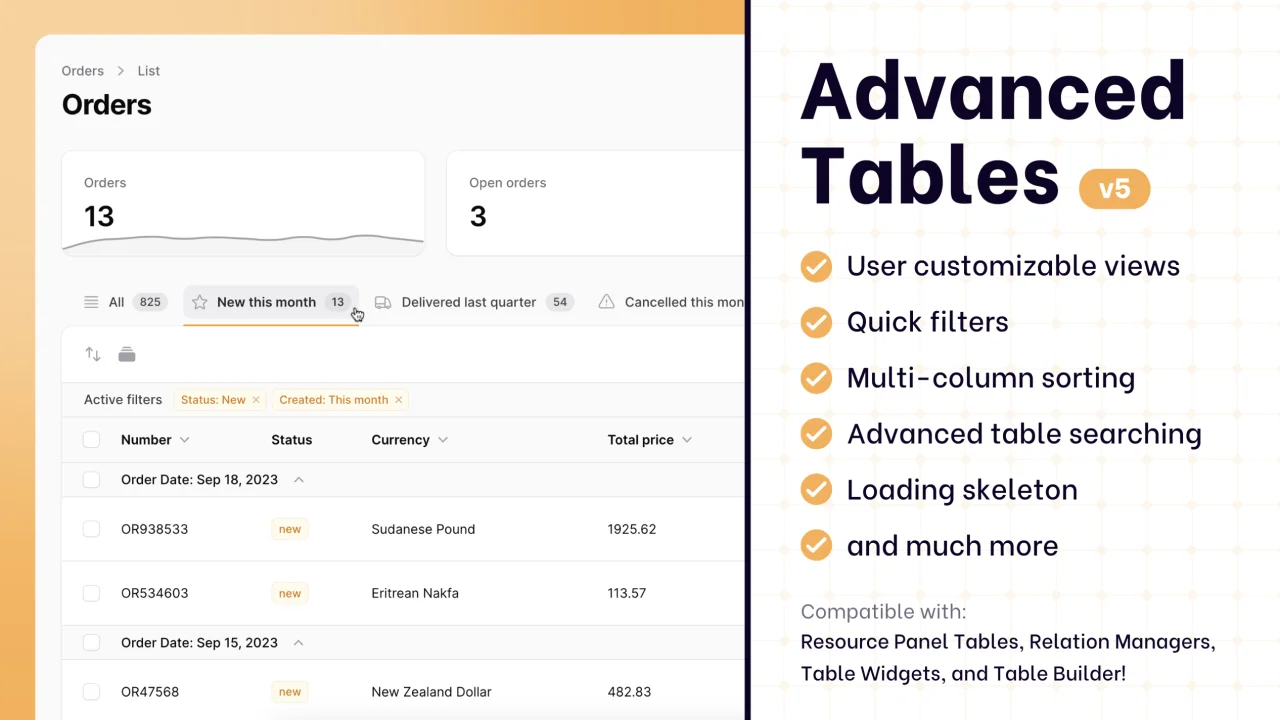
Supercharge your tables with powerful features like user-customizable views, quick filters, multi-column sorting, advanced table searching, convenient view management, and more. Compatible with Resource Panel Tables, Relation Managers, Table Widgets, and Table Builder!
 Kenneth Sese