Record Navigation
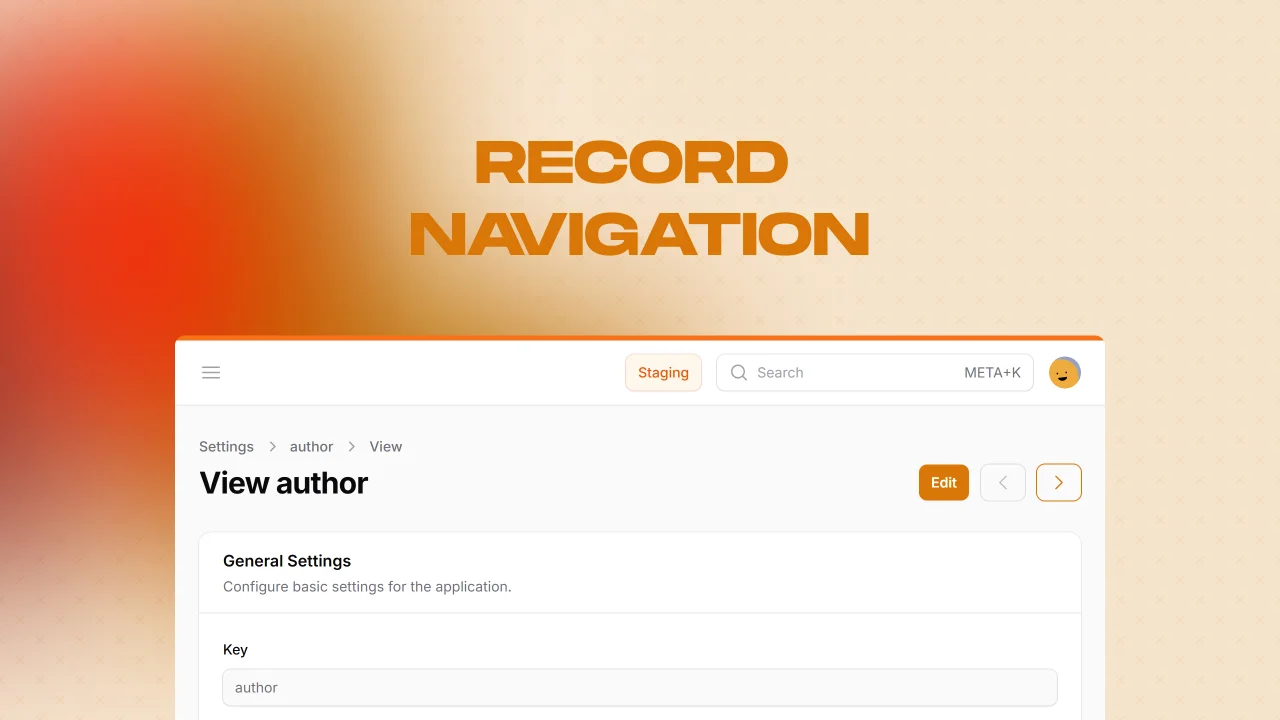
CommunityElegant next/previous record navigation for Filament admin panels with smart button states and customizable ordering.
 Author:
Nben Malla
Author:
Nben Malla
Package health
BetaAutomated checks of this plugin's Composer package
15 checks
- Passed: GitHub Actions pinned to SHA
- Skipped: GitLab CI includes pinned to SHA
- Passed: Open security advisories
- Passed: Dependabot PR responsiveness — No open Dependabot PRs.
- Skipped: Renovate MR responsiveness
- Passed: Dependabot or Renovate configured
- Passed: Dependency update cooldown configured
- Passed: Provides a security policy
- Passed: Abandoned or archived — No consulted source marks the package abandoned (packagist, github).
- Passed: Commit and release recency — Active: last commit 0 days ago; last release 6 days ago.
-
Passed:
composer.lock not committed by library
—
composer.lockis absent from the released dist archive. - Passed: Dist archive is lean
- Skipped: Current Laravel version supported
-
Passed:
Current PHP version supported
—
Constraint
^8.3supports current PHP8.5. - Skipped: Current Symfony version supported
filament/
namespace. Review the source and install at your own risk. Found
malware or an unresolved security issue the author won't
address?
Report it
.
Documentation
- Features
- Requirements
- Demo
- Installation
- Quick Start
- Navigating to the Edit Page
- Navigating to a Custom Route
- Customising Button Appearance
- Custom Navigation Logic
- Configuration
- Architecture
- Troubleshooting
- Upgrade Guide (from v2.0.x)
- Upgrade Guide (from v1.x)
- Contributing
- License
- Credits
- Support
A Laravel package that adds elegant next/previous record navigation to your Filament PHP admin panels. Navigate seamlessly between records with intuitive navigation buttons.




#Features
- Zero-config integration - drop two actions into
getHeaderActions()and you're done - No trait required - actions work out of the box without any page class changes
- Filament native - extends Filament's
Actionclass, all fluent methods work - Configurable - set ordering column and direction globally via config
- Fully overridable - add the trait and override any method for custom query logic
- Page-type aware - choose
view,edit, or any custom route as the target page per action - Custom routes - navigate to any route registered in your resource's
getPages() - Future-proof - depends only on Filament's stable
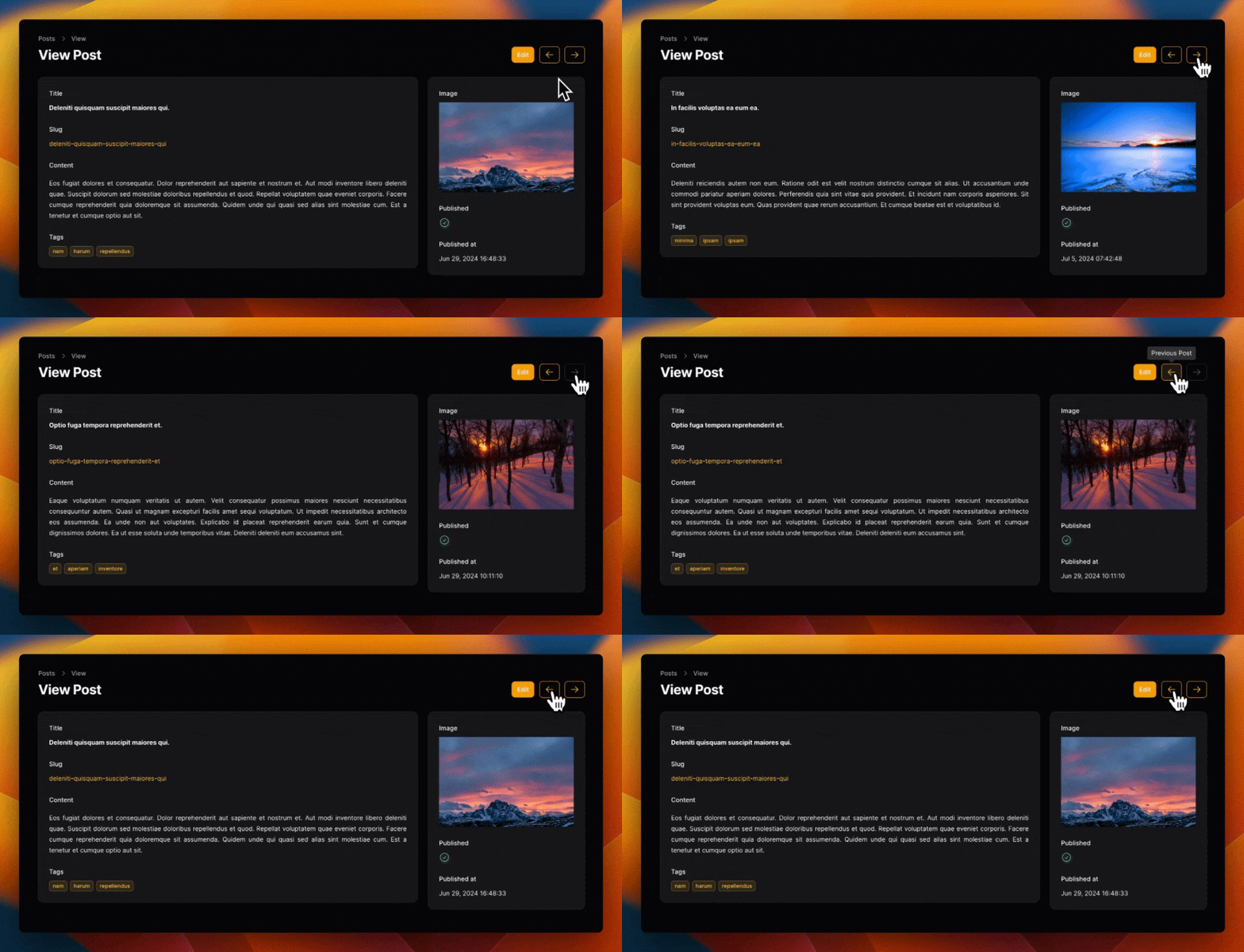
$livewireinjection API - Smart boundaries - buttons auto-disable and turn gray at the first/last record
- Optimised queries - each action fires exactly one database query per render
#Requirements
- PHP
^8.2 - Laravel
^10.0 | ^11.0 | ^12.0 | ^13.0 - Filament
^4.0 | ^5.0
#Demo
Live site: rnd.nben.com.np
#Installation
Install the package via Composer:
composer require nben/filament-record-nav
Optionally publish the config file to customise the order column and sort directions:
php artisan vendor:publish --tag=filament-record-nav-config
#Quick Start
Add the two actions to getHeaderActions() on any ViewRecord or EditRecord page.
No trait required - this is all you need for the default behaviour.
<?php

namespace App\Filament\Resources\PostResource\Pages;

use App\Filament\Resources\PostResource;
use Filament\Resources\Pages\ViewRecord;
use Nben\FilamentRecordNav\Actions\NextRecordAction;
use Nben\FilamentRecordNav\Actions\PreviousRecordAction;

class ViewPost extends ViewRecord
{
    protected static string $resource = PostResource::class;

    protected function getHeaderActions(): array
    {
        return [
            PreviousRecordAction::make(),
            NextRecordAction::make(),
            // ... your other actions
        ];
    }
}
Out of the box the actions will:
- Order records by the
order_columndefined in config (default:id) - Render as outlined primary buttons with chevron icons
- Disable and turn gray when there is no adjacent record (first / last)
- Navigate to the
viewpage of the adjacent record
#Navigating to the Edit Page
Use ->navigateTo() with the NavigationPage enum to control which page type
the action redirects to. Each action can target a different page type independently.
use Nben\FilamentRecordNav\Actions\NextRecordAction;
use Nben\FilamentRecordNav\Actions\PreviousRecordAction;
use Nben\FilamentRecordNav\Enums\NavigationPage;

protected function getHeaderActions(): array
{
    return [
        // Both navigate to the edit page
        PreviousRecordAction::make()->navigateTo(NavigationPage::Edit),
        NextRecordAction::make()->navigateTo(NavigationPage::Edit),
    ];
}
Or mix them:
// Previous stays on view, next goes to edit
PreviousRecordAction::make()->navigateTo(NavigationPage::View),
NextRecordAction::make()->navigateTo(NavigationPage::Edit),
#Navigating to a Custom Route
If your resource registers custom page routes beyond the standard view and edit,
use NavigationPage::custom() to navigate to them by route name.
First, register your custom page in the resource's getPages():
public static function getPages(): array
{
    return [
        'index'         => ListUsers::route('/'),
        'create'        => CreateUser::route('/create'),
        'view'          => ViewUser::route('/{record}'),
        'edit'          => EditUser::route('/{record}/edit'),
        'verified-view' => ViewVerifiedUser::route('/{record}/verified'), // custom route
    ];
}
Then pass the route name string to NavigationPage::custom():
use Nben\FilamentRecordNav\Actions\NextRecordAction;
use Nben\FilamentRecordNav\Actions\PreviousRecordAction;
use Nben\FilamentRecordNav\Enums\NavigationPage;

protected function getHeaderActions(): array
{
    return [
        PreviousRecordAction::make()->navigateTo(NavigationPage::custom('verified-view')),
        NextRecordAction::make()->navigateTo(NavigationPage::custom('verified-view')),
    ];
}
The route name passed to custom() is forwarded directly to Resource::getUrl($routeName, ['record' => $record]),
so it must exactly match a key in your resource's getPages() array.
Note: Custom routes still benefit from the same smart boundary detection - buttons auto-disable and turn gray when there is no adjacent record to navigate to.
#Customising Button Appearance
Both actions extend Filament's Action class directly, so every fluent method
from the Filament Actions docs
works as normal:
use Filament\Support\Enums\Size;
use Nben\FilamentRecordNav\Actions\NextRecordAction;
use Nben\FilamentRecordNav\Actions\PreviousRecordAction;

PreviousRecordAction::make()
    ->label('← Previous')
    ->color('secondary')
    ->size(Size::Small)
    ->tooltip('Go to previous record')
    ->keyBindings(['mod+left']),

NextRecordAction::make()
    ->label('Next →')
    ->icon('heroicon-o-arrow-right')
    ->color('secondary')
    ->size(Size::Small)
    ->tooltip('Go to next record')
    ->keyBindings(['mod+right']),
#Custom Navigation Logic
For custom query logic - filtering by status, scoping to a tenant, ordering by
a different column - add the WithRecordNavigation trait to your page class and
override the methods you need.
The trait is optional. Only add it when the default config-driven query is not sufficient.
#Filtering which records can be navigated
<?php

namespace App\Filament\Resources\PostResource\Pages;

use App\Filament\Resources\PostResource;
use Filament\Resources\Pages\ViewRecord;
use Illuminate\Database\Eloquent\Model;
use Nben\FilamentRecordNav\Actions\NextRecordAction;
use Nben\FilamentRecordNav\Actions\PreviousRecordAction;
use Nben\FilamentRecordNav\Concerns\WithRecordNavigation;

class ViewPost extends ViewRecord
{
    use WithRecordNavigation;

    protected static string $resource = PostResource::class;

    protected function getHeaderActions(): array
    {
        return [
            PreviousRecordAction::make(),
            NextRecordAction::make(),
        ];
    }

    // Only navigate through published posts, ordered by published_at
    public function getPreviousRecord(): ?Model
    {
        return $this->getRecord()
            ->newQuery()
            ->where('status', 'published')
            ->where('published_at', '<', $this->getRecord()->published_at)
            ->orderBy('published_at', 'desc')
            ->first();
    }

    public function getNextRecord(): ?Model
    {
        return $this->getRecord()
            ->newQuery()
            ->where('status', 'published')
            ->where('published_at', '>', $this->getRecord()->published_at)
            ->orderBy('published_at', 'asc')
            ->first();
    }
}
#Overriding the navigation URL
Override getRecordNavigationUrl() to fully control where the action redirects.
The $page parameter is either a NavigationPage enum case or a CustomNavigationPage
value object - both expose a ->value string with the route name.
use Illuminate\Database\Eloquent\Model;
use Nben\FilamentRecordNav\Enums\CustomNavigationPage;
use Nben\FilamentRecordNav\Enums\NavigationPage;

// Always navigate to the edit page, ignoring the action's NavigationPage setting
public function getRecordNavigationUrl(
    Model $record,
    NavigationPage|CustomNavigationPage $page
): string {
    return static::getResource()::getUrl('edit', ['record' => $record]);
}
Or respect whatever page type was passed, including custom routes:
public function getRecordNavigationUrl(
    Model $record,
    NavigationPage|CustomNavigationPage $page
): string {
    // $page->value is 'view', 'edit', or your custom route name
    return static::getResource()::getUrl($page->value, ['record' => $record]);
}
#Strict typing with the contract (optional)
If you want IDE autocompletion and static analysis support (PHPStan / Psalm),
declare implements HasRecordNavigation alongside the trait:
use Nben\FilamentRecordNav\Concerns\WithRecordNavigation;
use Nben\FilamentRecordNav\Contracts\HasRecordNavigation;

class ViewPost extends ViewRecord implements HasRecordNavigation
{
    use WithRecordNavigation; // provides the default implementation
}
Note: The actions use
method_exists()rather thaninstanceofto detect navigation methods. This means declaringimplementsis optional - the actions will call your overridden methods correctly either way. The interface is purely for your own type-safety tooling.
#Configuration
// config/filament-record-nav.php

return [
    /*
    | The column used to determine record order for navigation.
    | When navigating previous, queries for the nearest record with a lower
    | value. When navigating next, queries for the nearest record with a higher
    | value. Add a database index on this column for best performance.
    |
    | Common choices: 'id', 'created_at', 'updated_at', 'sort_order'
    */
    'order_column' => 'id',

    /*
    | Sort directions for the previous and next queries.
    | 'desc' for previous ensures the closest lower record is returned first.
    | 'asc'  for next  ensures the closest higher record is returned first.
    | Only change these if you have a non-standard ordering requirement.
    */
    'previous_direction' => 'desc',
    'next_direction'     => 'asc',
];
#Architecture
src/
├── Actions/
│   ├── Concerns/
│   │   └── ResolvesAdjacentRecord.php  ← shared cache, URL resolution, fallback query
│   ├── NextRecordAction.php            ← thin action, delegates to the trait above
│   └── PreviousRecordAction.php        ← thin action, delegates to the trait above
├── Concerns/
│   └── WithRecordNavigation.php        ← optional page trait for custom query logic
├── Contracts/
│   └── HasRecordNavigation.php         ← optional interface for strict typing
├── Enums/
│   ├── CustomNavigationPage.php        ← value object for arbitrary route names
│   └── NavigationPage.php              ← View | Edit | custom()
└── FilamentRecordNavServiceProvider.php
#How it works
When a page renders, Filament evaluates each action's color(), disabled(),
and url() closures. Each closure receives the Livewire component instance via
Filament's $livewire utility injection - a stable, first-class API that is
not expected to change between Filament versions.
Inside each closure, ResolvesAdjacentRecord::getCachedRecord() is called.
On the first call it resolves the adjacent record (via the page's override or
the config fallback), stores it in $resolvedRecordCache, and returns it.
The second and third closure calls read from the cache - so only one database
query fires per action per render, regardless of how many closures need the result.
When navigateTo() receives a NavigationPage enum case or a CustomNavigationPage
value object, both expose the same ->value string property. resolveUrl() calls
Resource::getUrl($page->value, ['record' => $record]) on either type without any
instanceof branching, keeping the URL resolution path simple and uniform.
No internal Filament lifecycle hooks (configureAction(), bootUsing(), etc.)
are used anywhere in the package.
#Troubleshooting
Buttons are always disabled (gray)
- Confirm the
order_columnin config matches an actual column on your table. - If using a timestamp column (
created_at), ensure records have distinct values - records with identical timestamps will not find each other. - If you have overridden
getPreviousRecord()/getNextRecord(), add a temporary\Log::info(...)inside them to confirm they are being called and the query returns what you expect.
Custom filter overrides are being ignored
- Confirm the
WithRecordNavigationtrait is present on the page class withuse WithRecordNavigation;. - Confirm the method signatures match exactly:
public function getPreviousRecord(): ?Modelandpublic function getNextRecord(): ?Model. - Confirm
use Illuminate\Database\Eloquent\Model;is imported at the top of the page class.
Wrong page type after navigation
- Use
->navigateTo(NavigationPage::Edit)on the action for the edit page. - Use
->navigateTo(NavigationPage::custom('your-route-name'))for a custom route. - Confirm the route name string passed to
custom()exactly matches a key in your resource'sgetPages()array. - Or override
getRecordNavigationUrl()in the trait to always return the route you want.
InvalidArgumentException or route not found after using NavigationPage::custom()
- The route name passed to
custom()must exactly match a key ingetPages(), including hyphens and casing. - Double-check:
'verified-view' => ViewVerifiedUser::route('/{record}/verified')ingetPages()matchesNavigationPage::custom('verified-view')on the action.
Performance on large tables
- Add a database index on the
order_column. - Override
getPreviousRecord()/getNextRecord()to addwhere()scopes that narrow the result set before the adjacent record query runs.
#Upgrade Guide (from v2.0.x)
v2.1.0 is fully backward compatible with v2.0.0. No changes are required to
existing code. The only addition is the NavigationPage::custom() named
constructor and the CustomNavigationPage value object that supports it.
#Upgrade Guide (from v1.x)
v2.0.0 is a full rewrite for Filament v4/v5. Summary of breaking changes:
| v1.x | v2.x |
|---|---|
| Trait required on the page | Trait optional |
configureAction() hook used internally |
Removed - uses $livewire injection |
| No page-type enum | NavigationPage::View / NavigationPage::Edit / NavigationPage::custom() |
getRecordUrl(Model $record) |
getRecordNavigationUrl(Model $record, NavigationPage|CustomNavigationPage $page) |
Filament ^3.0 |
Filament ^4.0 | ^5.0 |
PHP ^8.1 |
PHP ^8.2 |
Migration steps:
- Remove
configureAction()from any page classes that overrode it - it is no longer used. - Rename
getRecordUrl(Model $record)togetRecordNavigationUrl(Model $record, NavigationPage|CustomNavigationPage $page)wherever you defined it. Import bothNavigationPageandCustomNavigationPageat the top of the file. - Add
->navigateTo(NavigationPage::Edit)to any actions that previously pointed to edit routes viagetRecordUrl(). - The trait is now optional - you can remove
use WithRecordNavigationfrom pages that relied only on the default behaviour (no method overrides).
#Contributing
Contributions are welcome. Please open an issue before submitting a pull request for major changes so we can discuss the approach first.
#License
This package is open-sourced software licensed under the MIT license.
#Credits
- Leandro Ferreira – Original Idea / Blog Post – leandrocfe
- Nben Malla – Package Developer – nb3n
#Support
- Issues: GitHub Issues
- Source: GitHub Repository
Made with ❤️ for the Filament PHP community
The author
Nben Malla is a Software Engineer based in Dublin. Microservices and FinTech. Building things that matter.
Featured Plugins
A selection of plugins curated by the Filament team
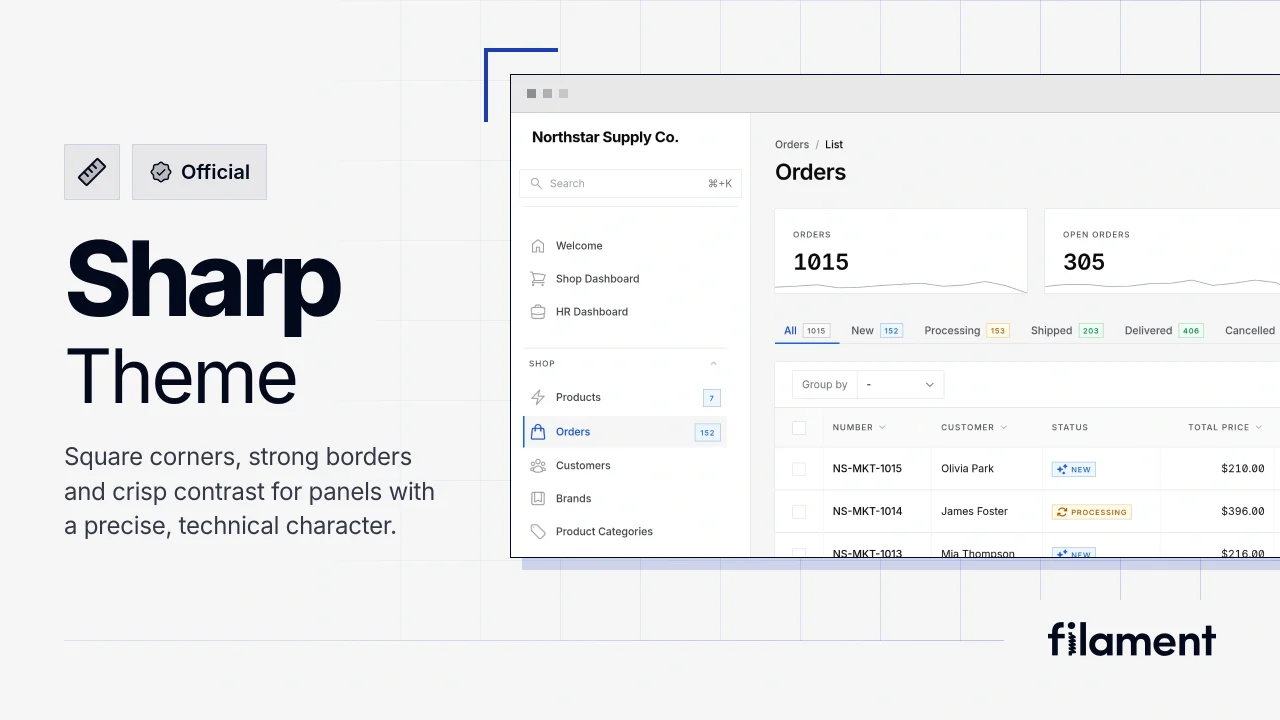
Sharp Theme
A theme that gives panels a precise, technical look with square corners, strong borders, and clear contrast.
 Filament
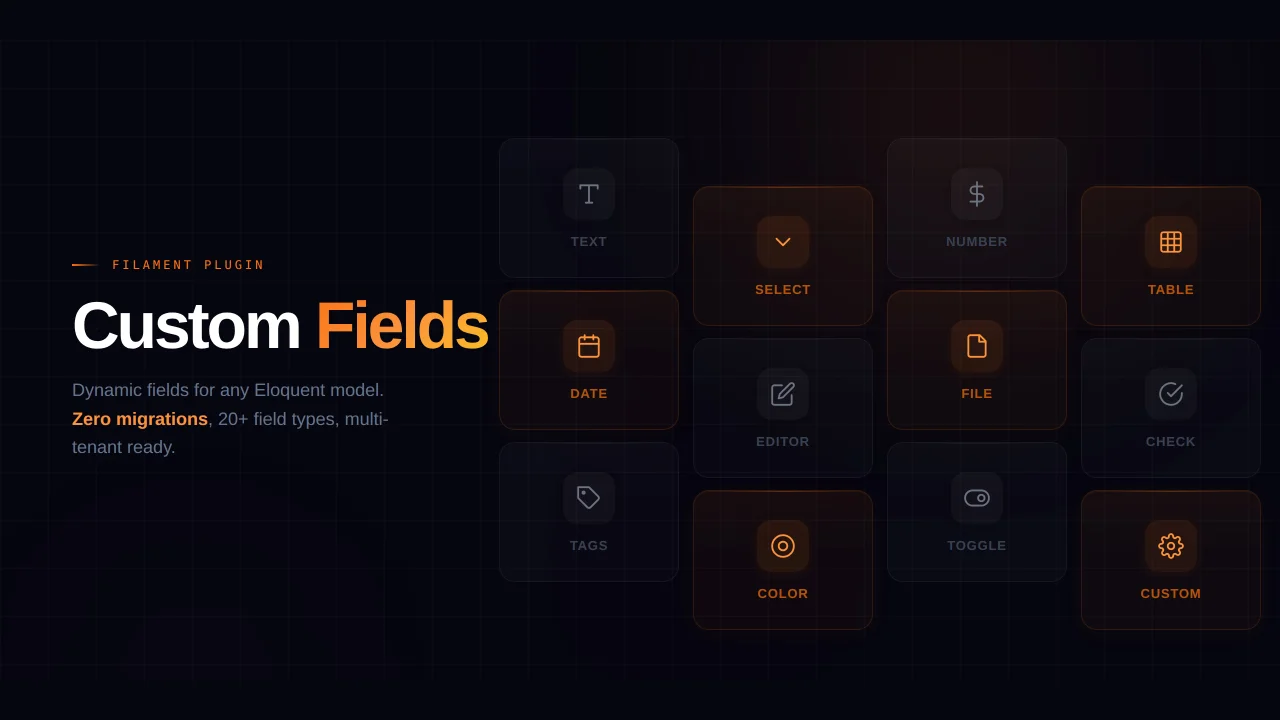
Custom Fields
Eliminate custom field migrations forever. Let your users create and manage form fields directly in Filament admin panels with 20+ built-in field types, validation, and zero database changes.
 Relaticle
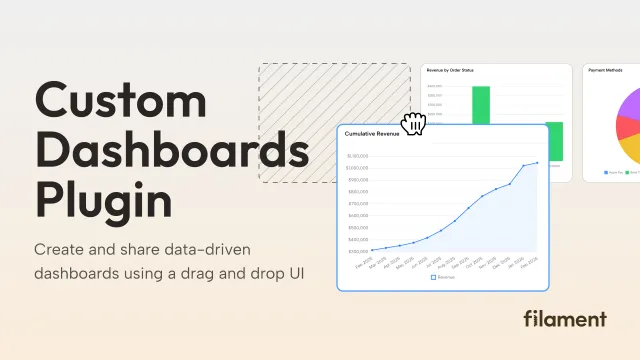
Custom Dashboards
Let your users build and share their own dashboards with a drag-and-drop interface. Define your data sources in PHP and let them do the rest.
Filament